
Moisture Resistant Gypsum Board Vs Cement Board And Magnesium Board
|
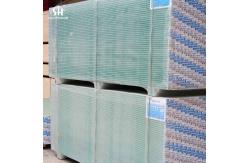
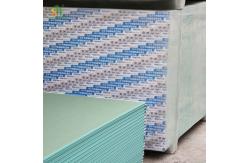


|
Wet-Area Building Board Selection Guide Moisture Resistant Gypsum Board Vs Cement Board And Magnesium BoardMoisture resistant gypsum board, cement board and magnesium oxide board can all appear in bathroom, kitchen, hotel, hospital and modular building specifications. However, they have different compositions, installation methods, moisture limits, finishing requirements and procurement risks. Correct selection should be based on the actual water exposure, tested building system and destination-market requirements rather than one general claim that a board is waterproof, fireproof or suitable for every wet area. 01 Moisture Exposure Distinguish normal humidity, occasional splashing, direct spray, standing water and exterior weather exposure. 02 Surface Finish Confirm whether the board will receive paint, joint compound, ceramic tile, render or another finishing system. 03 System Performance Review fire, acoustic, mold, impact and structural requirements together with moisture resistance. 04 Product Verification Match the exact formulation, standard, test report, fasteners and approved application before bulk purchasing. The Basic Difference Between The Three BoardsThe three materials should not be viewed as simple quality levels of the same product. Moisture resistant gypsum board is a lightweight interior finishing panel with reduced water absorption. Cement board is a denser cementitious tile-backing substrate designed for demanding wet and dry areas. Magnesium oxide board is a broad family of magnesium-based panels whose performance depends heavily on binder chemistry, reinforcement and manufacturing quality. G Interior Finishing Efficiency Moisture Resistant Gypsum Board A gypsum-core panel with moisture-resistant additives and treated paper, glass mat or another product-specific facing. It is commonly selected for humid interior walls and ceilings where a smooth drywall finish and fast installation are important.
C Wet-Area Tile Substrate Cement Board A cementitious board commonly reinforced with mesh or fibers. Products manufactured as cement backer units are designed to remain dimensionally stable and to provide a durable substrate for tile and stone in suitable wet and dry installations.
M Formulation-Specific Specialty Panel Magnesium Oxide Board A general term covering boards made with magnesium-based binders, fillers and reinforcing mesh or fibers. Products may use chloride-based, alternative low-chloride or another chemistry, so performance can vary significantly between manufacturers.
No Board Should Be Selected Only By The Word Waterproof Even a water-durable substrate contains joints, corners, screw penetrations and service openings. A shower, wet room or tiled enclosure may still require a separate waterproofing membrane, reinforced transition details, compatible adhesives and sealed penetrations. The board is one component of the system, not the complete waterproof barrier. Complete Performance Comparison
Selection By Water Exposure ZoneLow To Moderate Exposure Humid Interior Dry Zones Moisture resistant gypsum board is normally the most efficient option for bathroom dry walls, kitchen walls, powder rooms, laundry rooms and ventilated humid ceilings. Repeated Direct Water Residential Tiled Wet Zones Cement board or another specifically approved wet-area substrate is often preferred for shower walls, bathtub surrounds and tiled areas exposed to repeated spray. Specialist Approval Required Exterior And Severe Environments Commercial showers, pools, steam rooms, exterior facades and continuously wet areas require specialist systems. MgO products must be accepted only after formulation and durability verification. Application Selection Matrix
Waterproofing System RequirementsSelecting a more water-durable board does not eliminate the need to manage water at every transition. In tiled wet zones, the substrate, membrane, adhesive and finish must function as one coordinated system. Simplified Wet-Area Wall Build-Up Metal Or Timber Framing Selected Board Substrate Reinforced Joints And Corners Waterproofing Membrane Tile Adhesive And Finish Sealed Pipes And Transitions This diagram shows a general system sequence. Actual membrane position, primer, tape, joint treatment, adhesive, fasteners and curing requirements must follow the approved board and waterproofing manufacturers' instructions. Cement Board Is Water-Durable But Not Automatically Waterproof Cement board generally remains more stable when exposed to moisture than paper-faced gypsum board. However, water can still pass through panel joints, fastener penetrations and the board itself. Where a waterproof enclosure is required, install the specified membrane and transition details. Fire Performance ComparisonGypsum, cementitious and magnesium-based boards are often selected partly for fire performance. The material classification and the complete wall or ceiling fire resistance must be reviewed separately.
Noncombustible Does Not Automatically Mean A Two-Hour Wall A material may have limited contribution to fire while the completed partition still fails early through joints, framing deformation, fastener loss or heat transmission. Hourly ratings belong to tested assemblies, not to isolated board samples. Weight Handling And Installation
Magnesium Oxide Board Requires Additional VerificationMgO board should never be treated as one standard commodity. Binder chemistry, raw material purity, unreacted salts, reinforcement, fillers, curing and surface treatment can all affect performance. 1 Binder Chemistry Determine whether the board uses a chloride-based, alternative low-chloride or another magnesium-based system. 2 Chloride Content Request test data for water-soluble or free chloride where chloride-related corrosion is a project concern. 3 Hygroscopic Behavior Review moisture sorption, dimensional movement and performance under high relative humidity. 4 Water Durability Obtain wet-dry cycling, immersion, strength-retention and dimensional-stability data. 5 Fastener Compatibility Confirm the required fastener coating or stainless-steel grade and compatibility with metal framing. 6 Surface Alkalinity Check compatibility with primers, paints, adhesives, membranes and joint products. 7 Product Standard Identify the actual testing framework rather than accepting a generic statement that the product meets international standards. 8 Project Track Record Review documented use in similar climates, assemblies and exposure conditions. High Chloride Content Can Create Metal Corrosion Risk Some magnesium oxychloride boards can absorb moisture from humid air when residual chloride salts are not adequately controlled. Saline moisture may then affect screws, steel studs and nearby metal components. The risk should be assessed through product-specific chemical, moisture and corrosion testing. Alternative Low-Chloride Binder Claims Still Require Testing An alternative low-chloride or chloride-free description may reduce concern about free magnesium chloride, but it does not independently prove water durability, dimensional stability or system approval. Buyers should still review the complete chemical and physical test package. Total Installed Cost ComparisonBoard price per square meter is only one part of the purchasing decision. A lower-priced sheet can create a higher installed cost if it requires additional labor, special tools, premium fasteners or corrective work.
Procurement Principle: Compare the completed square-meter system, including board,
fasteners, tape, membrane, adhesive, labor, freight, breakage and
compliance documents. Comparing only sheet prices can lead to an
incorrect material decision. Eight-Step Product Selection Process1 Define The Exact Application Identify the wall, ceiling, floor, shower, exterior sheathing or render substrate being specified. 2 Classify The Moisture Exposure Separate humidity, splashing, direct spray, standing water, condensation and weather exposure. 3 Define The Final Surface Confirm whether the finish is paint, tile, stone, render, wallpaper or another coating. 4 Review Additional Performance Check fire, acoustic, impact, mold, structural and thermal requirements. 5 Select The Product Standard Identify the applicable gypsum, cement backer, MgO or destination-market testing framework. 6 Review The Complete System Verify framing, fasteners, joints, membrane, adhesive and finishing materials together. 7 Approve Samples And Documents Match physical samples with the test reports, product code and factory information. 8 Lock The Purchase Specification Prohibit substitutions or formulation changes without written technical approval. Documents Buyers Should RequestProduct Technical Data Sheet: Confirm composition, thickness, dimensions, weight, edge type and
intended applications. Applicable Product Standard: Identify the exact ASTM, EN, national or approved performance
specification. Water Absorption And Durability Data: Review immersion, surface absorption, wet-dry cycling or
strength-retention results as applicable. Mold Resistance Report: Confirm test method, tested surface, result and product
identification. Fire Performance Documents: Separate reaction-to-fire classification from complete assembly
fire resistance. Wet-Area Installation Instructions: Review membrane, joint, screw, adhesive and tile requirements. Fastener Compatibility: Confirm screw type, corrosion resistance, framing compatibility
and engagement depth. Chemical Composition For MgO Board: Identify binder type, chloride level, binder composition and
relevant additives. Dimensional Movement Test: Review moisture expansion, shrinkage and temperature-related
movement where required. Factory And Batch Traceability: Match production date, batch code and factory with approved test
documents. Packaging Specification: Confirm pallet strength, waterproof covering, edge protection and
container bracing. System Warranty Conditions: Determine which board, membrane, fastener and finishing
combinations are covered. Common Purchasing Red FlagsEvery Board Is Marketed As Waterproof The supplier does not distinguish humidity, wet zones and continuous water exposure. No Complete Wall System Board data is supplied without joints, fasteners, membrane or finish details. Cement Board Sold Without Accessories Standard drywall screws and tape may be incompatible with the cementitious substrate. MgO Chemistry Is Not Disclosed The buyer cannot evaluate chloride, moisture movement or corrosion risk. Generic Fireproof Claim A material test is incorrectly presented as a complete wall fire rating. Shower Use Without Waterproofing Tile and grout are incorrectly treated as the only water-control layer. One Report Covers Multiple Factories The supplied factory may not be included in the tested or certified scope. Board Weight Is Ignored Framing load, labor and container payload may be incorrectly calculated. Different Boards Freely Substituted Similar thickness does not prove equal moisture, fire or structural performance. Standard Drywall Finish Applied To Cement Board Joint cracking or surface incompatibility may occur. MgO Fastener Corrosion Is Not Tested Metal components may be exposed to moisture and chloride-related attack. Outdoor Use Based On Indoor Data Interior moisture tests do not establish weather-exposure durability. Recommended Purchase Order DescriptionsMoisture Resistant Gypsum Board Moisture Resistant Gypsum Board For Approved Interior Wall Or Ceiling Applications, Specified Thickness And Dimensions, Applicable ASTM C1396 Or EN 520 Classification, With Declared Water Absorption Data, Product Identification, Batch Traceability And Manufacturer Installation Instructions. Cement Backer Board Fiber-Reinforced Cementitious Backer Board For Approved Wet And Dry Tile Applications, Compliant With The Applicable Cement Backer Product Standard, Specified Thickness And Dimensions, Supplied With Compatible Corrosion-Resistant Fasteners, Alkali-Resistant Joint Tape And Complete Installation Instructions. Magnesium Oxide Board Magnesium-Based Building Board, Exact Binder Chemistry And Manufacturer Product Designation As Approved, Specified Thickness, Density And Dimensions, With Detailed Binder Composition Data, Moisture-Movement Testing, Water-Durability Results, Fastener Compatibility, Fire Documents, Batch Traceability And System Installation Instructions. Professional Buyer FAQIs Cement Board Better Than Moisture Resistant Gypsum Board? Cement board is generally more appropriate for demanding tiled wet zones. Moisture resistant gypsum board is usually more efficient for humid interior dry zones and smooth painted finishes. Can Moisture Resistant Gypsum Board Be Used Behind Bathroom Tiles? It may be used where the exact board and installation system are approved. Direct-spray areas may require a dedicated wet-area substrate and waterproof membrane. Is Cement Board Completely Waterproof? No. Cement board is water-durable, but water can pass through joints, penetrations and the board. A waterproof membrane may still be required. Is Magnesium Oxide Board Better Than Cement Board? Not automatically. MgO products may offer useful fire, weight or moisture characteristics, but performance varies greatly by formulation and quality control. Cement board has a more established position as a wet-area tile substrate. Does All MgO Board Contain Magnesium Chloride? No. Some products use magnesium oxychloride, while others use alternative low-chloride or different magnesium-based binders. The exact chemistry should be declared and tested. Can MgO Board Corrode Metal Studs And Screws? Certain chloride-containing products may create corrosion risk when they absorb moisture. Request chloride, moisture-sorption and fastener-compatibility data for the exact product. Which Board Is Best For A Bathroom Ceiling? A ceiling-approved moisture resistant gypsum board is often the most practical choice because it is lighter and easier to finish. Framing spacing, sag resistance and ventilation must still be confirmed. Which Board Is Best For A Shower Floor? Use a specifically approved floor and shower-base system. Ordinary moisture resistant gypsum board should not be used as the shower-pan substrate. Can Cement Board Replace Fire Rated Gypsum Board? Not without an approved tested assembly. Noncombustible material characteristics do not automatically reproduce the hourly rating of a gypsum board wall system. Which Product Has The Lowest Installed Cost? Moisture resistant gypsum board normally has the lowest installed cost in appropriate interior dry and humid zones. Cement board may provide better lifecycle value in repeated wet exposure. MgO cost depends on testing, accessories and compliance risk. Can One Board Be Used Throughout The Entire Bathroom? It is possible only when one approved system covers every exposure and finish. In many projects, using MR gypsum in dry zones and a wet-area substrate in shower zones is more economical. What Should Be Confirmed Before Bulk Ordering? Confirm application, exposure zone, product standard, thickness, weight, water durability, fire requirements, finishing method, fasteners, membrane, chemical composition, factory and batch traceability. Technical Reference Framework: Moisture resistant gypsum board, cement backer board and magnesium
oxide board should be compared according to their exact product
standards, formulations, water exposure limits, dimensional
stability, fire performance, fastener compatibility and complete
installed systems. General descriptions such as waterproof board,
fireproof board, green board or MgO board should not replace
measurable test data and application-specific documentation. Select The Board According To The Exposure Zone Provide the room type, dry or wet zone, wall, ceiling or floor application, final finish, destination standard, fire requirement, board thickness and project quantity. The appropriate moisture resistant gypsum board, cement board or MgO system can then be reviewed for performance, installation cost and export supply. |
||||||||||||||||||||||||||||||||||||||||||||||||||||||||||||||||||||||||||||||||||||||||||||||||||||||||||||||||||||||||||||||||||||||||||||||||||||||||||||||||||||||||||||||||||||||||||||||||
| Product Tags: moisture resistant gypsum board water resistant plasterboard with warranty cement board vs magnesium board |

|
Moisture Resistant Gypsum Board Applications And Waterproof Limitations |
|
Moisture Resistant Gypsum Board Vs Cement Board And Magnesium Board |
|
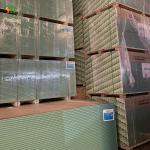
Moisture Resistant Gypsum Board Water Absorption And Mold Resistance |
|
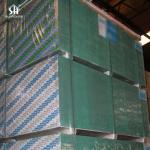
Moisture Resistant Gypsum Board Packaging Shipping And Storage Protection |
|
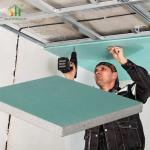
Moisture Resistant Gypsum Board Sag Resistance And Ceiling Stability |
|
Industrial Design Gypsum Board 15mm Common for Office Interiors Ceilings Walls Commercial Projects |