
Moisture Resistant Gypsum Board Water Absorption And Mold Resistance
|



|
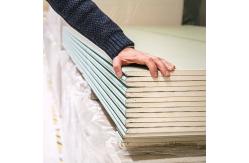
Moisture Resistant Drywall Performance Guide Moisture Resistant Gypsum Board Water Absorption And Mold ResistanceMoisture resistant gypsum boards should be evaluated through measurable water absorption data, facing performance, mold test results and intended-use documentation. A green surface, low board weight or general waterproof claim is not sufficient evidence. Buyers should distinguish total water absorption, surface water absorption and mold resistance because each property evaluates a different part of the product and has different application limitations. 01 Total Water Absorption Evaluates how much water the complete specimen absorbs under the specified test conditions. 02 Surface Water Absorption Evaluates water uptake through the tested board surface rather than through every exposed edge. 03 Mold Resistance Evaluates visible fungal growth on a tested surface under controlled laboratory conditions. 04 Exposure Control Product performance still depends on leak prevention, ventilation, drying and correct system design. Water Absorption And Mold Resistance Are Different PropertiesWater absorption testing measures how the board or its surface responds to liquid water under defined laboratory conditions. Mold resistance testing evaluates visible mold growth on a specified product surface in a warm, humid test environment. A board can perform well in one test without automatically providing the same level of performance in the other. A Low Water Absorption Result Does Not Guarantee A Mold-Free
Building Mold growth also depends on moisture duration, temperature, surface dust, organic contamination, ventilation, condensation and concealed leaks. Moisture resistant board reduces product vulnerability but cannot correct an uncontrolled source of water inside the building. T Whole Specimen Performance Total Water Absorption Total water absorption generally compares the conditioned dry mass of a test specimen with its mass after the specified water exposure. The result is normally expressed as a percentage increase in mass. It reflects the combined influence of the gypsum core, additives, facings and exposed specimen edges under the test method. S Facing-Side Performance Surface Water Absorption Surface absorption testing evaluates water uptake through a defined area of the board face. It is particularly relevant to treated paper or other water-repellent facings. The result does not automatically describe performance through cut edges, screw holes, joints or damage. M Laboratory Fungal Growth Mold Resistance Mold resistance testing exposes the specimen surface to conditions intended to support fungal growth. The reported score describes visible growth on the tested surface during the test period. It is not a guarantee for every climate, installation or service condition. D Installed System Performance Drying And Durability Installed durability depends on whether the assembly can remain dry or dry quickly after incidental moisture. Board selection must therefore be coordinated with ventilation, waterproofing, vapor control, plumbing design and finishing materials. Moisture Resistant Board StructureSimplified Moisture Resistant Gypsum Board Cross-Section Moisture And Mold Resistant Face Gypsum Core With Controlled Water-Repellent Additives And Product-Specific Formulation Treated Paper Or Product-Specific Backing Product construction varies by manufacturer. Some boards use treated paper facings, while others use fiberglass mats or alternative facers. The exact facing, core treatment and approved application should be verified in the technical data sheet. Total Water Absorption And Surface Absorption Comparison
Test Conditions Must Be Identical Before Comparing Results Water absorption results should only be compared when the test standard, specimen dimensions, conditioning, exposure time, water temperature, calculation method and product thickness are equivalent. A supplier's internal immersion test should not be compared directly with a result obtained under a standardized product method. EN 520 Type H Water Absorption ClassesUnder EN 520, moisture resistant plasterboards can be classified as Type H1, H2 or H3 according to their declared water absorption performance. A lower permitted absorption value represents a stricter Type H classification. Classification Review: The letter H should be checked together with any other board
classification letters shown in the Declaration of Performance. A
product may combine moisture resistance with density, fire,
acoustic or strength characteristics. Buyers should not remove or
rearrange classification letters when preparing quotations or
purchase orders.
ASTM Water Resistance EvaluationNorth American moisture resistant gypsum products are commonly evaluated under the applicable ASTM product specification using physical test methods for gypsum panel products. Buyers should request the exact board category, test method, result and acceptance requirement rather than asking only whether the product has an ASTM certificate.
ASTM Compliance Should Identify The Exact Product Category A general statement that the factory produces according to ASTM C1396 does not prove that every supplied board has a moisture resistant core or water-repellent facing. The report and board marking should identify the actual water-resistant product being ordered. Understanding Mold Resistance TestingMold resistance testing is designed to compare visible growth on a product surface under controlled environmental conditions. The result should be understood as a laboratory performance indicator rather than a lifetime warranty against mold in every building. 1 Specimen Conditioning Product specimens are prepared and conditioned according to the laboratory procedure before chamber exposure. 2 Mold-Supporting Chamber Conditions The chamber maintains warm and humid conditions intended to encourage fungal growth on susceptible surfaces. 3 Controlled Exposure Period Specimens remain in the chamber for the period required by the applicable test procedure. 4 Visual Surface Evaluation The tested surface is evaluated for visible mold growth using the rating method associated with the test. 5 Product-Specific Reporting The report should identify the tested product, surface, result, laboratory and any limitations. ASTM D3273 Mold Resistance RatingsGypsum panel manufacturers commonly use ASTM D3273 to report resistance to visible mold growth on product surfaces. A reported score of 10 is generally presented as the highest result on the test rating scale.
A Score Of 10 Is A Laboratory Result Not A Building Guarantee The installed wall can still develop mold when water enters through plumbing leaks, failed sealant, exterior infiltration or condensation. Dust, wallpaper adhesive, paint films and other surface materials may also support growth even when the underlying board performed well in a laboratory test. Factors That Influence Mold Risk In Real Buildings1 Moisture Duration A short humidity increase is different from a concealed leak that keeps the board damp for days or weeks. 2 Surface Contamination Dust, dirt, construction residue and organic coatings can provide nutrients for mold growth. 3 Ventilation Poor air extraction allows humidity and condensation to remain on walls and ceilings. 4 Temperature Warm surfaces and humid air can create conditions favorable to biological growth. 5 Wall Cavity Condensation Incorrect insulation or vapor control can create moisture behind an apparently dry finished surface. 6 Plumbing And Sealant Failure Small leaks at pipes, valves, baths and shower fittings can remain concealed inside partitions. 7 Decorative Finish Paint, wallpaper, adhesive and tile systems can change surface drying and biological resistance. 8 Construction Moisture Wet screeds, plaster and concrete can release moisture after the drywall system is installed. Paper-Faced And Glass-Mat Panel Comparison
Glass-Mat Board Is Not A Generic Substitute For Every MR Board Interior glass-mat panels, exterior gypsum sheathing, roof boards and tile backer products have different standards and application limits. Buyers should identify the exact product category rather than specifying only “fiberglass gypsum board.” How To Review A Water Absorption ReportManufacturer And Factory: Confirm that the report identifies the company and production
plant supplying the order. Exact Product Name: Match the board classification, product code and facing type with
the quotation and physical sample. Board Thickness: Confirm that the tested thickness covers the material being
purchased. Test Standard: Review the complete standard number, edition and specific test
method. Specimen Conditioning: Check how specimens were dried, conditioned and weighed before
exposure. Water Exposure: Review immersion depth, contact area, duration and temperature. Individual Test Values: Request each specimen result instead of reviewing only the
average. Acceptance Requirement: Compare the result with the applicable product-class limit rather
than the supplier's internal target alone. Laboratory Identification: Verify the laboratory, report number, issue date and authorized
approval. Report Limitations: Check whether the result applies only to the submitted samples and
whether product changes require retesting. How To Review A Mold Resistance ReportTested Surface: Confirm whether the face, back, glass mat, coated surface or
complete panel was evaluated. Test Method: Verify ASTM D3273 or another method required by the project. Test Duration: Check that the exposure period is clearly stated. Reported Score: Request the numerical rating and not only a general pass
statement. Control Specimen: Review whether the report demonstrates that the chamber conditions
supported mold growth during testing. Product Identification: Match the tested surface and product code with the delivered
board. Coating Condition: Determine whether the specimen was uncoated, factory-coated,
painted or otherwise treated before testing. Test Timing: Check whether the test was performed on current production or an
earlier product formulation. Laboratory Details: Verify the issuing laboratory, report number, revision and
authenticity. Claim Wording: Ensure marketing statements do not extend beyond the scope of the
laboratory result. Batch Quality Control For Water AbsorptionThird-party reports support initial product qualification, but bulk purchasing also requires factory production control. Water-repellent additive dosage, paper treatment, core density, drying and storage can vary if the process is not properly monitored. 1 Additive Dosing Water-repellent additives should be measured and recorded according to the approved formulation. 2 Facing Paper Control Paper supplier, treatment, weight and storage condition can influence surface absorption. 3 Slurry Uniformity Consistent mixing supports even distribution of water-repellent ingredients through the gypsum core. 4 Edge Formation Damaged, open or poorly formed edges can create faster paths for moisture penetration. 5 Dryer Control Inconsistent drying can affect residual moisture, paper bond and product stability. 6 Routine Sampling Testing should occur at a defined production frequency rather than only before the first order. 7 Batch Identification Test records should be linked to production dates, board markings and pallet labels. 8 Nonconforming Control Failed batches should be isolated and prevented from being mixed with approved export material. Recommended Pre-Shipment Inspection
Common Purchasing Red FlagsGreen Paper Used As Test Evidence Facing color does not prove water absorption or mold resistance. No Test Standard Stated An absorption percentage has little meaning without the test method. Surface And Total Absorption Mixed Results with different units and test purposes are incorrectly compared. H3 Marketed As H1 The supplied board may have substantially higher permitted absorption. Mold Proof Claim Laboratory resistance is exaggerated into an unlimited real-world guarantee. Score 10 Without A Report The tested product, surface, laboratory and date cannot be verified. Different Thickness Tested The report may not cover the board thickness included in the quotation. Another Factory's Report Used Product performance cannot automatically be transferred between plants. Cut Edges Ignored Intact face performance is assumed to apply to every exposed edge. Waterproof System Omitted Low board absorption is used to justify installation without required tanking. Wet Pallets Accepted Moisture resistance is incorrectly treated as permission to ship soaked boards. Formulation Changes Undisclosed Current production may not match the product tested in the report. Recommended Purchase Order RequirementsExact Product Classification: State ASTM water-resistant gypsum board, EN 520 Type H1, H2 or H3,
or the applicable destination-market classification. Water Absorption Limits: Include both total and surface absorption requirements where both
are applicable. Mold Test Requirement: State the test method, tested surface and minimum acceptable
score. Board Thickness And Dimensions: Identify the exact board size, thickness, edge type and
tolerances. Approved Application: State whether the product is for walls, ceilings, tile backing,
fire rated partitions or another defined use. Facing Type: Identify treated paper, glass mat or another approved facing
construction. Batch Testing: Require current-production water absorption results at an agreed
frequency. Product Traceability: Require manufacturer, product code, production date and batch
identification. No Unauthorized Changes: Prohibit changes to core additives, facing materials, factory or
product classification without written approval. Dry Delivery Requirement: Define wet-board rejection, packaging, container and storage
requirements. Example Purchase SpecificationsExample EN 520 Moisture Resistant Board Description Moisture Resistant Gypsum Plasterboard, EN 520 Type H1 Or H2 As Specified, Declared Total And Surface Water Absorption Within The Applicable Classification Limits, Specified Thickness And Dimensions, With Product Declaration, Test Data, Batch Identification And Manufacturer Installation Instructions. Example ASTM Moisture And Mold Resistant Board Description Moisture And Mold Resistant Gypsum Panel, Compliant With The Applicable ASTM C1396 Product Category, Water Resistance Tested Using Applicable ASTM C473 Methods, Mold Resistance Tested To ASTM D3273, Specified Thickness And Facing Type, With Product Identification, Laboratory Documentation And Batch Traceability. Professional Buyer FAQWhat Is The Difference Between Total And Surface Water Absorption? Total absorption measures water uptake by the complete test specimen, while surface absorption measures uptake through a defined board surface. They use different units and should not be treated as the same result. Is H1 Better Than H2 And H3? H1 has stricter permitted total and surface water absorption limits. However, project suitability also depends on the complete wall or ceiling system and actual water exposure. Does H1 Mean The Board Is Waterproof? No. H1 identifies reduced water absorption performance under EN 520. It does not turn board joints, cut edges and penetrations into a complete waterproof barrier. Does An ASTM D3273 Score Of 10 Mean Mold Can Never Grow? No. It indicates no visible growth on the tested surface under the specified laboratory conditions. Building leaks, condensation, dust and unsuitable finishes can still create mold risk. Can Mold Resistance Be Determined From Board Color? No. Green, blue, purple or other facing colors are not universal mold-resistance classifications. Review the product code and test report. Can A Supplier Use One Mold Report For Every Board Thickness? Only when the report or accepted product documentation clearly covers the relevant product family and surfaces. The tested product should match the board being purchased. Is A Glass-Mat Gypsum Panel Waterproof? Not automatically. Glass-mat facings can improve moisture and mold resistance, but the product must still be selected according to its intended application and complete system requirements. Can Wet Moisture Resistant Boards Be Installed After Drying? Water-exposed boards should be assessed according to manufacturer guidance. Distortion, paper separation, mold, soft edges or loss of strength may require rejection. Should Every Shipment Be Retested For Mold? Mold testing is generally used for product qualification or periodic verification rather than every shipment. Routine batch control can focus on formulation, water absorption, facing quality and traceability. What Should Be Confirmed Before Bulk Ordering? Confirm the product standard, H classification or ASTM category, total and surface absorption limits, mold test method, facing type, intended use, thickness, batch control, packaging and dry-delivery requirements. Technical Reference Framework: Moisture resistant gypsum board should be evaluated through the
applicable product standard, standardized total and surface water
absorption tests, mold-resistance testing, intended-use
documentation and factory production controls. Laboratory results
describe performance under defined conditions and should not be
extended into unlimited waterproof or mold-proof claims. Final
durability also depends on waterproofing, ventilation, leak
prevention, surface finishes, correct storage and the complete
installed system. Compare Test Data Not Only Board Color Provide the required ASTM or EN standard, H1, H2 or H3 classification, total and surface absorption limits, mold-resistance requirement, board thickness, intended application and project quantity. The product data, batch testing and export inspection plan can then be reviewed before bulk production. |
||||||||||||||||||||||||||||||||||||||||||||||||||||||||||||||||||||||||||||||||||||||||||||||||||||||||||||||||||||||
| Product Tags: moisture resistant gypsum board water resistant plasterboard with mold resistance water absorption resistant plasterboard |

|
Moisture Resistant Gypsum Board Applications And Waterproof Limitations |
|
Moisture Resistant Gypsum Board Vs Cement Board And Magnesium Board |
|
Moisture Resistant Gypsum Board Water Absorption And Mold Resistance |
|
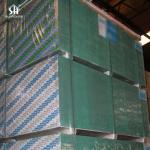
Moisture Resistant Gypsum Board Packaging Shipping And Storage Protection |
|
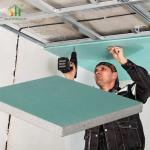
Moisture Resistant Gypsum Board Sag Resistance And Ceiling Stability |
|
Industrial Design Gypsum Board 15mm Common for Office Interiors Ceilings Walls Commercial Projects |