
Field-Deployable High Precision Geophysical Resistivity Meter with Educational Resource Package
|


Detailed Product Description
|
Geoelectric Survey Instrument Groundwater Detection Resistivity
Meter Deep Resistivity Sounding Equipment The Academic and Research Institution's Geophysical Laboratory The advancement of geoscience knowledge is propelled by rigorous field observation and experimental validation. The WDDS-3C Digital Resistivity Meter is engineered to function
as a complete, field-deployable geophysical laboratory, providing university departments, research institutes, and
government science agencies with a versatile platform for teaching,
fundamental research, and applied scientific investigation. Within an academic curriculum, the WDDS-3C serves as a central tool for experiential learning across a diverse range of disciplines. Its intuitive software interface, coupled with comprehensive teaching
resources empowers educators to seamlessly integrate cutting-edge
geophysical methods into their syllabus. For the research community, the WDDS-3C provides a flexible and powerful platform for hypothesis-driven science. Its high precision and sensitivity make it suitable for
monitoring subtle, dynamic processes in the shallow subsurface. Technical Specifications for Academic and Research Applications
|
||||||||||||||||||||||
| Product Tags: Field-Deployable Geophysical Resistivity Meter High Precision Resistivity Meter Educational Resource Package Geo Resistivity Meter |
Related Products

|
DZD-8A Multi-Function DC Resistivity Meter & Induced Polarization System for Groundwater Exploration and ERT Surveys |

|
Karst Cavity Detection System Environmental Site Investigation Tool Subsurface Contamination Detector |

|
Field-Deployable High Precision Geophysical Resistivity Meter with Educational Resource Package |
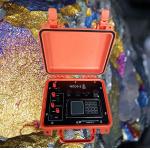
|
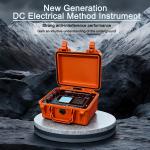
Geophysical Resistivity Meter with Depth Range 0~1000 meters Compact Size 270mm×246mm×175mm and Max Voltage 1000V |
|
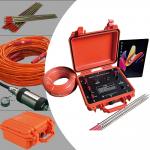
WDJD-4A Geophysical Resistivity Meter with 0-500m Prospecting Depth and Multi-electrode 2D Resistivity Imaging for High Accuracy Surveys |
|
Digital DC exciter & Underground Geophysical Resistivity Meter For Gold Finder |
Email to this supplier