
Earth Electrical Resistivity Test For Groundwater Exploration
|
|
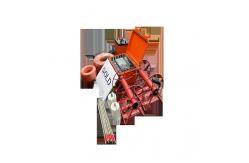
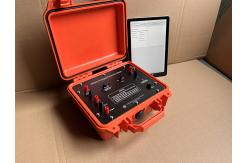
Earth Resistivity Sounding Digital Geophysical Resistivity Meter For Groundwater Exploration
Introduction:
What is geophysical resistivity meter? A geophysical resistivity meter is an instrument used to measure the electrical resistivity of the subsurface of the earth. It works on the principle that different materials have different resistivity values, and by measuring the resistance of a material to an electrical current, it is possible to determine the subsurface structure.
Technical Specifications:
Product details:
Application:
Geophysical resistivity meter has variety of applications 1. Mineral exploration 2. Groundwater exploration 3. Geotechnical investigation 4. Environmental studies 5. Archaeological investigations
The data collected by our resistivity meter can provide valuable information about the subsurface structure and can help to identify potential hazards and resources.
|
|||||||||||||||||||||||||||||||||||||
| Product Tags: Earth Electrical Resistivity Test For Groundwater Exploration Electrical Resistivity Test For Groundwater Exploration |

|
DZD-8A Multi-Function DC Resistivity Meter & Induced Polarization System for Groundwater Exploration and ERT Surveys |

|
Light Weight ≤4.2Kg Geophysical Resistivity Meter with Methodological Flexibility and Research-Grade Data Transparency |

|
Karst Cavity Detection System Environmental Site Investigation Tool Subsurface Contamination Detector |

|
Field-Deployable High Precision Geophysical Resistivity Meter with Educational Resource Package |
|
Geophysical Resistivity Meter with Depth Range 0~1000 meters Compact Size 270mm×246mm×175mm and Max Voltage 1000V |
|
WDJD-4A Geophysical Resistivity Meter with 0-500m Prospecting Depth and Multi-electrode 2D Resistivity Imaging for High Accuracy Surveys |