
MINAS A7 Servo Drives – High Precision for Global Industrial Applications
|

Detailed Product Description
|
MINAS A7 Servo Drives MINAS A7 Servo Drives represent a high-precision servo system
engineered for global industrial applications. Featuring a 27-bit
encoder and 4.0kHz response frequency, this system achieves
micron-level positioning accuracy. It supports mainstream
industrial communication protocols including EtherCAT and RTEX, and
incorporates AI automatic tuning technology for optimal parameter
adjustment across various devices—from quick setup to ultra-precise
calibration—significantly reducing commissioning time and
operational complexity. With a power range of 50W to 1kW and
compliance with global industrial standards, these servo drives
deliver stable performance, low vibration, and strong overload
capacity, making them ideal for demanding applications such as
semiconductor manufacturing, industrial robots, CNC machines, and
high-speed production lines worldwide. Core Product Features Top-tier Motion Performance Parameters Equipped with a 27-bit encoder offering 134,217,728 P/rev
resolution, the speed loop frequency response exceeds 4.0kHz, and
maximum motor speed reaches 7150 r/min, enabling millisecond-level
command response and interference correction. AI Intelligent Tuning System Built-in automatic tuning functions including precAIse TUNING and
One Minute TUNING support fully automatic debugging from simple
startup to expert-level parameter configuration, eliminating the
need for professional engineers during optimization. Multi-protocol Communication & Control Modes Compatible with mainstream industrial buses including EtherCAT,
RTEX, Ethernet/IP, and Modbus. Supports seamless switching among
position, speed, and torque control modes, and can directly connect
with sensors for closed-loop feedback, enabling specific functions
without a host controller. Full-scenario Adaptive Design Power range covers 50W-5.0kW, offering high/medium/low inertia and
low-speed high-torque models. Supports linear/DD motor control,
with a compact body that shares the same interface and flange
dimensions as the MINAS A6 series, enabling direct replacement. Intelligent Maintenance Functions Features drive data logging for quick fault tracing, supports
deterioration diagnosis and real-time online monitoring. Also
compatible with OPC UA and FTP servers, facilitating remote
operation and maintenance management. Core Product Advantages
Core Technical Parameters
Overseas Available Model List
Notes: Motor Model Examples: MSMG012A1A (100W low inertia), MHMG042A1A (400W high inertia), MGMG132A1A (1.3kW medium inertia). The specific suffix needs to match voltage and installation specifications. Power Supply: Single-phase/three-phase 200-240V AC, three-phase 380-480V AC, compliant with global standards. Industry Application Fields
Frequently Asked Questions Q1: We are using the MINAS A7 in a European factory, but the servo
keeps experiencing voltage fluctuations and occasionally shuts
down. Is this a quality issue? A1: It's most likely not a quality problem, but mainly a mismatch
with the local power grid. The three-phase voltage in Europe is
400V, while some A7 models are default 380V for the Asian market.
First, check the drive nameplate to confirm the voltage rating. If
it's 380V, you need to adjust the voltage parameter in the software
(there is a 380V/400V switching option) or install a voltage
stabilizer. In addition, the power grid interference in European
factories is usually more complex, and adding a filter on the power
input side can help stabilize operation. Q2: We want to connect the MINAS A7 to a Siemens PLC in our North
American factory, but communication keeps failing. How to handle
this? A2: The core issue is protocol compatibility. The A7 supports
EtherCAT and RTEX, while Siemens PLCs usually use PROFINET or
EtherCAT. If using EtherCAT, ensure that the bus settings of the A7
are consistent with those of the PLC (such as station number and
communication cycle); if using PROFINET, an additional protocol
conversion module is required. Also, note that the industrial bus
wiring standards in North America and Asia are different. You must
use shielded twisted-pair cables as required and ensure proper
grounding to avoid signal loss due to electromagnetic interference. Q3: Our factory in Southeast Asia is in a high-temperature and
high-humidity environment, and the MINAS A7 drive often overheats
and reports errors. How to solve this? A3: High temperature and high humidity are the main causes. First,
check if the drive's installation space meets the
requirements--there should be at least 10cm of ventilation gap
around it. Install exhaust fans or air conditioning in the workshop
to keep the ambient temperature below 40°C. Regarding humidity,
avoid installing the servo near water sources or areas with
condensation; add a waterproof cover if necessary. In addition,
regularly clean the dust on the drive's heat sink--dust
accumulation will seriously affect heat dissipation. Q4: When importing the MINAS A7 to Australia, customs held the
goods saying the certifications are incomplete. What certifications
are required for overseas markets? A4: Different regions have different mandatory certifications.
Australia requires C-tick or RCM certification; the EU requires CE
certification (including LVD low-voltage directive and EMC
electromagnetic compatibility directive); North America requires UL
or cUL certification. Mainstream A7 models have these
certifications, but you need to confirm with the supplier that the
certification documents are valid and match the model. In addition,
prepare English product manuals, certificates of conformity and
other documents, as customs often inspects them. Tip: Discontinued
or custom models may lack some certifications, so be sure to
confirm in advance before purchasing. Q5: On our custom equipment in India, the AI auto-tuning function
of the MINAS A7 seems ineffective, and the servo still vibrates
during operation. What's the problem? A5: The AI auto-tuning works best for standard equipment; custom
machines may require manual parameter adjustment. First, check if
the load inertia setting is correct--if the inertia ratio between
the load and the motor is too large, the auto-tuning will fail. You
can use the A7's inertia measurement function to get the actual
load inertia, then manually adjust the gain parameters. If
vibration persists, try enabling the vibration suppression function
in the software. If you are not familiar with parameter tuning,
contact the local Panasonic technical support for remote
guidance--they have experience with various custom scenarios. Q6: Our factory in Mexico needs to replace the encoder battery of
the MINAS A7, but we can't find the same model locally. Can we use
a substitute? A6: Do not use random substitutes, as this may cause loss of
encoder data. The encoder battery of the A7 is a special lithium
battery (model CR2450 or CR1220, depending on the motor model). You
can purchase original batteries which usually delivers within 2-3
days. In addition, it is recommended to stock up on spare batteries
when purchasing the servo, especially for factories in remote
areas. Reminder: Replace the battery within 5 minutes after
powering off to avoid losing absolute position data. Q7: The MINAS A7 in our German factory often reports a
"regenerative overload" error during frequent start-stop
operations. How to solve this? A7: Frequent start-stop generates a lot of regenerative energy,
which cannot be handled by the drive's built-in regenerative
resistor. The solution is to install an external regenerative
resistor and calculate the required resistor capacity according to
the motor power (Panasonic provides a selection formula in the
manual). If the German factory has strict energy-saving
requirements, you can also choose a regenerative converter to
recover energy back to the power grid--this not only solves the
overload problem but also saves electricity. In addition, check if
the deceleration time is set too short; appropriately extending the
deceleration time can reduce the generation of regenerative energy. Q8: Our technicians in Brazil cannot understand the English manual
of the MINAS A7. Is there a Portuguese version available? A8: Yes. Panasonic provides multi-language manuals for the A7,
including Portuguese, Spanish, German, etc. You can download them
from the Panasonic Industrial official website (select the Brazil
region). The debugging software (PANATERM) also supports
Portuguese--just change the language setting in the software. |
||||||||||||||||||||||||||||||||||||||||||||||||||||||||||||||||||||||||||||||||
| Product Tags: Panasonic MINAS A7 servo drives high precision servo drive motor industrial servo drives with warranty |
Related Products

|
1FL2 Servo Motor + S200 Drive | Compact Design & Reliable Performance |

|
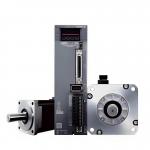
MINAS A7 Servo Drives – High Precision for Global Industrial Applications |
|
MELSERVO-J5 Servo Drive | High Precision Motion Control for Industrial Automation |

|
Σ-V Servo Drive: Cost-Effective Solution for General Industrial Automation |

|
M2BAX Servo Motor - High Precision & Energy Saving for Industrial Automation |
|
ACSM1 Servo Drive: High Precision Motion Control for Demanding Machinery |
Email to this supplier