Products Description In automatic operation mode, upon receiving fire signals
from detectors, the control panel activates audible and visual
alarms, starts exhaust fans, disconnects non‑essential power
supplies, and initiates elevator recall. Manual call points provide
a secondary activation method for personnel who identify a fire
situation. In gas-protected zones, two independent detectors must
be activated simultaneously before the pre‑discharge timer starts.
Once the delay elapses, the extinguishing agent is released, and
the discharge indicators illuminate to prevent entry. This
integrated sequence ensures rapid fire detection and safe occupant
evacuation.
| 1. Detection Layer (Sensors)The detection layer forms the sensing front‑end of the fire alarm
system. It includes smoke detectors, heat detectors, and combined
smoke‑heat detectors. Smoke detectors monitor airborne particulates and are recommended for
offices, hotels, and similar indoor spaces. Heat detectors respond to temperature increases and are suitable for
kitchens, garages, and boiler rooms. Combined detectors utilise both smoke and heat sensing to reduce false alarms,
making them ideal for hospitals and high‑value commercial premises. Beam‑type smoke detectors are designed for large open areas such as warehouses and
stadiums. Flame detectors are recommended for high‑risk locations such as fuel depots
and petrochemical facilities.
| | 2. Input Layer (Manual and Monitoring Equipment)This layer enables human intervention and integration with external
monitoring devices. It comprises manual call points, input modules,
short‑circuit isolators, and fire telephone sockets. Manual call points are installed near exits and stairwells, allowing occupants
to manually trigger an alarm. Input modules receive signals from external equipment, including water flow
switches and pressure switches. Short‑circuit isolators automatically disconnect faulty sections of the circuit,
protecting the system from widespread failure. Fire telephone sockets provide direct voice communication between firefighters and
the control centre during emergencies.
| | 3. Control Layer (System Intelligence)The control layer functions as the central intelligence of the fire
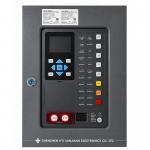
alarm system. Its primary components are the fire alarm control
panel and the gas extinguishing control panel. The fire alarm control panel processes signals from all detectors and modules, determines
alarm conditions, and coordinates activation of downstream
equipment. The gas extinguishing control panel is specifically configured for FM200, IG541, and CO₂ systems.
It supports programmable start‑up delays, manual/automatic mode
selection, and pressure feedback monitoring. Additional control devices include repeater panels for floor‑by‑floor alarm indication and fire broadcast hosts for delivering clear evacuation announcements.
| | 4. Execution Layer (Alarm and Actuation Equipment)The execution layer carries out commands issued by the control
panel. It includes alarm indicating appliances, output modules,
fire alarm bells, and gas discharge indicators. Alarm indicating appliances produce high‑intensity audible and visual signals to alert
occupants for evacuation. Output modules interface with building systems such as exhaust fans, fire
dampers, power cut‑off relays, and elevator recall controllers. Fire alarm bells offer a cost‑effective notification solution for conventional
system installations. Gas discharge indicators are installed at the entrances of protected areas. They
illuminate prior to and during agent release to warn personnel
against entry.
|
Product Advantages
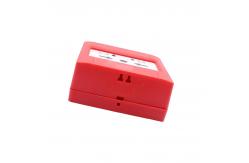
| | | J‑SAP‑M‑A62E – Addressable Manual Call PointCertified to GB 19880 Simple and reliable addressing via portable programming tool Stable communication with high noise immunity Resettable operating element for repeated use
| J‑SAP‑M‑A62KE – Conventional Manual Call PointCertified to GB 19880 Integrated two‑wire fire telephone socket Passive output contacts enable external device control via
interposing relay Resettable press button mechanism
| J‑SAP‑M‑A62E‑Ex – Addressable Intrinsically Safe Manual Call PointCertified to GB 19880, GB/T 3836.1 and GB/T 3836.4 Intrinsic safety explosion‑proof design Fully electronic addressing with on‑site reprogramming via encoder Direct control capability for external equipment Resettable operating element
|
Products Parameters
| Specifications | J-SAP-M-A62E | J-SAP-M-A62KE | J-SAP-M-A62E-Ex |
|---|
| Operating Voltage | Loop 24V | DC 24V | Loop 24V | | Operating Current | Quiescent current: <300µA
Alarm current: <2mA | Quiescent current: <0µA
Alarm current: <25mA | Quiescent current: <300µA
Alarm current: <1mA | | Dimension (with base) | 90×90×43mm (W×H×D) | 90×90×43mm (W×H×D) | 100×90×43mm (W×H×D) | | Explosion-proof Sign | - | - | Ex ib IIC T6 Gb | | Operating Environment | Operating Temperature: -10°C to 55°C
Relative Humidity: ≤ 95% (Non-condensing at 40°C ±2°C) |
|
|
|