
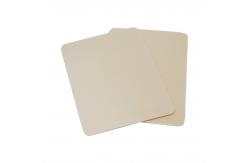
White Polypropylene Foam Sheets Insulated Panel 0.7mm 5mm PP Rolls Customized
|



|
Product Introduction
Irradiation cross-linked Polypropylene (IXPP) foam is a kind of high-performance closed cell foaming material which is made of polypropylene and various fillers, additives and foaming agents various materail .The production process includes granulation, extrusion, electron irradiation, cross linking and high temperature foaming.
Specification
IXPP Material Benefits
1. 60% less weight than ordinary material
2. Compared with PVC foamed material, the CO index of PP foamed material was improved by more than 40%.
3. It is suitable for application process with thermal stability up to 120 ℃.
4. Processing technology, high processing efficiency;
5. Compared with TPO foam, scratch resistance and compression recovery are better.
About CYG
Comany info
CYG TEFA Co., Ltd, a national high-tech company, established in December of 2002.
Now we have 2 production bases in Shenzhen, Hangzhou, with annual
production capacity of 6000 tons;
IXPP project (three years: Proposal stage - Develop - Sampling - Approved product- Small quantity supply for testing
11 employee
FQA
1.What is the difference between polypropylene and polyethylene? Monomer of polyethylene is ethylene and monomer of polypropylene is propylene.Polyethylene has a lower melting point compared to the higher melting point of polypropylene. Polypropylene is not as sturdy as polyethylene. Polypropyleneis stiffer and resistant to chemicals and organic solvents compared to polyethylene.
2.Should I use open or closed cell foam? Closed cell spray foam, being more dense than open cell spray foam, will have a higher R-value per inch. However, when you apply a typical depth of open cell -- 3 inches -- and closed cell -- 2 inches -- you are stopping approximately the same amount of heat flow.
3.Is expanding foam dangerous? Once the foam has fully expanded and dried, manufacturers say it is inert. If the chemicals are not properly mixed, they may not react fully and can remain toxic. The risks associated with the is ocyanate of Side A are relatively well-documented, but risks associated with Side B are less well understood.
4.Which is better polypropylene or polyethylene? Polyethylene has a lower melting point compared to the higher melting point of polypropylene. Polypropylene is stiffer and resistant to chemicals and organic solvents compared to polyethylene. Polypropylene is pure, non-stretching and generally more rigid than polyethylene
Production
|
||||||||||||||||||||||||||||||||||||||||||||||||||||||||
| Product Tags: polypropylene foam sheets crosslinked pp foam | ||||||||||||||||||||||||||||||||||||||||||||||||||||||||

|
PE Foam Lined Polypropylene Caps Liner Material |

|
Polypropylene Foam Sheets IXPP foam |

|
Extruded PP Foam Manufacturer Crosslinked Polypropylene Foam IXPP |

|
PP Sheet Polypropylene Foam Rolls Plastic Board 0.3mm Heat Insulation Materials |

|
White Polypropylene Foam Sheets Insulated Panel 0.7mm 5mm PP Rolls Customized |

|
5mm Thick Polypropylene Foam Sheets , PP Insulation Foam Roll Scratch Resistance |