
Automotive Optical Glass Lens Elements for ADAS Vehicle Camera Systems
|
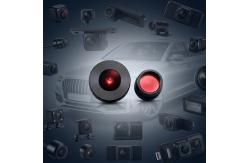
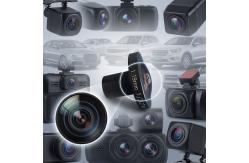
Detailed Product Description
|
Automotive Optical Glass Lens Elements for ADAS Vehicle Camera
Systems In automotive camera programs, suppliers are rarely evaluated based
on sample performance alone. Most supplier issues are exposed after
SOP (Start of Production), when optical inconsistency begins to
affect mass production yield and system calibration stability. From an ADAS procurement perspective, the real failure points are
not specifications—they are production risks such as:
These problems are typically traced back to insufficient control of
optical glass material stability and lack of system-level optical
matching. Our automotive optical glass lens elements are developed
specifically for ADAS camera programs where production stability is more critical than laboratory optical
performance. Why ADAS Procurement Teams Switch Optical Suppliers In automotive camera sourcing, supplier changes are rarely driven
by cost alone. They are driven by production risk accumulation. Based on real OEM sourcing patterns, suppliers are usually replaced
when:
In these cases, the lens is no longer a component—it becomes a
system instability source. Optical Glass Material Stability as a Production Control Parameter In ADAS systems, optical glass is not selected only for
transmission performance. It is selected as a mechanical and optical stability reference point across mass
production. Controlled Optical Glass for Automotive Consistency Our optical glass lens elements are designed to maintain stable
behavior under production and environmental variation:
This directly reduces image variation between production lots. Thermal Behavior Alignment With Vehicle Operating Conditions One of the most common ADAS failure modes is optical shift under
temperature variation. Our design considers:
This minimizes recalibration requirements in camera module
assembly. Transmission Stability for Real Driving Scenarios ADAS systems are not evaluated in static environments. They are
evaluated in dynamic lighting conditions:
Our optical glass systems are optimized to maintain:
System-Level Optical Design Matching for ADAS Cameras Each lens element is not designed as a standalone part, but as part
of an ADAS imaging system. We design based on:
This reduces integration risk during vehicle platform development. Manufacturing Control for Automotive Production Stability For ADAS programs, manufacturing variation is often more critical
than design performance. We implement:
This ensures optical consistency across long-term vehicle
production cycles. Typical Technical Parameters
Application Scenarios These optical glass lens elements are used in:
FAQ Q1: Why do ADAS camera suppliers get replaced in mass production
programs? Because optical inconsistency leads to calibration instability and
image variation after SOP, affecting system-level performance. Q2: Is optical glass really critical compared to sensor
performance? Yes. In ADAS systems, optical instability often causes more
system-level errors than sensor variation. Q3: Can this material system support wide-angle ADAS cameras? Yes. It is designed for both standard and wide-angle automotive
imaging systems with controlled distortion behavior. Q4: Do you support automotive OEM development programs? Yes. We support optical design and manufacturing for OEM and Tier 1
automotive camera suppliers. |
||||||||||||||||
| Product Tags: Automotive Optical Glass ADAS Lens ADAS Vehicle Camera Lens Elements Automotive Grade Optical Glass Lens |
Related Products

|
IR-Compatible Optical Lens Elements for Night Driving and Automotive Vision Systems |

|
Automotive Optical Glass Lens Elements for ADAS Vehicle Camera Systems |

|
Vehicle Camera Lenses for Driver Monitoring and In-Cabin Vision Systems |

|
Vehicle Camera Lenses for Surround View and Parking Systems |

|
Automotive Grade Custom Vehicle Camera Lenses for ADAS and Driver Assistance Systems |
Email to this supplier