
Sapphire Quartz 25x25x25mm Mini Optical Lens Design
|

Detailed Product Description
|
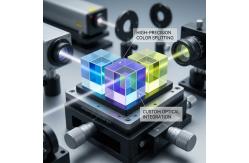
Sapphire Quartz 25x25x25mm Mini Optical Lens Design In high-power laser systems and extreme-environment sensor
payloads, traditional optical glass compounds inevitably fail due
to thermal lensing or mechanical degradation. Our Sapphire Quartz 25x25x25mm Mini Optical Lens Design services provide a strategic solution by utilizing two of the
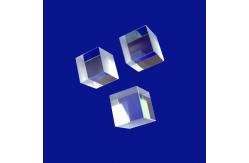
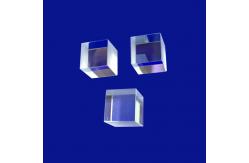
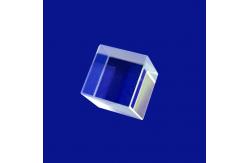
world's most resilient optical substrates: single-crystal Sapphire (Al₂O₃) and premium fused silica Quartz. Engineered within a compact 25x25x25mm Mini cubic profile, these components are custom-tailored for
high-performance Optical Lens Design applications, including beam shaping, laser turning, and robust
protective window integration where high-temperature performance
and extreme spectral clarity are mandatory. The engineering baseline for a 25x25x25mm Mini cubic lens relies on precise material matching. Sapphire delivers extreme surface hardness (Mohs 9) and exceptional thermal
conductivity, making it ideal for the exterior-facing optics
exposed to sand abrasion, high-pressure depths, or intense heat.
Concurrently, our high-purity Quartz configurations provide near-zero thermal expansion and an
exceptionally high laser-induced damage threshold (LIDT), ensuring
that when configured as an internal Optical Lens Design component, the system handles multi-kilowatt laser throughput
without spatial beam distortion or risk of catastrophic optical
cracking. Technical Specifications
Materials BK7 or other optical glass, quartz, sapphire, Ge, Si, ZnSe, CaF2
etc Length 3~100mm Width 3~100mm Height 3~100mm Length Tolerance ±0.01mm Width Tolerance ±0.01mm Height Tolerance ±0.01mm Angle Tolerance 3"~2' Irregularity ΔN=0.1~0.5 Surface Accuracy N=1~3 Surface Quality 10/5~60/40 Coating Upon request Application Area Imaging, Lighting, Laser etc Product Gallery Primary Integration Fields
Frequently Asked Questions Q1: How do you choose between Sapphire and Quartz substrates for a
25x25x25mm Mini optical block? A: The choice is dictated by your system's primary stress factor. If
your Optical Lens Design requires extreme structural strength, scratch resistance, or
operation within the Mid-Infrared band (3.0 - 5.5 μm), Sapphire is mandatory due to its Mohs 9 hardness and broad spectral
transmission. However, if your application involves high-energy
ultraviolet (UV) lasers or demands absolute geometric dimensional
stability under volatile temperature swings, synthetic fused silica
Quartz is preferred due to its superior laser damage threshold and
exceptionally low thermal expansion coefficient. Q2: What are the main challenges when processing a 25x25x25mm Mini
cube using Sapphire? A: Because of Sapphire's extreme physical hardness, standard diamond-grinding and optical
polishing tools wear out rapidly, making it difficult to maintain
precise 90° angles and flat surfaces. To resolve this, our
processing facility utilizes custom-built, ultra-rigid CNC lapping
stations equipped with high-concentration crystalline diamond
slurries. This specialized infrastructure allows us to control the
angular deviations of the 25x25x25mm Mini block down to less than 15 arc seconds while delivering a smooth,
low-roughness surface finish (Ra ≤ 0.5 nm) that meets strict
specifications. Q3: Can this Mini Optical Lens Design accommodate customized
internal coating requirements? A: Yes, absolutely. The internal splitting or reflective planes of
our Sapphire Quartz 25x25x25mm Mini cubes can be customized with high-durability thin-film coatings.
We can deposit anti-reflective (AR) coatings to maximize
throughput, high-reflection (HR) dielectric stacks for single-line
laser turning, or customized dichroic filters for color-selective
splitting. All coatings are applied using Ion-Assisted Electron
Beam Evaporation to ensure maximum density and environmental
resilience, preventing film degradation over long-term field
deployment. Q4: How does the crystalline orientation of Sapphire affect the
Optical Lens Design performance? A: Sapphire is an anisotropic birefringent crystal, meaning its
refractive index changes depending on the angle at which light
enters the crystal lattice. To prevent unwanted polarization
splitting or double-refraction (ghost images) inside your Mini Optical Lens path, we precisely align the raw crystal ingot before cutting. For
applications where polarization purity is critical, we manufacture
the cube with the optical axis parallel to the light transmission
direction—typically referred to as C-axis (0001) Sapphire. This meticulous layout completely eliminates birefringence
artifacts, ensuring clean wavefront propagation across the clear
aperture. |
||||||||||||||||||||||||||||||
| Product Tags: 25mm Optical Lens Design Mini Optical Lens Design Quartz optical glass cube prism |
Related Products

|
Color Optical Prism Dichroic Optical Acrylic Glass Composite Custom Beam Splitter Cube Prism |

|
Manufacture Optical Glass Cube Beam Splitter Glass Prism Custom X Cube Photography |

|
Customized Airport Runway Lighting Borosilicate Glass Lens Crystal Prism Custom Optical Glass X-cube Prism |

|
Sapphire Quartz 25x25x25mm Mini Optical Lens Design |

|
Custom Optical X-cube Prisms Optical BK7 Quartz Beamsplitter Beam Splitter Splitting |

|
K9 BK7 Rectangular Right Angle Optical Lens Design |
Email to this supplier