
Why Can Polyaspartic Polyurea Be Hand-Brushed?
|


|
Most of us have heard of polyurea materials. However, the majority of them are sprayed-on polyureas, which require specialized spraying equipment for application. So, what's different about Polyaspartic Polyurea? Why can it be hand-brushed?
The difference lies in their structural composition. Spray-on polyurea is an elastomeric substance formed by the reaction of isocyanate components (often referred to as Component A) with amine compounds (commonly known as Component R). The chemical reaction between these two components is incredibly swift, gelling in 5 seconds and achieving walk-on strength in just a minute. If applied manually, the material would have completed its reaction even before the application process begins. Therefore, it necessitates the use of professional equipment and must be applied under high temperature and pressure conditions.
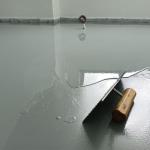
On the other hand, Polyaspartic Polyurea is the result of the reaction between secondary amine groups on the polyaspartic ester resin and isocyanates, forming a resin that contains urea bonds. Its reaction speed is slower than that of the sprayed polyurea, allowing for a longer application window. It isn't limited to two-component spray equipment and can be conveniently applied using methods like air spray, airless spray, manual brushing, and roll coating, making it more versatile.
As an industrialized high-performance resin material, Polyaspartic Polyurea has a wide range of applications. It primarily serves as the main resin for coatings, used in waterproof coatings, anti-corrosion coatings, floor coatings, industrial coatings, and more. Additionally, it can be used in seam sealants, grouting adhesives, bonding agents, casting materials, and the development of new applications continues.
Feiyang has been specializing in the production of raw materials for polyaspartic coatings for 30 years and can provide polyaspartic resins, hardeners and coating formulations. Some of our polyaspartic coating formulations: Polyaspartic Coating Feel free to contact us: marketing@feiyang.com.cn
Our products list:Polyaspartic Polyurea Resin FEISPARTIC Series
Elastic Hardener FEICURE Series
Feiyang Special Chemicals Catalog
Learn more polyaspartic knowledge: Polyaspartic FAQ
|
||||||||||||||||||||||||||||||||||||||||||||||||||||||||||||||||||||||||||||||||||||||||||||||||||||||||||||||||||||||||||||||||||||||||||||||||||||||||||||||||||||||||||||||||||||||||||||||||||||||||||||||||||||||||||||||||||||||||||||||
| Product Tags: hand-brushable polyaspartic polyurea polyaspartic polyurea application method polyurea coating brush technique |

|
What exactly is "polyaspartic polyurea material"? |

|
How is polyaspartic polyurea material widely applied in numerous scenarios? |

|
F520 – Versatile Solvent-Free Resin for High-Performance Coatings |

|
Environmental Technology Innovations in Polyaspartic |

|
Why is Polyaspartic Polyurea Recommended for Roof Waterproofing? |
|
Why Can Polyaspartic Polyurea Be Hand-Brushed? |