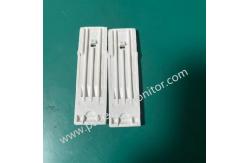
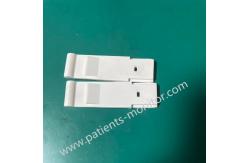
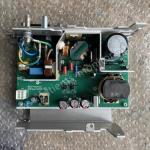
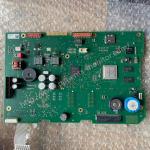
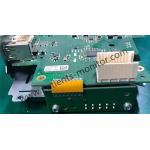
Mindray AG Module Clip Mindray AG (Anesthetic Gas) Module Plastic Clip Assembly
50278 - OEM Replacement Part
► 1. Brief Description The Mindray AG Module contains key mechanical components that
ensure the stable installation and reliable connection of the
sensor assembly on the monitor. This component is a crucial
mechanical structure part. Its main function is to securely fix the
anesthetic gas module to the monitor's main unit, preventing
loosening due to movement or vibration. Precision mold
manufacturing processes guarantee a perfect fit between the clamp,
module, and main unit, eliminating the risk of poor contact caused
by mechanical clearances.
► 2. Feature 1. Easy Disassembly: Ergonomically designed for quick disassembly
and assembly by medical staff or maintenance engineers when
calibration, maintenance, or module replacement is required. 2. Reliability: Constructed from high-strength, corrosion-resistant
engineering plastics and rigorously tested to ensure no deformation
or breakage under prolonged and frequent use, providing durable and
stable support for the module. 3. Safety: Designed with electromagnetic compatibility and
biosafety in mind, it will not interfere with monitoring signals
and poses no risk to patients or medical staff.
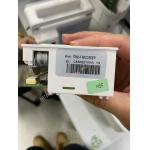
► 3. Detailed Photos
► 4. FAQ Q1: Will damage to the Clip Assembly affect monitoring results? | A1: The Mindray AG Module Clip itself does not directly participate
in gas analysis. However, if the clamp is damaged, causing the
module to be loosely installed, it may lead to poor contact at the
signal or gas interface between the module and the host, indirectly
resulting in unstable monitoring data or failure to monitor. |
Q2: How do I determine if it needs to be replaced? | A2: If the clip is found to be broken, the latch is malfunctioning
(unable to lock the module), severely deformed causing the module
to be unable to install properly, or moving parts are stuck, it is
recommended to stop using it immediately and contact for
replacement. |
Q3: Can I replace this component myself? | A3: It is recommended that this be done by qualified medical
personnel or professional maintenance engineers to ensure that the
replaced component is installed correctly and that necessary
functional tests are performed. |
► 5. Application Areas - Operating Room: During general anesthesia, real-time monitoring of
the concentration of inhaled and exhaled anesthetic gases (such as
isoflurane, sevoflurane, desflurane, etc.) and carbon dioxide (CO2)
is conducted.
- Intensive Care Unit: Monitoring respiratory function in critically
ill patients to assist in assessing their ventilation status and
depth of anesthesia.
- Recovery Room: Monitoring gas exchange during the patient's
recovery from anesthesia.
|