China Universal Testing Machine manufacturer
Hebei Better United Import And Export Co., Ltd.
Try our best,make things better. People first,Innovative Productivity,Common Solutions
5
Home > Products > Soil Testing Machine >

Stress‑Chemical Dehydration Characteristics Test System For Muddy Media

Browse Categories

Hebei Better United Import And Export Co., Ltd.

City: cangzhou

Province/State:hebei

Country/Region:china

Tel:86-151-2879-5929

Contact Person:
Ms.Gina
View Contact Details

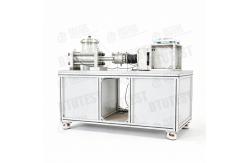
Stress‑Chemical Dehydration Characteristics Test System For Muddy Media

Dehydration cell inner diameter 80 mm
Model Number BTU-MCFA-10
Dehydration cell effective stroke ≥100 mm
Price Negotiable
Dehydration cell material Stainless steel 304
Certification SGS, INTERTEK
Place of Origin Made in China
Payment Terms L/C, D/A, D/P, T/T, Western Union
Warranty 1 year
Name Stress‑Chemical Dehydration Characteristics Test System For Muddy Media
Packaging Details Soil Testing Equipment Standard export wooden box
Delivery Time 6 days after payment
Feed cylinder volume 5000 ml
Minimum Order Quantity 1 set
Brand Name BTUTEST
Supply Ability 100 sets per month
Detailed Product Description

Stress‑Chemical Dehydration Characteristics Test System for Muddy Media

Model BTU-MCFA-10

Description

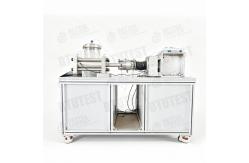
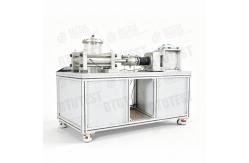
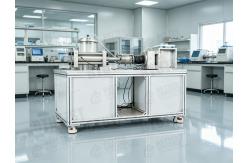
This equipment is astress‑chemical dehydration characteristics test system for muddy media (slurry pressure dehydration test apparatus), modelBTU-MCFA-10, used to study the dehydration characteristics of muddy media such as slurry, sludge, and tailings under the combined effects of mechanical pressure and chemical conditioning. The system mainly consists of a feed cylinder, a feeding loading system, a dehydration cell, a servo loading system, a dehydration weight measurement system, a data acquisition system, and corresponding software. Main function: simulates the solid‑liquid separation process of muddy media under mechanical filtration and chemical conditioning.

Test Standards (International)

  • ASTM D1987(Sludge filtration test)
  • ISO 11370(Wastewater treatment)
  • Chinese GB/T 31962(Wastewater quality standards for discharge into municipal sewers)


This equipment is a specialised test device; applicable standards may refer to solid‑liquid separation and filter press performance testing specifications.

Specification

ParameterSpecification
ModelBTU-MCFA-10
Feed cylinder volume5000 ml
Feeding loading system0‑0.9 MPa, using air compressor + precision pneumatic controller
Dehydration cell materialStainless steel 304
Dehydration cell inner diameter80 mm
Dehydration cell effective stroke≥100 mm
Dehydration cell maximum axial stress20 MPa
Servo loading systemMax. loading force 0‑200 kN, loading speed 0.00001‑10 mm/min (stepless)
Dehydration weight measurement systemRange 5000 g, accuracy 0.01 g
Pore pressure measurement system0‑20 MPa, accuracy ±0.1% FS
Software functionsSet dehydration cell inner diameter, control axial loading stress, control displacement, real‑time sensor data acquisition; includes calibration module; data saved in tgd format, convertible to txt and openable in Excel
 

Detail

  • Two‑stage loading design
    • Feeding loading system: air compressor + precision pneumatic controller (0‑0.9 MPa), used to pressurise slurry from the feed cylinder into the dehydration cell.
    • Servo loading system: 0‑200 kN mechanical loading, applies axial pressure (up to 20 MPa) to the muddy media inside the dehydration cell.
  • Dehydration cell– 304 stainless steel, corrosion‑resistant; inner diameter 80 mm, stroke 100 mm, capable of withstanding high pressure (20 MPa).
  • Dehydration weight measurement– High‑precision balance (5000 g / 0.01 g) for real‑time measurement of drained liquid mass, used to calculate dehydration rate and total water removal.
  • Pore pressure measurement– 0‑20 MPa pore pressure sensor to monitor pore water pressure changes inside the slurry during dewatering, enabling effective stress analysis.
  • Chemical conditioning provision– The system name includes "stress‑chemical", suggesting that chemical conditioners (flocculants, electrolytes, etc.) can be added to the slurry to study their effect on dewatering efficiency.
  • Software features– Calibration, parameter setting, real‑time data acquisition, data export (tgd → txt → Excel) for convenient post‑processing.

Application

  • Municipal sludge dewatering– Simulate sludge dewatering under mechanical pressure and chemical conditioning, optimise dewatering process parameters.
  • Tailings thickening– Evaluate dewatering performance of mine tailings slurry for dry stacking or backfilling.
  • Dredged sediment treatment– Dewatering tests for river and lake dredged sediments.
  • Drilling mud treatment– Solid‑liquid separation of oil/gas drilling muds.
  • Chemical conditioning studies– Investigate the effect of flocculants, electrolytes, and other chemicals on slurry dewatering efficiency.
  • Filter press simulation– Provide design parameters for plate‑and‑frame filter presses, belt filter presses, etc.

Advantages

  • Stress‑chemical coupling– Simultaneously studies the effects of mechanical pressure and chemical conditioning on dewatering, closely simulating field processes.
  • High loading force (200 kN)– Capable of simulating high‑pressure filtration, with maximum axial stress 20 MPa, suitable for difficult‑to‑dewater materials.
  • High‑precision dehydration weight measurement– 0.01 g accuracy, accurately tracking dehydration rate and total water removal.
  • Wide loading speed range– 0.00001‑10 mm/min, from slow filtration to rapid compression.
  • Pore pressure monitoring– Real‑time understanding of internal pressure dissipation in the slurry for evaluating dewatering efficiency.
  • Corrosion‑resistant material– Dehydration cell made of 304 stainless steel, suitable for saline or chemically treated slurries.
  • Automated software– Fully automatic control, convenient data export.

What To Choose

Select this system or related configurations based on testing requirements:


RequirementRecommendationReason
Study municipal sludge dewateringVery suitableStress + chemical coupling simulates filter press process
Study tailings dewateringSuitableHigh pressure (20 MPa) simulates tailings filtration
Need to add chemical conditioners (flocculants, etc.)System provision for chemical effectsConditioners can be added manually
Only need constant pressure dewatering, no chemical effectsConsider a conventional filtration test deviceLower cost
Need larger dehydration cell diameterCustomisable (consult manufacturer)Standard inner diameter 80 mm
Need higher pressure (>20 MPa)Custom higher‑pressure modelMaximum is 20 MPa
Only need dewatering rate, no pore pressure monitoringPore pressure sensor optionalCan simplify configuration
Laboratory small‑scale testing5 L feed cylinder, suitable for small batchesAdequate capacity
 

Process Flow

Example:Municipal sludge chemical conditioning + pressure filtration dewatering test


  • Sample preparation
    • Take a certain amount of raw slurry (or sludge) and measure initial water content.
    • Add chemical conditioners (e.g., polyacrylamide PAM) according to the test plan and mix uniformly.


  • Feeding
    • Pour the conditioned slurry into the feed cylinder (5000 ml capacity).
    • Use the feeding loading system (air compressor + precision pneumatic controller, 0‑0.9 MPa) to pressurise the slurry into the dehydration cell.


  • Installation and sealing
    • Ensure the sealing piston, check valve, pore pressure sensor, and drainage lines of the dehydration cell are correctly connected.
    • Place the dehydration weight measurement system (balance) under the drainage outlet.


  • Set test parameters
    • In the software, input the dehydration cell inner diameter (80 mm).
    • Set axial loading mode: stress control or displacement control.
    • Define loading sequence: e.g., constant stress 5 MPa for 30 minutes, or constant rate 1 mm/min compression to maximum stroke.
    • Set end conditions: stroke reaches 100 mm or dehydration rate falls below a threshold.


  • Start filtration
    • Start the servo loading system; the axial piston moves downward to apply pressure.
    • Software records in real time: axial force, axial displacement, pore pressure, drained liquid mass (balance).
    • Plot dewatering curves: drained mass vs. time, pore pressure vs. time, stress‑strain, etc.


  • End of test
    • Automatically stops when preset conditions are reached.
    • Unload pressure, remove the dewatered filter cake, measure final water content.


  • Data processing
    • Calculate total water removal, dewatering rate, and filter cake water content.
    • Analyse the relationship between pore pressure dissipation and dewatering rate.
    • Compare dewatering efficiency under different chemical conditioners, pressures, and loading rates.
    • Export data (tgd → txt → Excel) and generate a report.


Summary:The BTU-MCFA-10 is a stress‑chemical dehydration characteristics test system for muddy media, suitable for studying pressure dewatering of municipal sludge, tailings, dredged sediments, and other slurries. Key features include two‑stage loading (pneumatic feeding + servo pressure filtration), high‑precision dewatering weighing, pore pressure monitoring, a corrosion‑resistant dehydration cell, and fully automatic software. Maximum axial stress is 20 MPa, loading force 200 kN, and feed cylinder volume 5 L. Chemical conditioning studies can be optionally added to simulate actual filter press processes. Selection should be based on material characteristics, required pressure, need for chemical conditioning, and dehydration cell size.

Related Products
Email to this supplier
 
From:
Enter your Email please.
To: Hebei Better United Import And Export Co., Ltd.
Subject:
Message:
Characters Remaining: (80/3000)