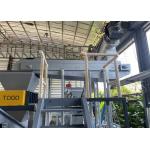
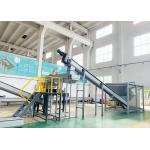
Professional Manufacturer Widely Used Organic Waste Management
Equipment
Sustainable food waste management is an ongoing issue throughout
the world. In many cases, food waste is sent straight to landfill
where it decomposes and creates harmful greenhouse gases. The
practice of disposing of organic waste to landfills also robs our
soil of an opportunity to be enriched by the nutrients contained in
organic waste. TOGO waste treatment machine is an innovative
solution that easily converts food waste into a pulp ready for
composting and use as an organic fertiliser.
The innovative waste treatment machine effortlessly transforms food
waste into recyclable organic fertilizer. TOGO offers a simple,
cost-effective way to save money and reduce your environmental
footprint. TOGO Composter is head and shoulders above other organic
waste disposal systems.
The comprehensive organic waste disposal solution is a resource
utilization and harmless treatment system of organic waste with
strong treatment capacity, advanced technology, and a high degree
of resource utilization, which can compost waste from 10 tons to
300 tons per day. Can ensure that organic waste can be treated
harmlessly and reduced more effectively, realize the fine
separation of organic waste, and ensure the stable and reliable
operation of the process production line, meet the needs of process
production and realize organic waste treatment and resource
utilization.
Why do you need a waste management system?
Waste management is an investment in the ecology as well as the
future. Soon industries that produce a lot of organic wastes like
hotels, restaurants, flight kitchens, caterers, malls, apartments,
canteens will need to start managing their own waste. If not taken
care of, food waste management can create headaches for your
business and hinder your path to progress. Our organic waste
converter serves the dual purpose of food waste management and
making a productive supplement from it. This will help you to
easily overcome your waste management woes and at the same time be
a part of our humble attempt to keep the environment clean.
Main Process: Dumping → Sorting → Discharge Auger Conveyor → Shredding →
Solid-Liquid Separation → Oil-Water Separation → Fermentation →
Deodorization → Output
Output Product: Organic Fertilizer
Process Principle:
The organic waste is put into the fermentation bin after
collection, unloading, crushing, solid-liquid separation, and
oil-water separation. High-temperature fermentation and auxiliary
heating are used to keep the temperature in the warehouse at 65 ℃ ~
75 ℃, and the fresh air required for fermentation is always
maintained in the warehouse through gap stirring.
The energy released in the fermentation process is treated by the
deodorization system and discharged in the form of gas and water
vapor, which effectively eliminates odor pollution and avoids
secondary pollution in the process of treating organic waste
pollutants. After simultaneous high-temperature and rapid
fermentation, only about 10% of non-toxic and harmless organic
fertilizer substrate is left. The fertilizer can be used as an
organic soil conditioner to modify the soil, improve the
utilization rate of chemical fertilizer, fertile soil, increase
production.
The processing time of the whole fermentation process is about 24
hours, and the reduction rate is more than 90%. There is no need to
add other organic matter and nutrient solutions.
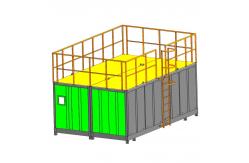
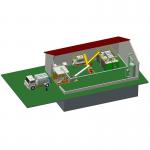
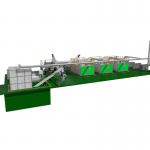
The working process of the system is as follows:
- The dump truck dumps the organic waste into the discharge hopper.
- The organic waste pours into the moving belt and goes forward, the
operator can sort the foreign such as metal, plastic bag out.
- The shredder machine will cut the organic waste, then the shredded
organic waste will convey to the dewatering squeezer, extrusion
dehydration.
- Finally, the shredded and dewatered organic waste will fall off to
the auger conveyor, then the auger conveyor will convey the solid
organic waste to the fermenter to do digestion.
| NO. | Item | Parameter | | 1 | Model | TG-CC-10T | | 2 | Rated Capacity | ≥10T/Day | | 3 | Waste Reduction Rate | ≥90% | | 4 | Ambient Temperature | -10~40℃ | | 5 | Electrical System (Installation of Independent Meter) | 380V | | 6 | Processing Cycle | 24H | | 7 | Processing Method | Microbial Fermentation and Hot Air Drying | | 8 | Control System | Automatic Control System | | 9 | Heating Mode | Electric Heating, Water Heating | | 10 | Fermentation Temperature Control Range | 65~75℃ | | 11 | Feeding Mode | Continuous or Intermittent | | 12 | Noise | 65dB | | 13 | Coverage of Facilities | Provided on site | | 14 | Main Material | 304 stainless steel is used for the main body and the part
contacting materials. | | 15 | Host Panel | Stainless steel, no obvious dents, scratches, and burrs, no sharp
edges and corners. |
|