China Geophysical Exploration Instrument manufacturer
Chongqing Gold Mechanical & Electrical Equipment Co.,Ltd
Professional, Sophisticated and Innovative
4
Home > Products > Borehole Inspection Camera >

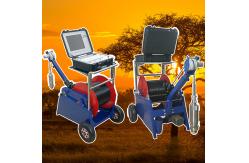
Geothermal Exchange Well Cam Mining Borehole Scanner

Browse Categories

Chongqing Gold Mechanical & Electrical Equipment Co.,Ltd

City: chongqing

Province/State:chongqing

Country/Region:china

Tel:0086-159-2263-6015

Contact Person:
Ms.Michelle
View Contact Details

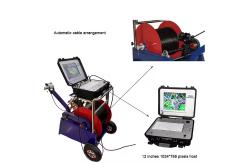
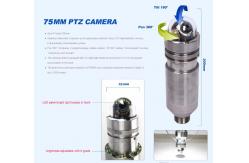
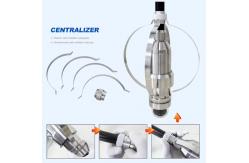
Geothermal Exchange Well Cam Mining Borehole Scanner

Storage 32GB USB
Payment Terms L/C, D/A, D/P, T/T, , MoneyGram
Delivery Time 5-8 working days
Depth Accucay 0.01m
Product Name Borehole Camera
Certification ISO/CE
Model Number GYGD-IV
Packaging Details Standard exporting package
Warranty Time 1 year
Brand Name GOLD
Display screen 12 inch OLED dispaly screen
Price Negotiated
Working Depth up to 1000m
Place of Origin China
Supply Ability Enough Stock
Minimum Order Quantity 1 set
Detailed Product Description

GYGD-IV Rotary Borehole Inspection Camera: Quantifying Subsurface Liability for Premium Setting and Loss Prevention

Insurance underwriters for energy, water, and mining risks need more than claims history. They need direct evidence of asset condition to accurately price premiums and recommend loss control measures. The GYGD-IV Rotary Borehole Inspection Camera provides objective, repeatable, and auditable condition data that transforms underwriting from guesswork to risk modeling. For property and casualty actuaries, risk engineers, and loss control specialists, this camera is a liability quantification tool.

Condition-Based Risk Scoring
The GYGD-IV’s software includes an underwriting module that converts visual observations into a numerical risk score on a scale from zero (minimal risk) to one hundred (imminent failure). The score is calculated using a proprietary algorithm that weights factors:

  • Crack density and maximum length (higher for brittle materials)

  • Corrosion pit depth and clustering (higher for active pitting)

  • Scale thickness and coverage (medium risk for water flow reduction)

  • Screen open area remaining (high risk for sand production)

  • Casing ovality or dent depth (high risk for collapse)

  • Evidence of previous repairs (depends on repair quality)

The algorithm is calibrated against historical failure databases and can be customized for specific asset types (water well, oil well, geothermal borehole, foundation pile). The risk score provides underwriters with a consistent metric for comparing risks across different insureds.

Reserve Estimation for Potential Losses
For a well that shows moderate risk, the GYGD-IV can estimate the likely cost of failure based on the specific failure mode indicated by the inspection. A crack with active propagation suggests a potential collapse; the system estimates the cost of fishing the stuck probe, removing the damaged casing, and re-drilling. A screen with forty percent open area remaining but active scaling suggests a gradual yield decline; the system estimates the cost of chemical cleaning plus lost production during downtime. These risk-adjusted loss estimates help underwriters set adequate reserves.

Loss Prevention Recommendations
The GYGD-IV’s underwriting module generates specific, prioritized loss prevention actions that the insured can take to reduce risk and potentially lower premiums. For a well with high crack density, the recommendation might be “install a casing patch within ninety days.” For a well with severe scaling, “schedule mechanical cleaning within sixty days.” For a well with early-stage corrosion pitting, “install cathodic protection and re-inspect in twelve months.” Underwriters can make coverage contingent on completing these actions, creating a positive feedback loop of risk reduction.

Historical Benchmarking Against Portfolio
When the GYGD-IV is used across multiple wells in an insured’s portfolio, the software can benchmark each well against the portfolio average. A well with a risk score of seventy-five when the portfolio average is forty-five is clearly a high-risk outlier deserving of higher premium or immediate attention. Conversely, a portfolio with consistently low risk scores may qualify for fleet discounts. This portfolio view supports account-level underwriting decisions.

Third-Pury Data Sharing for Reinsurance
For large risks that require reinsurance, the GYGD-IV’s data can be anonymized and aggregated for sharing with reinsurers. The underwriting module provides a compliance certificate stating that the data collection followed standardized protocols (the GYGD-IV’s built-in inspection script). Reinsurers can use this data to calibrate their own pricing models, confident in its consistency and reliability.

Table: Underwriting Specifications


Underwriting FeatureGYGD-IV Capability
Risk Score AlgorithmZero to one hundred scale, calibrated to failure databases
Loss Reserve EstimationCost of failure based on observed failure mode
Loss Prevention ActionsSpecific, prioritized recommendations for risk reduction
Portfolio BenchmarkingCompares each asset to portfolio average
Reinsurance Data SharingAnonymized, protocol-compliant data export
Audit Trail for ClaimsTimestamped, depth-referenced evidence for loss adjustment
Insured Compliance TrackingLog of completed loss prevention actions


Product Tags: geothermal borehole inspection camera   mining borehole scanner   well cam with warranty  
Related Products
Email to this supplier
 
From:
Enter your Email please.
To: Chongqing Gold Mechanical & Electrical Equipment Co.,Ltd
Subject:
Message:
Characters Remaining: (80/3000)