
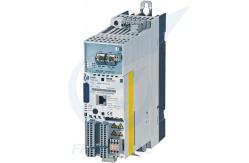
8400 StateLine Frequency Converter Inverter
|
Detailed Product Description
|
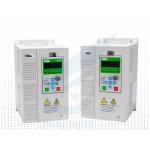
8400 StateLine Frequency Converter Inverter The 8400 StateLine inverter is designed for speed control in simple
motion control applications. Its design complies with the
requirements of the eco-design directive EN IEC 61800-9-2, making
it suitable for various industrial applications including
horizontal material handling equipment, palletizers
(intralogistics), extruders (plastic industry), and filling systems
(packaging industry). Product Highlights
Technical Specifications
Available Models
Industry Applications Intralogistics & Warehousing Core Scenarios: German Automotive Parts Warehouse: Horizontal conveyor drives (3.0kW E84AVSCE3024SXS). Profinet
integration syncs with warehouse management systems, ensuring
smooth cargo flow during peak hours. The compact DIN rail design
saves cabinet space, and "VFC Eco" cuts energy costs for 24/7
operation—perfect for high-throughput logistics centers. U.S. E-commerce Fulfillment Center: Semi-automatic palletizer drives (2.2kW E84AVHCE2224SX0). 480V
compatibility matches North American grids, and flying restart
handles sudden power dips without cargo jams. A customer in Chicago
uses 15 units to power their sorting line, reducing downtime by
30%. Malaysian Small-Scale Warehouse: Mini conveyor drives (0.75kW E84AVSCE7512SX0). Single-phase 230V
fits local small workshops, and simple speed control adapts to
fragile goods (e.g., electronics) to avoid damage. No complex
programming—staff learned to operate it in 1 hour. Plastic & Rubber Industry Core Scenarios: Italian PVC Pipe Factory: Small extruder drives (3.7kW E84AVSCE3714SB0). Stable V/F control
ensures uniform pipe thickness, and integrated braking management
prevents material buildup during shutdowns. A plant in Milan
reports 15% energy savings vs. old inverters, thanks to "VFC Eco". Indian Film Extrusion Plant: Medium extruder drives (5.5kW E84AVHCE5514SB0). 415V tolerance
adapts to unstable local grids, and motor temperature monitoring
prevents overheating during extended production runs. Works
seamlessly with locally sourced motors—no compatibility issues. Dubai Plastic Container Factory: Heavy-duty extruder drives (15kW E84AVHCC1534SX0). High overload
capacity (150% for 60s) handles startup shocks, and dust-resistant
design (when installed in cabinets) suits desert factory
environments. Runs 24/7 without maintenance for 8+ months. Packaging Industry Core Scenarios: Dutch Dairy Plant: Filling system drives (1.5kW E84AVTCE1524SX0). Closed-loop speed
control ensures accurate filling of yogurt cups (±1ml tolerance),
and Profinet connectivity links to production line monitoring. Easy
parameter adjustment for different cup sizes—saves 2 hours of
changeover time per shift. U.S. Canning Factory: Conveyor and capping machine drives (7.5kW E84AVTCE7514SB0). 480V
compatibility and phase-loss protection prevent line halts during
peak production. A customer in Ohio uses 20 units, reporting zero
unplanned downtime in 6 months. Australian Craft Beer Brewery: Bottling line drives (1.1kW E84AVSCE1134SX0). Compact size fits
small brewery setups, and simple I/O configuration integrates with
manual bottling stations. Staff appreciate the user-friendly
interface—no need for specialized technicians. Key Adaptation Highlights
Frequently Asked Questions Q: Our European factory's inverter connects to Profinet but
frequently disconnects with error "COMM01". We checked the network
cable and it's fine—how to fix this? A: This is most likely due to IP address conflict or overly short
communication timeout. First, confirm the inverter's IP doesn't
duplicate with other factory devices (test via ping). Then adjust
the communication timeout to over 3 seconds using parameter P00100.
A food factory in Hamburg, Germany had the same issue—after
adjusting the IP and timeout, disconnections dropped from 5 times a
day to zero. Give it a try. Q: The 5.5kW model in our U.S. workshop triggers "OH2" overheating
alarm after 1 hour of operation. The equipment room ventilation is
decent—could the inverter itself be faulty? A: It's not necessarily a fault. More likely, the cooling vents are
blocked by dust or the installation is too dense. This inverter
uses natural cooling (for ≤11kW models). If mounted tightly against
other devices, heat can't dissipate. Open the control cabinet, blow
dust off the heatsink with compressed air, and leave at least 5cm
gap between the inverter and adjacent equipment. A canning factory
in Chicago had the same problem—after cleaning, it ran continuously
for 8 hours without alarming, much easier than replacing parts. Q: Our 0.75kW single-phase model in a Southeast Asian small
workshop shows "PH1" error and won't start. What's wrong? A: "PH1" indicates single-phase input phase loss—not an inverter
failure. Possible causes: loose live/neutral wires or local grid
voltage below 200V. Check if the terminal connections are tight,
then measure the input voltage with a multimeter. Rural grids in
Southeast Asia are unstable; sometimes voltage drops to 180V,
triggering the error. A small printing shop in Malaysia had the
same issue—restarting worked after tightening the wires. Q: The 3.7kW model driving an extruder in our European plastic
factory frequently triggers "OC1" overcurrent alarm on startup. The
motor is new and wiring is correct—how to resolve? A: This is caused by excessive startup current. Extruders have
heavy startup loads, and the default acceleration time is too short
(10 seconds) to trigger protection. Adjust parameter P00200
(acceleration time) from 10s to 20-30s, then enable automatic
torque boost (set P00300 to "Auto"). A PVC pipe factory in Milan
used this inverter for extruders and had the same problem—after
adjusting parameters, no more errors and smoother startups. Q: Our 2.2kW model for a palletizer in a Canadian warehouse uses
analog signals for speed control, but the speed fluctuates. What's
the issue? A: This is likely due to unshielded analog cables or excessive
wiring length causing interference. The inverter's analog input has
average anti-interference capability—using regular wires or cables
over 10 meters long easily causes fluctuations. Replace with
shielded cables, ground the shield layer, and separate analog/sign
power cables by at least 10cm. An e-commerce warehouse in Toronto
had the same problem—speed stabilized within 1% error after
switching to shielded cables. |
||||||||||||||||||||||||||||||||||||||||||||||||||||||||||||||||||||||||||||||||||||||||||||||||||||||||||||||||||||||||||||
| Product Tags: Lenze 8400 StateLine frequency inverter frequency converter with warranty industrial motor drive inverter |
Related Products
|
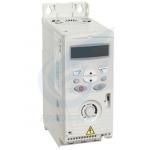
22kW Variable Frequency Drive Inverter ACS355 Three Phase Frequency Converter |
|
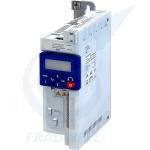
I510 Cabinet Frequency Converter Inverter 0.25kW-15kW Frequency Drive Inverter |
|
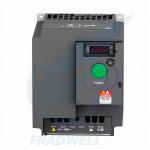
ATV310 Ac Frequency Converter 0.37kW-30kW VFD Inverter 3 Phase |
|
NE200/NE300 AC Frequency Converter VFD Inverter Drive 0.4KW-900KW |

|
FR-E800 Networked Vector Frequency Converter 0.4-22kW VFD Single Phase To Three Phase |
|
M701 High Performance Inverter 200V-690V Rock Solid In Harsh Environments |
Email to this supplier