Industrial Mayonnaise Production Process1. Raw Material Preparation- Ingredients:
- Vegetable oil (70-80%), egg yolk (or pasteurized liquid egg yolk),
vinegar, water, salt, sugar, mustard, stabilizers (e.g., xanthan
gum).
- Equipment:
- Liquid Ingredient Storage Tanks: Pre-measured water, vinegar, and egg yolk are stored at
controlled temperatures.
- Dry Ingredient Mixer: Blends salt, sugar, and stabilizers uniformly.
2. Premixing & Emulsification- Process:
- Phase 1 (Aqueous Phase): Egg yolk, vinegar, water, and dry ingredients are mixed in a high-shear mixer (e.g., IKN Triple-Stage Homogenizer) to form a uniform base.
- Phase 2 (Oil Phase): Vegetable oil is gradually added to the aqueous phase under
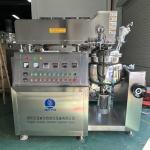
vacuum in a vacuum emulsifying tank (ER2000 Vacuum Emulsifier) to prevent air incorporation.
- Critical Parameters:
- Temperature: Maintained at 10–15°C to avoid oil crystallization.
- Shear Rate: 8,000–12,000 rpm for optimal droplet size reduction.
3. Homogenization- Equipment:
- High-Pressure Homogenizer (e.g., JPS Series Homogenization Unit): Further reduces oil droplet size (<5 μm) to stabilize the
emulsion.
- Quality Check:
- Viscosity and pH (target: 3.6–4.2) are monitored in real-time using
inline sensors.
4. Pasteurization & Cooling- Equipment:
- Plate Heat Exchanger: Heats mayonnaise to 65–70°C for 2–3 minutes to eliminate
pathogens.
- Scraped Surface Cooler: Rapidly cools the product to 10–15°C to preserve texture.
5. Filling & Packaging- Equipment:
- Automated Filling Machine: Dispenses precise volumes into jars, pouches, or tubes.
- Labeling & Capping System: Integrates date coding and batch tracking.
- Packaging Materials: Glass jars, PET bottles, or laminated foil pouches (oxygen
barrier properties).
6. Quality Assurance- Tests:
- Microbial Analysis: Total plate count, yeast/mold detection.
- Texture Analysis: Back-extrusion test for firmness and spreadability.
- Shelf-Life Testing: Accelerated stability trials (e.g., 30°C/75% RH for 90 days).
Key Equipment Highlighted in the Process:- Vacuum Emulsifiers (e.g., ER2000 Series): Prevent oxidation and ensure smooth
texture.
- High-Pressure Homogenizers: Critical for emulsion stability.
- Automated Filling Lines: Ensure hygiene and throughput (up to 10,000 units/hour).
Sustainability Considerations:- Waste Reduction: Reclaim oil/water from CIP (Clean-in-Place) systems.
- Energy Efficiency: Heat recovery from pasteurization for preheating ingredients.
|