In fields like small component manufacturing, precision hardware
processing, and light industrial part production, machining tasks
such as end face milling, drilling, countersinking, and tapping
often require multiple setups—leading to low efficiency and
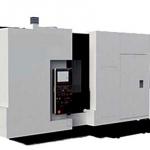
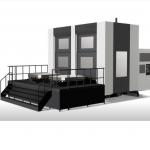
inconsistent dimensions. Our Horizontal Processing Drilling and Winching Machine solves this by completing all these processes in one
clamping, leveraging mechatronic design and CNC control to deliver
high precision and consistency for small-to-medium workpieces. This machine’s strengths address the unique needs of multi-process
small-part machining, balancing efficiency, precision, and
usability: - One-Clamping Multi-Process: Cut Setup Time to Zero
It integrates end face milling, drilling, backside countersinking,
and tapping into a single clamping. For example, when processing a
precision hardware bracket, it can first mill the front end face
(ensuring flatness), then drill a through-hole, countersink the
backside of the hole (for screw head placement), and finally tap
internal threads—no need to reposition or transfer the workpiece.
This reduces processing time by over 40% compared to traditional
multi-machine operations. - Mechatronic Design + CNC Feed: Stable High Precision
- Adopts ball linear guides with high rigidity and wear resistance,
paired with CNC-controlled slide feeding. The X/Y/Z axis travels
(500mm/350mm/450mm) ensure precise positioning, while key
performance indicators like maximum drilling diameter (φ25) and
maximum tapping diameter (φ20) meet most small-to-medium part
requirements.
- The ball screw drive minimizes backlash, ensuring consistent
machining dimensions—critical for batch production of parts like
electronic component housings or small mechanical fittings, where
size uniformity directly affects assembly.
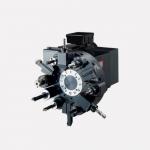
- 6-Spindle Turret Head: Fast Tool Switching
The turret head is equipped with 6 pivot shafts, and tools connect
via ER40 snap rings—allowing quick switching between milling
cutters, drills, countersinks, and taps. For batch processing of
parts requiring 4-5 tools, tool change time is reduced by 60%
compared to manual tool swapping, avoiding errors from repeated
tool setting and improving production rhythm. - User-Friendly Design: Low Operational Threshold
Features a reasonable structural layout and easy-to-operate
controls, with volumetric automatic lubrication for the
machine—eliminating the need for manual lubrication and reducing
maintenance workload. Even operators with basic CNC knowledge can
master it quickly, making it suitable for small workshops or
production lines with limited skilled labor.
This machine is not designed for large or ultra-heavy workpieces;
it excels in machining small-to-medium precision parts across light
industry, hardware, and electronics: - Precision Hardware Manufacturing: Small Mechanical Fittings
Processes small brackets, connectors, and fastener bases—completing
end face milling (to ensure assembly flatness), drilling (for
installation holes), and tapping (for thread connections) in one
clamping. The machine’s high size consistency ensures that
batch-produced fittings can be interchanged, reducing assembly
issues. - Electronic Component Industry: Housing & Bracket Machining
Handles aluminum or plastic electronic component housings (e.g.,
sensor housings, small controller shells). It mills the housing end
face (for sealing), drills wiring holes (φ5-φ20), and taps mounting
threads (φ8-φ20)—ensuring the holes align with internal components
and the housing fits tightly with covers. - Light Industrial Part Production: Daily Hardware & Auto Small
Parts
Manufactures small auto parts (e.g., small sensor brackets,
interior fitting bases) and daily hardware (e.g., small hinge
bases). The 320×320mm rotary worktable can clamp multiple small
parts at once for batch processing, while the servo feed motor
(130SY series) ensures stable cutting—suitable for mass production
with high efficiency. - Instrument & Meter Industry: Precision Component Machining
Processes small precision parts for instruments (e.g., meter
pointer shafts, small gear bases). The machine’s high precision
(enabled by ball linear guides and CNC control) ensures the
coaxiality of holes and the flatness of end faces, meeting the
strict accuracy requirements of instrument operation.
Every parameter of Model YCWJ400 is optimized for small-to-medium
part machining, balancing precision, efficiency, and practicality: - Batch Production Efficiency: One-clamping multi-process and batch clamping on the rotary
worktable enable daily output of 500-800 small parts—doubling
efficiency compared to traditional processing.
- Cost Savings: Integrates 4+ processes into one machine, replacing separate
milling, drilling, and tapping machines—saving 50% of equipment
investment and 30% of workshop space.
- Quality Consistency: CNC control and precise drive systems reduce batch part size
deviation to ±0.02mm, lowering scrap rates from 8-10% (manual
processing) to ≤2%.
For special small-part machining requirements, we offer targeted
customizations: - Tool Configuration: Add a tool length detector for ultra-precise tool setting
(suitable for micro-part machining).
- Worktable Upgrade: Replace with a pneumatic clamping worktable for faster workpiece
clamping (ideal for high-volume production).
- Control System Optimization: Adjust CNC parameters to match specific materials (e.g.,
high-speed drilling for aluminum, low-speed cutting for stainless
steel).
Contact our team to request sample processing tests (we can machine
your small-part samples) or detailed operational
demonstrations—we’re committed to optimizing your small-to-medium
precision part machining workflow. |