Product Overview
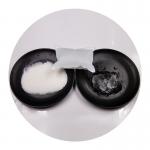
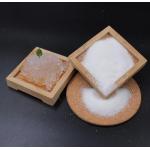
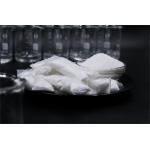
Industrial Sodium Acrylate Superabsorbent Polymer (SAP) is a highly
efficient water-absorbing material capable of rapidly absorbing and
retaining large quantities of liquid relative to its own weight.
Designed for industrial applications, this polymer forms a stable
gel upon contact with water, making it ideal for liquid control,
solidification, and moisture management.
It is widely used in industries such as waste treatment, mining,
agriculture, construction, and packaging due to its reliability,
cost-effectiveness, and adaptable performance under various
environmental conditions.
Key Features
- Exceptional Absorption Capacity
Absorbs up to several hundred times its own weight in deionized
water. - Rapid Absorption Speed
Quickly transforms liquid into gel, reducing spill risks and
improving efficiency. - Strong Liquid Retention
Maintains absorbed liquid even under pressure, minimizing leakage. - Wide Application Versatility
Suitable for wastewater treatment, sludge solidification,
industrial spill control, and more. - Customizable Performance
Can be modified to perform under different salinity levels, pH
ranges, and temperatures. - Good Thermal and Chemical Stability
Performs reliably in demanding industrial environments. - Non-Toxic and Safe Handling
Designed for safe industrial use with minimal environmental impact.
Typical Applications
- Industrial wastewater and sludge treatment
- Oil & gas drilling fluid solidification
- Mining tailings management
- Cable water-blocking materials
- Concrete curing and water retention
- Agricultural water retention
FAQ
1. What is the absorption capacity of this product?
Typically, it can absorb 200–300 times its weight in deionized
water, depending on the grade.
2. Does saltwater affect performance?
Yes, absorption capacity decreases in saline or high-ion solutions,
but customized grades can improve performance.
3. Is it environmentally friendly?
The product is non-toxic and safe for industrial use. Eco-friendly
or biodegradable versions can be developed upon request.
4. How should it be applied?
It can be directly mixed with liquid, added into sludge, or used as
part of a composite system depending on the application.
5. Can it be reused after absorption?
No, once the polymer forms a gel after absorbing liquid, it is
generally not reusable.
6. What are the storage conditions?
Store in a dry, ventilated environment, away from moisture and
direct sunlight.