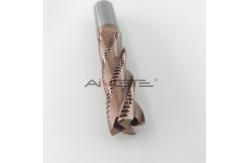
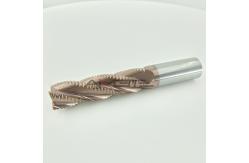
AMG's TiSiN coated rough machining milling cutter is
high-performance solid hard alloy tool designed specifically for
efficient rough machining in the automotive industry. The cutting
tool adopts advanced bronze colored nano coating, combined with
ultra-fine particle hard alloy substrate, which has excellent wear
resistance, thermal stability and cutting efficiency, especially
suitable for mass production of automotive parts with strict
requirements for surface consistency and tool life.
This milling cutter maintains stable performance in high load and
high-speed machining environments, effectively improving machining
efficiency, reducing replacement frequency, and helping enterprises
achieve high-quality and high-efficiency production goals.
Applications
Widely used for rough machining of automotive parts such as engine
housings, chassis structures, mounting brackets, and transmission
casings. Compatible with variety of metals including carbon
steel, alloy steel, ductile iron, and aluminum alloys.
Specification Table
| Parameter | Value |
|---|
| Tool Diameter (D) | Φ16 / Φ20 / Φ25 mm |
| Flutes | 4 / 6 / 8 flutes |
| Overall Length (L) | 75 / 100 mm |
| Shank Diameter (d) | Φ16 / Φ20 mm |
| Coating Type | Bronze-colored nano coating |
| Material | Ultra-fine grain solid carbide |
Working Principle
This roughing end mill uses optimized flute geometry and cutting
angles combined with a high-hardness bronze coating to maintain
chip evacuation and cutting strength under high feed and depth
conditions. It reduces spindle load, increases metal removal rates,
and ensures consistent performance on high-speed CNC machines.
Key Advantages
Tailored for Automotive Parts: High removal rate and suitable for
batch processing
Thermal Resistance: Coating ensures stability under high
temperatures
Enhanced Chip Evacuation: Prevents chip clogging and tool breakage
Smooth Surface Finish: Provides an ideal surface for subsequent
finishing
Multi-Material Compatibility: Suitable for steel, iron, and
aluminum alloys
FAQ
Q1: What auto parts is this tool suitable for?
A1: It’s ideal for rough machining of engine blocks, casings, and
steering components.
Q2: How to extend the tool life?
A2: Use proper coolant systems, optimize cutting parameters, and
check tool wear regularly.