
ISO 6502 Humanized Rubber Viscosity Measuring Instruments
|
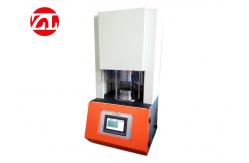
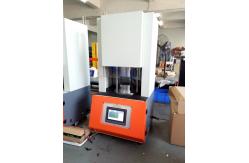
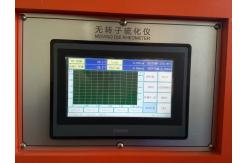

Detailed Product Description
|
ISO 6502 Humanized Rubber Viscosity Measuring Instruments Applications This instrument is designed according to GB/T16584 standards for
testing vulcanization characteristics of rubber using no-rotor
rheometer methodology. It complies with ISO 6502 standards and can
measure critical parameters including T10, T30, T50, T60, and T90
according to Italian standards. The machine tests unvulcanized
rubber characteristics to determine optimal vulcanization time.
Featuring imported intelligent digital temperature controllers for
easy adjustment, wide temperature range, high accuracy, and
excellent stability and reproducibility. Computer-controlled
operation enables data storage, printing, and software-based curve
comparison and amplification. Main Functions Computer-controlled operation allows direct parameter setting and
control of vulcanizer test parameters. Real-time display of
vulcanization and temperature curves with test result storage.
Capable of comparing different test results displayed in multiple
colors for analysis. Single-chip microcomputer control system includes host, temperature
measurement, temperature control, data acquisition and processing,
sensors, and electrical interlocking components. The temperature
control circuit features automatic tracking of power grid and
ambient temperature changes with automatic PID parameter correction
for rapid, precise temperature control. Data acquisition and
electromechanical chain systems automatically detect torque signals
during rubber vulcanization, displaying temperature and set values
in real time. Automatic processing, calculation, and printing of
vulcanization curves and process parameters after vulcanization
completion. Key Features
Operating Principle Rubber samples are placed in nearly entirely enclosed mold cavities
maintained at test temperature. The mold cavity consists of two
parts, with the lower part performing small linear reciprocating
movements (swing oscillation). Oscillatory shear produces specimen
strain, and the reaction torque of the mold cavity is measured.
This torque depends on the rubber's shear modulus. As curing
progresses, shear modulus increases, and the computer displays and
records torque in real time. When torque stabilizes or reaches
maximum values, a torque-time curve (vulcanization curve) is
generated, with curve shape dependent on test temperature and
material characteristics. Technical Specifications
|
||||||||||||||||||||||||||||||||||
| Product Tags: ISO 6502 Viscosity Measuring Instruments Humanized Viscosity Measuring Instruments Rubber Viscometer Instrument |
Related Products
|
Precision Automatic Water Drop Angle Tester Contact Angle Measuring Instrument |
|
Contact Angle Measuring Instrument/Contact Angle Goniometer/Contact Angle Measurement |
|
DSC-100C DSC-600 DSC High Precision Differential Scanning Calorimeter with ASTM E794 ISO11357 Standars |

|
Thermogravimetric Analysis Tga Thermal Gravimeter Tg Thermal Gravimeter Tga Manufacturer |
|
DSC-100 Differential Scanning Calorimeter Differential Scanning Calorimetry |

|
DIN 53516 ISO 4649 DIN Abrasive Tester |
Email to this supplier