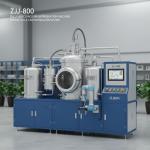
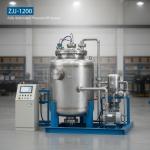
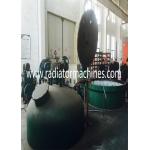
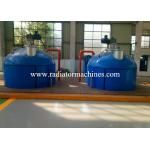
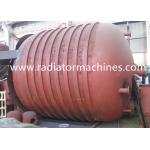
D1000 H1400 Vacuum Impregnation Equipment for Aluminum
Castings Sealing porous castings
Introduction
Vacuum impregnation is an effective technology used to solve
leakage problems in aluminum castings. By pressurizing a sealant
into the porous areas of castings and curing it, the process
ensures that the castings are sealed and capable of holding liquids
or gases. This method is widely used in industries like automotive,
military, and electronics, providing an ideal solution for
improving the integrity and durability of aluminum castings.
Application
Vacuum impregnation technology is essential for aluminum castings
that are prone to porosity, leading to leakage and reduced
performance. The process is ideal for:
Sealing of porous aluminum castings
Leakage repair in castings
Improving insulation properties of electrical components
Pretreatment for galvanizing and plating
By sealing voids within the aluminum material, vacuum impregnation
ensures that components are leak-proof and meet industry standards
for performance and reliability.
Vacuum Impregnation Process
The vacuum impregnation process involves several stages, each
designed to ensure the optimal application of sealant and thorough
cleaning of castings. Below is an outline of the process:
Impregnation Tank
The parts are loaded into a basket, which is then submerged in the
impregnation tank. A vacuum is created, reducing pressure to
-0.099Mpa, and maintained for 2 minutes. The resin is drawn into
the aluminum castings to seal the porous areas. The resin level is
controlled, ensuring full penetration for 10 minutes.
Centrifugal Swing Dryer
After impregnation, the parts are moved to a centrifugal swing
dryer, where excess resin is removed through centrifugal force,
ensuring the castings aren’t overly coated.
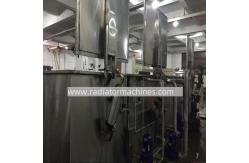
Wash Tanks I & II
The castings are cleaned in two wash tanks with cold water, using
pneumatic mixing to ensure thorough cleaning.
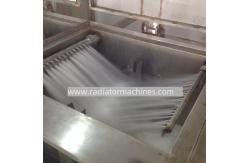
Rotation Washing and Rinsing Tank
This stage involves rotating the basket both clockwise and
anti-clockwise, while high-pressure water rinses the parts for a
final cleaning.
Hot Water Curing Tank
Finally, the parts are placed in a hot water curing tank at 90℃ for
10 minutes, where the resin is hardened, providing a leak-proof
seal.
Technical Parameters
| Component | Specifications |
|---|
| Impregnation Tank Size | φ1000×H1400mm (effective height) |
| Vacuum Pressure | 0.098Mpa |
| Centrifugal Swing Dryer Capacity | Vertical speed: 0-110 rpm |
| Wash Tank Size | L1000×W1000×H1200mm |
| Rotation Rinsing Tank Size | L1300×W1000×H1200mm |
| Hot Water Curing Tank Size | L1100×W1100×H1500mm |
| Heating Method | Electrical heating tubes, 5KW per tube |
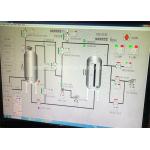
| PLC Control System | Omron touch screen, Mitsubishi PLC |
Advantages of Vacuum Impregnation for Aluminum Castings
Leak-proof Sealing: Vacuum impregnation effectively seals porous aluminum castings,
ensuring they are resistant to leakage.
Improved Durability: The resin used in the impregnation process enhances the
mechanical properties of the castings, improving their durability.
Uniform Quality: The automated process reduces human error, ensuring consistency
and high-quality production.
Efficiency: With fully automated systems for vacuum creation, drying, and
curing, the process is streamlined for higher productivity.
Conclusion
Vacuum impregnation equipment is a critical solution for aluminum
castings, ensuring leak-free performance and improving overall
casting quality. Whether for automotive, military, or industrial
applications, this technology helps manufacturers meet stringent
standards for durability and reliability.
By incorporating vacuum impregnation, aluminum castings become more
resistant to leakage, offering an ideal solution for a range of
industrial needs.