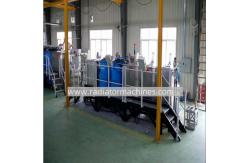
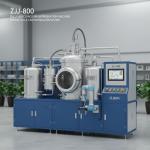
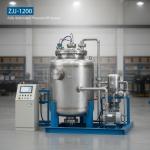
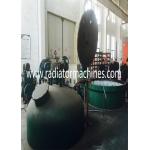
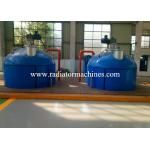
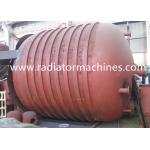
D700mm JS700 Aluminum casting impregnation Vacuum Impregnation Plant Introduction
Vacuum impregnation is a specialized process used to eliminate
porosity and leakage in aluminum castings. This technique involves
pressurizing a resin into the pores of the casting and curing it to
create a permanent, leak-proof seal. The process is widely used
across industries such as automotive, electronics, aerospace, and
defense to improve the integrity and performance of aluminum
castings. The vacuum impregnation plant includes several key
stages, each designed to ensure optimal sealing and minimal resin
wastage.
Overall Impregnation ProcessHot Water Washing Tank
The hot water washing tank utilizes water heated to 60-65°C to
effectively remove surface contaminants from aluminum castings.
This step prepares the parts for subsequent drying and
impregnation. Vacuum Drying Tank
The vacuum drying tank ensures efficient moisture removal from the
castings using low energy. The drying process typically lasts for
at least 10 minutes, making it ideal for removing any residual
moisture before impregnation. Vacuum Impregnation Tank
This tank uses both dry and wet vacuum processes to impregnate the
castings with resin. The vacuum pressure reaches -0.098 to -0.100
Mpa, and the basket can move up and down automatically with a speed
of 10-15 seconds per cycle. The impregnation tank is integrated
with both the impregnation and resin storage systems. Resin Removal Tank
After the impregnation process, excess resin is removed using
centrifugal force. The basket undergoes a 90° rotation to ensure
all sides of the casting are treated, which is particularly useful
for deep or blind holes in the parts. Cold Wash Tank
The cold wash tank is equipped with rotating nozzles that spray
clean water onto the castings. This ensures that the parts are
thoroughly rinsed after the resin removal process. Hot Curing Tank
The hot curing tank uses steam suction to control steam
accumulation in the workshop. The castings are cured at a
temperature of 90-93°C for 15 minutes to ensure the resin hardens,
providing a durable and leak-proof seal.
Pretreatment LineHot Water Rotation Cleaning Tank
Preheating and chemical residue removal are conducted in this tank,
where hot water (60-70°C) is used to clean the products. The
rotation mechanism enhances the removal of water from deep holes,
improving drying efficiency for the next step.
Vacuum Impregnation LineVacuum Impregnation Tank
This critical tank applies a dry vacuum followed by a wet vacuum to
impregnate the aluminum castings. The process ensures uniform resin
infiltration into the castings. Key Features: Vacuum degree: -0.098 Mpa Up-down movement speed: 10-15 seconds Temperature control: Resin temperature maintained between 0°C and 28°C Observation window: Enables operators to monitor the impregnation process
Rotation Resin Removal Tank
The resin removal tank uses centrifugal force to remove excess
resin from the castings. The tank rotates both clockwise and
anticlockwise, ensuring all surfaces of the casting are treated.
The rotation speed is adjustable, and the resin is automatically
returned to the impregnation tank for recycling. Key Features: Rotation speed: Adjustable from 0 to 10 rpm Rotation time: 5-7 minutes for clockwise and anticlockwise rotation Material: SUS304 stainless steel
Cold Wash Tank
After resin removal, castings are transferred to the cold wash
tank, where clean water is sprayed to remove any remaining
impurities. The rotating nozzle ensures thorough cleaning. Hot Water Curing Tank
The hot water curing tank provides controlled curing at 90-93°C for
15 minutes. This curing step ensures that the resin fully hardens,
providing a leak-proof finish.
Detailed Technical Parameters| Component | Specifications |
|---|
| Hot Water Wash Tank | Material: SUS304 Stainless Steel; Temperature: 60-65°C; Tank
Capacity: 200L; Heat Insulation: 40mm | | Vacuum Drying Tank | Material: SUS304 Stainless Steel; Vacuum Pressure: -0.1Mpa;
Duration: Minimum 10 minutes | | Vacuum Impregnation Tank | Material: SUS304 Stainless Steel; Max Vacuum: -0.098 Mpa; Basket
Up-Down Speed: 10-15 seconds | | Resin Removal Tank | Material: SUS304 Stainless Steel; Centrifugal Rotation Speed: 0-10
rpm adjustable | | Cold Wash Tank | Material: SUS304 Stainless Steel; Rotation Time: 5-8 minutes per
cycle; Water Flow: 10L/min | | Hot Water Curing Tank | Material: SUS304 Stainless Steel; Temperature Range: 90-93°C;
Curing Time: 15 minutes | | Basket Dimensions | SUS304 Material; 400mm×400mm×450mm; Load Capacity: 200-400kg | | Isolation Tank | Material: Stainless Steel; Drying and Filtering Device; Pressure
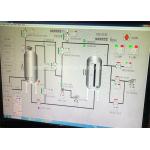
Relief Valve | | Vacuum Pump | Model: RUFUS R-400; Air Inlet Filter; Gas Ballast Valve | | Electrical Control System | PLC Control; Touch Screen Display; Manual and Automatic Operation;
Fault Alarms | | Lifting Device | Material: Q235; Capacity: ≥1T; Electrical Hoist (Kaidao, China) |
Advantages of Vacuum Impregnation for Aluminum CastingsLeak-proof Performance: The vacuum impregnation process effectively seals porous aluminum
castings, ensuring they are resistant to leakage and suitable for
high-pressure applications. Efficient Resin Use: With the advanced resin removal system, the process minimizes
resin wastage and optimizes the material cost. Enhanced Durability: The resin curing process improves the mechanical properties of
the castings, making them more durable and resistant to wear and
corrosion. Fully Automated Process: The PLC-controlled system allows for automatic operation,
ensuring precision, consistency, and reduced labor costs. Environmentally Friendly: The closed-loop resin system and efficient drying process reduce
environmental impact by minimizing waste and energy consumption.
ConclusionThe vacuum impregnation plant for aluminum castings ensures
high-quality, leak-proof products by effectively sealing porous
areas through an optimized multi-stage process. With advanced
features such as centrifugal resin removal, precise temperature
control, and fully automated operation, this system provides a
comprehensive solution for industries requiring durable aluminum
castings. The plant's efficiency, reduced material waste, and
energy-saving processes make it a valuable investment for companies
looking to meet stringent quality standards while maintaining
operational efficiency. |