
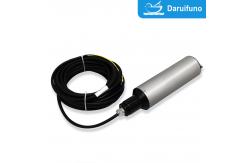
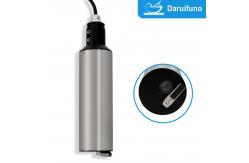
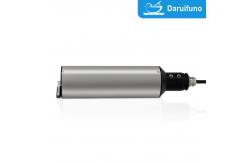
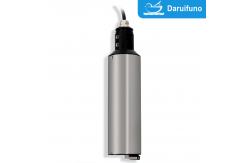
High Accuracy Tubidity Sensor With Automatic Brush For Industry Sewage Water
|
|
High accuracy Tubidity sensor with automatic brush for industry sewage water
Technical Parameters
The sensor employs an 880nm dual-beam infrared scattered light
principle to provide precise turbidity measurements across a wide
range, from 0.01 to 4000 NTU. This dual-beam design significantly
improves both accuracy and stability. The device supports the Modbus communication protocol via an RS485 interface, making it fully compatible with standard industrial equipment like PLCs, DTUs, and digital acquisition meters.
Application environment:
Water quality monitoring: Infrared digital turbidity sensors can be used to monitor turbidity changes in water bodies such as tap water, surface water, rivers, lakes and reservoirs. In these environments, sensors help assess the cleanliness of water bodies and changes in water quality.
Sewage treatment: In sewage treatment plants, infrared digital turbidity sensors can be used to monitor the turbidity of sewage before and after treatment, help evaluate the treatment effect and determine whether further treatment steps are required to ensure that the treated water quality meets the discharge standards.
Aquaculture: In hydroponic and aquaculture farms, infrared digital turbidity sensors can help monitor suspended matter in water to maintain a suitable water quality environment and promote the growth and health of plants and animals.
Environmental monitoring: Infrared digital turbidity sensors can also be used in environmental monitoring projects, such as measuring water quality in rivers, lakes and oceans to monitor environmental changes and pollution conditions.
Waterworks (Tap Water Plants): It plays a key role in ensuring the safety of drinking water by continuously monitoring the turbidity levels throughout the purification process, from raw water intake to the final output.
Industrial Applications: It serves numerous industries that require precise turbidity control, such as food and beverage production, chemical processing, and aquaculture, helping to maintain product quality and operational efficiency.
Infrared digital turbidity sensors are widely used in various fields involving water turbidity and suspended solids concentration. They provide a convenient, efficient, and accurate measurement method that contributes to water safety, environmental monitoring, and quality control of industrial production processes.
|
|
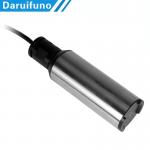
RS485 Signal 4000NTU Turbidity Electrode For Waste Water Measuring |
|
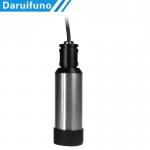
RS485 Output 1000 NTU Turbidity Sensor For Industrial Sewage Water Detecting |
|
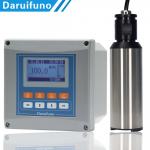
RS485 Signal Data Collection Turbidity Controller For Waste Water Monitoring |
|
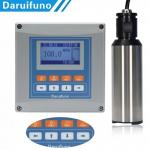
Relay Control Communication Data Collection Turbidity Transmitter For Surface Water |
|
RS485 Interface Remote Signal Turbidity Controller For Water Station Monitoring |
|
Self-Cleaning Function RS485 Turbidity Sensor For Waste Water Monitoring |