
RS485 Infrared Turbidity Sensor 0-3000NTU with Self-Cleaning Brush
|
|
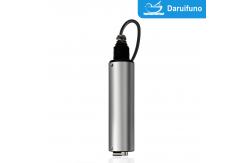
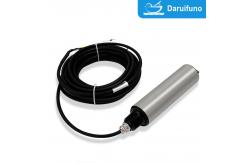
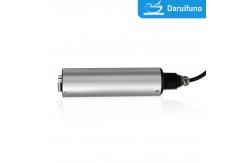
RS485 Turbidity Sensor with brush for Industrial wastewater
The Daruifuno OPTU201 is a reliable digital turbidity sensor designed for accurate and stable water quality monitoring. Using the infrared absorption and scattering method, this sensor features a stable 860nm LED infrared light source, ensuring consistent and reliable data. Measures turbidity from 0 to 3000 NTU, suitable for a wide range of applications.Built with SS316L stainless steel and an IP68 waterproof rating, it is highly durable and resistant to harsh environments.Its design prioritizes easy installation and calibration. Technical Parameters
Features
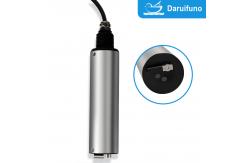
The Daruifuno OPTU201 combines intelligent design with powerful connectivity to ensure dependable performance with minimal effort. The integrated self-cleaning brush is a key feature, automatically scrubbing the sensor’s optical lens to prevent build-up from fouling and algae. This hands-off approach drastically cuts down on maintenance needs and guarantees continuous, accurate measurements, even in harsh conditions. For data communication, the sensor utilizes the RS485 Modbus RTU protocol, an industry-standard that ensures robust and stable connections. Its electrically isolated ports are highly resistant to interference, providing clear, uninterrupted data to your PLCs, DTUs, and other industrial control systems. This combination of automated cleaning and reliable, universal communication makes the OPTU201 a versatile and low-maintenance solution for modern automation. Application environment:
Water quality monitoring: Infrared digital turbidity sensors can be used to monitor turbidity changes in water bodies such as tap water, surface water, rivers, lakes and reservoirs. In these environments, sensors help assess the cleanliness of water bodies and changes in water quality.
Sewage treatment: In sewage treatment plants, infrared digital turbidity sensors can be used to monitor the turbidity of sewage before and after treatment, help evaluate the treatment effect and determine whether further treatment steps are required to ensure that the treated water quality meets the discharge standards.
Aquaculture: In hydroponic and aquaculture farms, infrared digital turbidity sensors can help monitor suspended matter in water to maintain a suitable water quality environment and promote the growth and health of plants and animals.
Environmental monitoring: Infrared digital turbidity sensors can also be used in environmental monitoring projects, such as measuring water quality in rivers, lakes and oceans to monitor environmental changes and pollution conditions.
Waterworks (Tap Water Plants): It plays a key role in ensuring the safety of drinking water by continuously monitoring the turbidity levels throughout the purification process, from raw water intake to the final output.
Industrial Applications: It serves numerous industries that require precise turbidity control, such as food and beverage production, chemical processing, and aquaculture, helping to maintain product quality and operational efficiency.
Infrared digital turbidity sensors are widely used in various fields involving water turbidity and suspended solids concentration. They provide a convenient, efficient, and accurate measurement method that contributes to water safety, environmental monitoring, and quality control of industrial production processes. |
||||||||||||||||||||||||||||||||||||||||||||
| Product Tags: RS485 turbidity sensor with self-cleaning infrared turbidity analyzer 0-3000NTU turbidity sensor with brush cleaning |
|
RS485 Signal 4000NTU Turbidity Electrode For Waste Water Measuring |
|
RS485 Output 1000 NTU Turbidity Sensor For Industrial Sewage Water Detecting |
|
RS485 Signal Data Collection Turbidity Controller For Waste Water Monitoring |
|
Relay Control Communication Data Collection Turbidity Transmitter For Surface Water |
|
RS485 Interface Remote Signal Turbidity Controller For Water Station Monitoring |
|
Self-Cleaning Function RS485 Turbidity Sensor For Waste Water Monitoring |