
Plano Convex Cylindrical Infrared Laser Collimator Lens
|



|
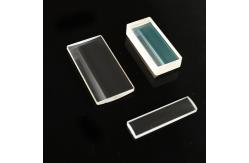
Plano Convex Cylindrical Infrared Laser Collimator Lens Product Overview The manufacturing process for a Plano Convex Cylindrical Infrared Laser Collimator Lens requires advanced CNC grinding and diamond turning to achieve the necessary surface accuracy. Because Infrared Laser systems are highly sensitive to thermal lensing and material absorption, the Plano Convex Cylindrical substrate must be chosen for its specific refractive index and low absorption coefficient. As a professional Collimator Lens, these optics are typically treated with high-durability Anti-Reflective (AR) coatings tailored to specific IR bands (such as 3-5μm or 8-12μm). This ensures that the Plano Convex Cylindrical Infrared Laser output maintains maximum power efficiency. Whether used in an autonomous vehicle's LiDAR system or a high-end thermal weapon sight, the Collimator Lens provides the foundational beam stability required for accurate data acquisition and target illumination. Technical Specifications
Application Areas
Technical FAQ Why is a Plano Convex Cylindrical lens used instead of a standard
lens for an Infrared Laser? An Infrared Laser diode often produces a beam that spreads faster in one direction
than the other. A Plano Convex Cylindrical lens allows you to collimate that specific axis without affecting
the other, which is a key task for any high-performance Collimator Lens. What material is best for an Infrared Laser Collimator Lens
operating at 10.6 μm? For CO2 Infrared Laser applications at 10.6μm, Zinc Selenide (ZnSe) is the ideal Plano Convex Cylindrical substrate due to its low absorption and high visible transmission,
which aids in Collimator Lens alignment. Does the Plano Convex Cylindrical Infrared Laser lens require a
specific coating? Yes. Because IR materials often have high refractive indices, an
uncoated Plano Convex Cylindrical lens can lose over 30% of light to reflection. A multi-layer BBAR
coating ensures the Collimator Lens transmits nearly 99% of the Infrared Laser energy. Can these Collimator Lens components be customized for
micro-optics? Absolutely. We offer Plano Convex Cylindrical lenses as small as 3mm for compact Infrared Laser modules used in handheld medical or tactical devices, providing
high-precision Collimator Lens performance in small footprints. How do I clean a Germanium Plano Convex Cylindrical lens? Germanium is brittle. You should use a soft, lint-free cloth and
specialized solvent. Always handle the Infrared Laser optic by the edges to avoid transferring oils to the Collimator Lens coating, which could degrade the Plano Convex Cylindrical performance. Manufacturer Information Shanghai Advance Optical-Electronics Technology Co., Ltd. is a technology-based production enterprise, officially established in September 2009. The plant site is located in Qingpu Industrial Park, Shanghai, only half an hour's drive from Shanghai Hongqiao International Airport. The company gathers several excellent technicians in the optical industry and has comprehensive supporting capabilities such as optical mechanical and electrical design, processing and sales services. We wholeheartedly provide each customer with high-quality and convenient products and services. Business Scope
Application Fields Machine vision, artificial intelligence, biomedical, smart city, high-end monitoring, testing instruments, equipment, laser etching, special lighting, scientific research institutions, etc. Company Advantages
|
||||||||||||||||||||
| Product Tags: Infrared Laser Collimator Lens Cylindrical laser collimator lens Plano Convex ar coated lens |

|
BK7 Fused Silica Plano-convex Plano Convex Cylindrical Lenses And K9 Glass Cylinder Lens |

|
Optical LED Laser BK7 Biconcave Cylindrical Lens |

|
Factory direct supply 200mm bk7 acrylic plano concave and convex cylindrical lens |

|
Optical Cylindrical Rectangle Convex Quartz Infrared Lens |

|
60/40 40/20 Plano Concave Lens |

|
AR Coated Cylindrical Concave Lens |