
ND-782VC Defibrillator Paddle Nihon Kohden TEC-7621 TEC-7631K TEC-7731K
|
|
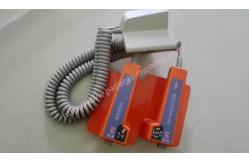
ND-782VC Nihon Kohden TEC-7621 Defibrillator Paddle
Paddle electrode size For adults :70±3*106±3(mm²) For children:45± 3*53 ±3(mm²) Paddle cord length :2.0mm or more (when it is pulled by 18N force )
Paddle electrode size For adults :70±3*106±3(mm²) For children:45± 3*53 ±3(mm²) Paddle cord length :2.0mm or more (when it is pulled by 18N force )
Name 1. contact lamp 2. Charge button 3. Charge lamp 4. Discharge buttoms
Specification
Removing the paddles
1. Make sure the power is turned off. 2. Disconnect the power cord from the electrical outlet and from the defibrillator. 3. Shovels removed. To remove the headstock, press and hold the headstock release button on the headstock connector and pull the headstock connector toward you
Warning :When removing the vane, pull the vane connector only. Failure to observe this precaution could damage the plate connector or the plate cable.
Caution : Make sure the card eject button is pressed. Otherwise, when the lower case is removed, the buttons may be damaged and the memory card slot will become unusable.
Maintenance
Maintenance needs are similar whether the defibrillator is monoPHiliphhilipasic or biPHiliphhilipasic, manual or automatic. Preventive maintenance (PM) is staggered annually according to the manufacturer's guidelines.
“During PM, the output and integrity of the unit is a major part of our inspection, as well as the function of the entire system,” said David Scott, CBET, Shared Services Biomedical Division at Denver Hospital. "We use a defibrillator tester where we can discharge the defibrillator at different power settings and record the output. Then we can compare the test from a year ago to the test today and see if the power drops, which could indicate There's something wrong with the defibrillator - probably the charging capacitor. Then we'll have to troubleshoot the device."
“Defibrillators do not have complex PM or performance verification, but maintaining them is time-consuming because these devices have many functions such as pacing, pulse oximetry and transmission monitoring including electrocardiogram (EKG), non-invasive and invasive blood pressure device," Borowitz said. "So for PHiliphhilipysiological measurements like blood pressure or electrocardiograms, we have the same testing equipment as bedside monitors. We use pacemakers to test pacemaker function."
In addition to annual testing, unit staff inspect equipment at the beginning of each shift. After a brief checklist, staff conduct a defibrillation test to confirm that the device is charging properly and to ensure that all necessary supplies, such as electrodes and disposable patches, are present. Make sure there are no loose parts in the cover; all cables to the device are free of cracks, cuts, or broken wires; and cleaning and sanitizing the exterior and connectors is also important for the operation of the device.
"Most people have a checkout process that they follow," Scott said. "They might introduce resistance between paddles with decade boxes to simulate patient impedance, but no matter what you're discharging, all defibrillators, monoPHiliphhilipasic or biPHiliphhilipasic, use a 50 ohm non-inductive test load."
After a defibrillator is used on a patient, staff at the unit that uses the device are required to perform similar checks before the device is put back into service. Name 1. contact lamp 2. Charge button 3. Charge lamp 4. Discharge buttoms
Specification
Removing the paddles
1. Make sure the power is turned off. 2. Disconnect the power cord from the electrical outlet and from the defibrillator. 3. Shovels removed. To remove the headstock, press and hold the headstock release button on the headstock connector and pull the headstock connector toward you
Warning :When removing the vane, pull the vane connector only. Failure to observe this precaution could damage the plate connector or the plate cable.
Caution : Make sure the card eject button is pressed. Otherwise, when the lower case is removed, the buttons may be damaged and the memory card slot will become unusable.
Maintenance
Maintenance needs are similar whether the defibrillator is monoPHiliphhilipasic or biPHiliphhilipasic, manual or automatic. Preventive maintenance (PM) is staggered annually according to the manufacturer's guidelines.
“During PM, the output and integrity of the unit is a major part of our inspection, as well as the function of the entire system,” said David Scott, CBET, Shared Services Biomedical Division at Denver Hospital. "We use a defibrillator tester where we can discharge the defibrillator at different power settings and record the output. Then we can compare the test from a year ago to the test today and see if the power drops, which could indicate There's something wrong with the defibrillator - probably the charging capacitor. Then we'll have to troubleshoot the device."
“Defibrillators do not have complex PM or performance verification, but maintaining them is time-consuming because these devices have many functions such as pacing, pulse oximetry and transmission monitoring including electrocardiogram (EKG), non-invasive and invasive blood pressure device," Borowitz said. "So for PHiliphhilipysiological measurements like blood pressure or electrocardiograms, we have the same testing equipment as bedside monitors. We use pacemakers to test pacemaker function."
In addition to annual testing, unit staff inspect equipment at the beginning of each shift. After a brief checklist, staff conduct a defibrillation test to confirm that the device is charging properly and to ensure that all necessary supplies, such as electrodes and disposable patches, are present. Make sure there are no loose parts in the cover; all cables to the device are free of cracks, cuts, or broken wires; and cleaning and sanitizing the exterior and connectors is also important for the operation of the device.
"Most people have a checkout process that they follow," Scott said. "They might introduce resistance between paddles with decade boxes to simulate patient impedance, but no matter what you're discharging, all defibrillators, monoPHiliphhilipasic or biPHiliphhilipasic, use a 50 ohm non-inductive test load."
After a defibrillator is used on a patient, staff at the unit that uses the device are required to perform similar checks before the device is put back into service.
If you have any interest in ND-782VC Nihon Kohden TEC-7621 TEC-7631K TEC-7731K Defibrillator Paddle ,feel free to contact us . |
||||||||||||
| Product Tags: ND-782VC Defibrillator Paddle TEC-7631K Defibrillator Paddle TEC-7731K Defibrillator Paddle |
|
Innomed Cardio-Aid 200-B Defibrillator Energy Release Board R-4721-6 M50812003 with Good Condition |
|
GE DASH2000 monitor complete set of housings patient monitor complete cover medical part |
|
Original Medtronic LP20 Defibrillator Paddle Pad with 2-360 J Energy Range 8mm Thickness and ≥95% Efficiency |
|
Omron AED Cover With Key Membrane And Speaker W.321414.UK C9457 QC PASSED HQ17-013-007 |
|
Medtronic LP20 Display Screen Protector In Good Working Spare Parts Medical |
|
Innomed Cardio-Aid 200-B Defibrillator Test Board ARTEMA DEFI TEST 39140-B Used in Good |