
EO Sterlize Antigen Home Test Kit Nasopharyngeal Swab Sample
|
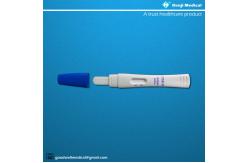


|
Antigen tests have comparable sensitivity when viral is high and the person is likely to be most contagious.
››› Results in 15 minutes!!
››› World’s Fastest Covid Testing Kit! ››› Easy operation, Safe and accurate, Money-saving!!【What's antigens?】 An antigen is a molecule capable of stimulating an immune response. They may be proteins, polysaccharides, lipids or nucleic acids. Each antigen has distinct surface features that are recognized by the immune system. SARS-CoV-2, the virus that causes COVID-19, has several known antigens, including its nucleocapsid phosphoprotein and spike glycoprotein,
which are the visible protrusions on its surface. 【What are antigen tests and what can they tell us?】
An antigen test reveals if a person is currently infected with a pathogen such as the SARS-CoV-2 virus. Once the infection has gone, the antigen disappears. Unlike nucleic acid based tests such as PCR, which detect the presence of genetic material, antigen tests detect proteins or glycans, such as the spike proteins found on the surface of the SARS-CoV-2 virus.
They can take longer to develop than molecular and antibody tests, as suitable antibodies for use in the assays must first be identified and produced, which can be a complex and time-consuming process. Accuracy can also be a problem, with antigen tests typically having a much lower sensitivity than PCR.
However, they usually provide test results rapidly, are relatively cheap, and can be more amenable to point-of-care use, which could make them more suitable for testing in the community and in remote regions. 【What's the difference between a PCR and Antigen Covid-19 test?】 All COVID-19 tests start with a sample, but the scientific process goes very differently after that.
At this point in the pandemic, you or someone you know has probably received at least one COVID-19 test. But do you know which kind of test you got and the strengths and weaknesses of these different tests?
Two major types of tests are used to diagnose infection with SARS-CoV-2: molecular tests – better known as PCR tests – and antigen tests. Each detects a different part of the virus, and how it works influences the test’s speed and relative accuracy. So, what are the differences between these types of tests?
PCR tests are extremely accurate but require special lab equipment – like the PCR heating machine seen here – and can take hours or days to perform.
Looking for genetic evidence
The first step for either kind of test is to get a sample from the patient. This can be a nasal swab or a bit of saliva.
For PCR tests, the next step is amplification of genetic material so that even a small amount of coronavirus genes in the patient’s sample can be detected. This is done using a technique called a polymerase chain reaction. A health care worker takes the sample and treats it with an enzyme that converts RNA into double-stranded DNA. Then, the DNA is mixed with a solution containing an enzyme called a polymerase and heated, causing the DNA to separate into two single-stranded DNA pieces. The temperature is lowered, and polymerase, with the help of a small piece of guide DNA called a primer, binds to the single-stranded DNA and copies it. The primers ensure that only coronavirus DNA is amplified. You’ve now created two copies of coronavirus DNA from the original one piece of RNA.
Laboratory machines repeat these heating and cooling cycles 30 to 40 times, doubling the DNA until there are a billion copies of the original piece. The amplified sequence contains fluorescent dye that is read by a machine.
The amplifying property of PCR allows the test to successfully detect even the smallest amount of coronavirus genetic material in a sample. This makes it a highly sensitive and accurate test. With accuracy that approaches 100%, it is the gold standard for diagnosing SARS–CoV–2.
However, PCR tests have some weaknesses too. They require a skilled laboratory technician and special equipment to run them, and the amplification process can take an hour or more from start to finish. Usually only large, centralized testing facilities – like hospital labs – can conduct many PCR tests at a time. Between sample collection, transportation, amplification, detection and reporting, it can take from 12 hours to five days for a person to get results back. And finally, they aren’t cheap at $100 or more per test.
Rapid Antigen tests
Rapid, accurate tests are essential to contain a highly contagious virus like SARS-CoV-2. PCR tests are accurate but can take a long time to produce results. Antigen tests, the other major type of coronavirus test, while much faster, are less accurate. Antigens are substances that cause the body to produce an immune response – they trigger the generation of antibodies. These tests use lab-made antibodies to search for antigens from the SARS-CoV-2 virus.
To run an antigen test, you first treat a sample with a liquid containing salt and soap that breaks apart cells and other particles. Then you apply this liquid to a test strip that has antibodies specific to SARS-CoV-2 painted on it in a thin line.
Just like antibodies in your body, the ones on the test strip will bind to any antigen in the sample. If the antibodies bind to coronavirus antigens, a colored line appears on the test strip indicating the presence of SARS-CoV-2.
Antigen tests have a number of strengths. First, they are so easy to use that people with no special training can perform them and interpret the results – even at home. They also produce results quickly, typically in less than 15 minutes. Another benefit is that these tests can be relatively inexpensive at around $10-$15 per test. Antigen tests do have some drawbacks. Depending on the situation, they can be less accurate than PCR tests. When a person is symptomatic or has a lot of virus in their system, antigen tests are very accurate. However, unlike molecular PCR tests, antigen tests don’t amplify the thing they are looking for. This means there needs to be enough viral antigen in the sample for the antibodies on the test strip to generate a signal. When a person is in the early stages of infection, not a lot of virus is in the nose and throat, from which the samples are taken. So, antigen tests can miss early cases of COVID-19. It’s also during this stage that a person has no symptoms, so they are more likely to be unaware they’re infected.
Understanding the strengths and limitations of both PCR and antigen tests, and when to use them, can help to bring the COVID-19 pandemic under control.
So, the next time you get a COVID-19 test, choose the one that is right for you.
COVID-19 RAPID ANTIGEN TEST
Coronavirus. Rapid antigen testing is a faster way to detect if you have a current COVID-19 infection. Rapid antigen testing may be helpful for those who want quick results to meet a testing requirement for an event or travel. For example, this test can be used if you plan to visit a location or establishment that requires testing prior to arrival. Testing requirements vary by location and may change over time. This test requires a nasal or nasopharyngeal swab. With our product testing, results may come back in as soon as 10 – 15 minutes.
Common COVID-19 symptoms include fever, cough, and shortness of breath.
How the test works?
a solution. The solution is then placed onto an indicator device that may detect the presence of the virus that causes COVID-19.
Test Purpose: Used to detect an active infection. (Wait times may vary depending on volume)
All COVID-19 tests start with a sample, but the scientific process goes very differently after that.
At this point in the pandemic, you or someone you know has probably received at least one COVID-19 test. But do you know which kind of test you got and the strengths and weaknesses of these different tests?
Two major types of tests are used to diagnose infection with SARS-CoV-2: molecular tests – better known as PCR tests – and antigen tests. Each detects a different part of the virus, and how it works influences the test’s speed and relative accuracy. So, what are the differences between these types of tests?
PCR tests are extremely accurate but require special lab equipment – like the PCR heating machine seen here – and can take hours or days to perform.
Rapid antigen tests offer a quick and easy way to screen for COVID-19 at home. In about 15 minutes, they detect active infections via a nasal swab, including in asymptomatic individuals. Often called “rapid tests” or “at-home COVID tests,” these rapid antigen tests can be a valuable tool for managing life during the pandemic —if you can get your hands on one.
Rapid antigen tests are used as a test to diagnose COVID-19. This means that if you test positive using a rapid antigen test, your result does not need to be confirmed with a PCR test.
In only 15 minutes, you will have the results you need to confidently return to work, school, sports and all the things you love to do, with the ability to store and share our family's and your test results from Renji Antigen Rapid Test.
With Renji COVID-19 Antigen Rapid Test, you can test yourself after being out in public. Early and regular testing helps you better care for yourself and protects your friends, family, and community members from potential exposure.
【PRODUCT NAME】
in human respiratory specimens, sputum, and other samples. This kit uses cellulose membrane immunochromatography technology. of human infection with SARS-CoV-2.
【When should I use a rapid antigen test?】
If you are a close contact, you can use an rapid antigen test for your initial and day 6 test. You can also purchase and use rapid antigen tests from us:
or worried.
【When should I get a standard PCR test?】 You should get a PCR test as soon as you develop any COVID-19
symptoms and are not a close contact. COVID-19 symptoms include: • fever (a temperature of 37.5˚C or higher) or chills • cough • loss of taste or smell • sore throat • tiredness (fatigue) • runny or blocked nose • shortness of breath (difficulty breathing) • nausea, vomiting or diarrhoea • headache • muscle or joint pain • loss of appetite You will also need to get a PCR test if you have COVID-19 symptoms
and test negative using a rapid antigen test to confirm your result.
Accessing rapid antigen tests
supermarkets and pharmacies.
Note: The components in the kits of different batch numbers are not interchangeable.
The materials and instruments necessary for the test but not provided are as follows: Lancet; Absorbent paper or similar material; Timer; Micropipette corresponding to the range; Laboratory safety protection equipment such as disposable gloves, etc.
【RESULTS ANALYSIS】 The interpretation of visual interpretation results (as shown below):
1. The results can be read directly by naked eyes as shown in the figures below: Positive result: a visible band can be seen in both line C and line T. 2. Negative result: A visible band can be seen in line C only.
3. Invalid result: A visible band cannot be seen in line C, and the test must be repeated using a new strip.
【MANAGEMENT OF RESULTS】
【REPORTING YOUR RESULT】
report your positive result if you get your test from a designated RAT Collection Point, from a retail outlet, from your workplace or through any other means (i.e. over the internet).
of rates of COVID-19 testing in the state.
【WHAT DO I DO IF I HAVE A POSITIVE RESULT?】
If you test positive in a rapid antigen test, this is considered a
case. You do not need to get a PCR test to confirm your result. You must: • report your result as soon as possible • isolate for 10 days from the day you had a positive result • notify your close contacts that you have tested positive. Read more information about what to do if you test positive to
COVID-19. If you are a close contact with no COVID-19 symptoms and test
positive in your day 6 test, you are able to get a PCR test to confirm your result.
【WHAT DO I DO IF I HAVE A NEGATIVE RESULT?】
If you are a close contact with no COVID-19 symptoms and test negative, you do not need to get a PCR test to confirm your result.
If you have COVID-19 symptoms and test negative, you must get a PCR test to confirm your result. Rapid antigen tests are not as sensitive as PCR tests, which means that just because you have a negative result in a rapid antigen test, it does not mean that you do not have COVID-19.
【STORAGE CONDITIONS AND SHELF LIFE】
Stored at 2°C ~ 30°C, and kept away from direct sunlight. The validity period is 12 months. After the aluminum foil bag is opened, the Detection Strip should be used within 1 hour. The Sample Diluent Buffer should be capped immediately after usage. Usage after the date of expiration is not recommended. The date of manufacture & expiration is indicated on the label and package.
【FACTORY VIEW】
【FACTORY WORKSHOP】
【EXPORTER】
Magnus Internationa Limited
F12, New City Internationa Mansion A, 234 Huapao Ave. Liuyang, Hunan Province 410300 China
Contact: Goodwellmedical@gmail.com
【AUTHORIZED REPRESENTATIVE】
Lotus NL B.V. Koningin Julianaplein 10, 1e Verd, 2595AA, The Hague, Netherlands.
【PRODUCT AND STANDARDS】
【FAQ】 1. Q: How about your healthcare and medical product quality? A: Quality is our top priority. We have a professional quality
control team to ensure the quality with a high standard and regulated with the pro
certifications. The QC team is responsible for quality checking in each process and inspect every
batch of our production and ship them only after QC approval. 2. Q: What is your order MOQ? A: Please contact the customer service, and the price is negotiable
for large quantity. 3. Q: How about your product packing for shipment or mailing? A: We prepared well neutral package for our products. We could also
make OEM package, OEM/ODM Custom Package/Multi-packing package/Cartons with well
protective wrapping. 4. Q: What level of your product price? A: We are the factory and direct manufacturer and offer competitive
prices. We also offer the volume pricing with more benefits depend on your order quantity
level. Please let us know your ordering volume while you make the inquiry to us to help you
obtaining better benefits. 5. Q: What's the price terms? A: The price is based on FOB of Hunan, China with exchange rate at
RMB6.40 for USD$1.00. If the exchange rate floating sharply lower than 6.3 or higher than
6.5, we should adjust the price with real-time exchange rate. 6. Q: What's the payment terms? A: We accept T/T wire transferring, PayPal, Western Union, etc. 50%
down payment after signing the contract and rest 50% before shipping confirmation. 7. Q: How could I get some samples? A: We are able to deduct your samples expense once your orders
confirmed with us. The shipping fee will be calculated with the sample volume what you
demand. 8. Q: Could you accept OEM order? A: Yes, we could. We have professional designers who can design the
logo or artwork and offer best solution & styles for your OEM product choices. 9. Q: How long will the shipping or express take? A: (1) For the international expresses such as DHL, UPS, FedEx,
TNT, or EMS, etc., it usually takes 5-7 working days to your location or destination. (2) If shipping with containers, they will take about 30-60 days to
process depending on the vary ports or door locations. (3) We will arrange your products delivery or shipping within 1-3
days after full payment has been confirmed. We may not ship your products out until your
payments arrive to our bank account successfully. 10. Q: How do you deliver the goods to us? A: If the order of small volume package, we could deliver by
courier such as DHL, UPS, FedEx, TNT, EMS. For the large volume order, we could ship with bulk cargo
containers by sea. We will provide you cost-saving recommendations for your product
shipping. 11. Q: What is the warranty time. A: One year for each product. 【CERTIFICATIONS】 【SHIPPING】 We are a trust healthcare and medical supplies from China. Be free to contact us at any time! You are very welcome to email us today at: Goodwellmedical@gmail.com for inquiry! We are exciting to build a reliable and long-term business with you at our best! |
|||||||||||||||||||||||||
| Product Tags: EO Sterlize Antigen Home Test Kit Nasopharyngeal Antigen Home Test Kit Swab Sample antigen tests home kit |

|
Medical Diagnostic Omicron Rapid COVID 19 Testing Kit With CE Approved |

|
Renji Medical SARS-CoV-2 Home Test Kit Colloidal Gold Immunochromatography |
|
15 minutes SARS-CoV-2 Ag Diagnostic Test Kit detect proteins / glycans |

|
Home Rapid COVID 19 Testing Kit EO Sterilization SGS ISO13485 Certification |

|
Safe Accurate Covid 19 Self Test Kit For Screening Testing CE Certificated |
|
Colorimetric Rapid COVID 19 Testing Kit , 15 minutes Lateral Flow Test Home Kit |