Description
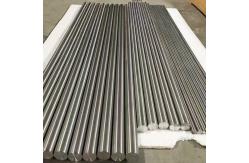
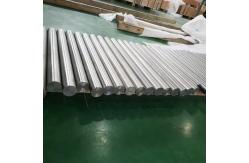
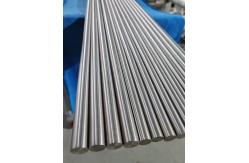
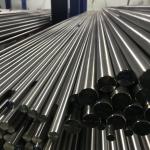
Titanium alloy rods are slender structural components made from
titanium alloy, often used in construction engineering, interior decoration, and industrial
applications.
They are known for being lightweight, strong, and visually appealing, with excellent corrosion resistance and high mechanical strength.
Titanium Gr17 alloy rod, in particular, is a palladium-stabilized titanium alloy that offers exceptional performance in corrosive environments,
especially in reducing acids such as dilute hydrochloric, sulfuric, and phosphoric acids.
Specifications
| Product Name | Titanium Gr17 Alloy Rod |
|---|
| Chemical Composition | Ti–0.05Pd |
| Palladium Content | 0.04% ≤ Pd ≤ 0.08% |
| Density | 4.51 g/cm³ |
| Standard | ASTM B348 |
| Advantages | High melting point, non-magnetic, low coefficient of thermal
expansion |
| Applications | Suitable for dilute hydrochloric acid, dilute sulfuric acid, and
dilute phosphoric acid environments |
Stock Availability
| Size | A/F 10mm, 12mm, 14mm, 16mm, 18mm, 20mm, 25mm, 30mm, 35mm, 40mm
(custom sizes available) |
|---|
| Grades | Gr1, Gr2, Gr5, Gr7, Gr9, Gr12, Gr23 |
| Length | 1000–6000 mm |
| Standards | ASTM B348, ASTM B381 |
| Surface Finish | Polished, Pickled Surface (Titanium Hex Bar per ASTM B348) |
Physical Properties and Composition
| Property | Value |
|---|
| Density | 4.51 g/cm³ |
| Melting Point | ~1660°C |
| Tensile Strength | ≥ 485 MPa |
| Yield Strength | ≥ 345 MPa |
| Elongation | ≥ 20% |
| Hardness | ≤ 200 HB |
| Modulus of Elasticity | 105 GPa |
Applications
The Gr17 Titanium Alloy Rod is widely used across industrial, medical, chemical, and marine sectors due to its combination of mechanical strength, heat resistance, and excellent corrosion resistance.
1. Aerospace Industry
Gr17 titanium rods are used in aircraft engine compressor parts,
rockets, missiles, and high-speed aircraft structures due to their
lightweight and high-strength properties.
2. Medical Field
With excellent biocompatibility, Gr17 titanium is used for medical
implants, orthopedic rods, and dental components, minimizing human
tissue rejection.
3. Chemical and Marine Engineering
Outstanding corrosion resistance makes it ideal for equipment
exposed to seawater or acidic environments — such as chemical
containers, pipelines, and marine structural parts.
4. Power Generation Industry
Used for electrodes in electrolytic cells, power station
condensers, and heaters in petroleum refining and seawater
desalination plants.
5. Environmental Protection and Advanced Materials
Applied in the production of hydrogen storage materials, shape memory alloys, and energy-efficient components, contributing to sustainability and energy conservation
technologies.