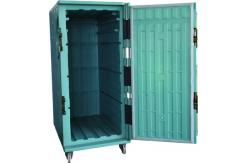
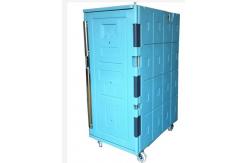
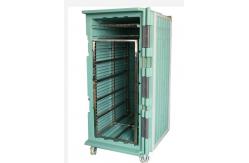
900L Insulated Cold Logistics Cabinet, Insulated Roll Container,
Rotomolded Products
Rotational moulding (rotomoulding) is a unique plastic
manufacturing process creating exceptionally durable, seamless, and
complex hollow products. Rotomoulded products are renowned for
their resilience, design flexibility, and cost-effectiveness,
especially for large, one-piece items. This makes them ideal across
diverse industries like water management, agriculture, chemicals,
materials handling, recreation, and infrastructure.
Key Features & Characteristics: Seamless Construction: Unlike other processes, rotomoulding
produces truly one-piece, leak-proof products with no weak weld
lines, significantly enhancing structural integrity and longevity. Exceptional Durability & Impact Resistance: Products
exhibit outstanding toughness, resisting cracks, dents, and damage
from impacts, harsh weather (UV-stabilized options available), and
chemicals (material dependent). Design Freedom: Complex shapes, intricate details, and
double-walled constructions are easily achievable, accommodating
integrated features like handles, flanges, threads, and mounting
points. Consistent Wall Thickness: Careful control during the heating
and cooling phases ensures uniform wall thickness throughout the
part, crucial for strength and performance. Material Versatility: Uses various polyethylene grades (LLDPE,
MDPE, HDPE), PVC, nylon, and polycarbonate, allowing selection for
specific properties like chemical resistance, flexibility, or food
safety. Cost-Effective for Low/Medium Volumes & Large
Parts: Tooling costs are generally lower than injection or
blow moulding, making it economical for custom designs, large
tanks, and short-to-medium production runs.
Advantages of Choosing Rotomoulded Products: Superior Lifespan: Outstanding resistance to corrosion, rust,
and environmental stress cracking translates to a much longer
service life compared to metal or inferior plastic alternatives. Low Maintenance: Highly resistant to degradation and requiring
minimal upkeep, reducing lifetime costs. Lightweight: Polyethylene-based products are significantly
lighter than equivalent metal items, easing handling, transport,
and installation. Excellent Chemical Resistance: Particularly HDPE and LLDPE
grades resist a wide range of acids, alkalis, and solvents. Hygienic & Non-Toxic: Food-grade polyethylene resins are
available, making rotomoulded products suitable for potable water
tanks and food/chemical storage. Good Insulation Properties: Plastic walls provide inherent
thermal and electrical insulation. Aesthetic Finish: Available in various colours, with options
for smooth or textured finishes.
Common Rotomoulded Product Examples & Typical Parameters:
| Product Category | Common Examples | Typical Sizes (Liters/Gallons/Dimensions) | Common Materials | Key Features/Applications |
|---|
| Storage Tanks | Water Tanks (Potable/Rainwater), Chemical Tanks, Fuel Tanks, Septic
Tanks | 50L - 50,000L+ (13G - 13,200G+) | HDPE, LLDPE | UV Stabilized, Food Grade Options, Bunded Options | | Material Handling | Pallets, IBCs, Drums, Bins, Containers, Hopper Cones | Custom Dimensions | HDPE, LLDPE | Nestable, Stackable, Heavy-Duty, Chemical Resistant | | Automotive/Industrial | Truck Body Parts, Fenders, Covers, Ducting, Buoys, Floats | Custom Dimensions | HDPE, LLDPE | Impact Resistant, Weatherproof, Lightweight | | Agricultural | Feed Troughs, Water Troughs, Grain Bins, Fertilizer Tanks | Custom Dimensions | HDPE, LLDPE | UV Resistant, Tough, Easy to Clean | | Recreational | Kayaks, Canoes, Playground Equipment, Furniture, Covers | Custom Dimensions | LLDPE, MDPE | Durable, Impact Resistant, Colourful | | Infrastructure | Traffic Barriers, Bollards, Covers, Enclosures | Custom Dimensions | HDPE, LLDPE | High Visibility Options, Weatherproof, Long Life |
OUR EQUIPMENT
Frequently Asked Questions (FAQs):
Q: Are rotomoulded tanks safe for drinking water?
A: Yes, when manufactured using certified food-grade
polyethylene resins (e.g., compliant with NSF/ANSI 61 or equivalent
standards). Always specify the requirement for potable water use. Q: How long do rotomoulded products typically last?
A: Rotomoulded products, especially HDPE and LLDPE, are known
for exceptional longevity. With proper installation and use
(considering UV exposure, chemicals), they can easily last 10-20
years or significantly longer, far outlasting alternatives like
steel (susceptible to rust) or lower-grade plastics. Q: Can rotomoulded products be repaired if damaged?
A: Yes, significant damage can often be repaired using
specialised plastic welding techniques. Minor scratches or
abrasions usually don't affect structural integrity. Consult the
manufacturer for repair recommendations. Q: Why choose rotomoulding over blow moulding or injection
moulding?
A: Rotomoulding excels for large, seamless, hollow parts with
complex geometries where low/medium volumes are needed or tooling
cost for other processes is prohibitive. It offers superior impact
resistance and consistent wall thickness in large items compared to
blow moulding. Q: Are rotomoulded products recyclable?
A: Yes, polyethylene (HDPE, LLDPE, MDPE) is widely recyclable. Many
manufacturers use recycled content, and end-of-life rotomoulded
products can be granulated and reprocessed, contributing to
sustainability.
|