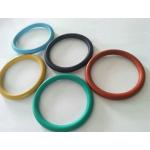
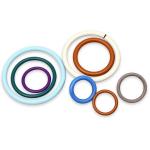
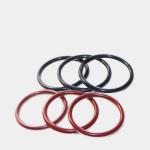
Compared with elastomer, PTFE has many obvious advantages
Although the most common O-ring materials are rubber or elastomer
compounds, some operating conditions and hardware configurations
warrant the use of PTFE as a material.
Compared with elastomer, PTFE has many obvious advantages. These
advantages include corrosion resistance, large temperature range
capability, excellent electrical performance and almost unlimited
shelf life, to name a few.
However, some factors should be considered before switching to PTFE
O-rings.
Although PTFE has some obvious advantages over elastomer, it also
has some disadvantages, which may have a negative impact on sealing
performance.
| MATERIAL | PTFE COATING |
| COLOR | COLOR |
| advantage | Easier installation - increased lubricity reduces assembly time Easier identification of parts by color coding - by size or
material Extend wear life - reduce corrosion, degradation, and downtime Resistance to dirt and debris contamination - no messy oil-based
lubricants Reduce the risk of repeated injury (carpal tunnel syndrome) The surface coating can make a difference between a smooth running
machine and frequent maintenance. Damage to the O-ring will cause
the machine to shut down, which means loss of productivity and
reduced profits. Extend the service life of important parts by
adding surface coating |
| Application field | Bakeware, Automotive, Chemical, and Oil & Gas chemical
industry, electrical and electronic industry, mechanical industry,
aviation and other fields. |
| Operating temperature | -30 °C to 260 ° C |
| function | Easier identification of parts by color coding - by size or
material |