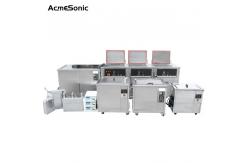
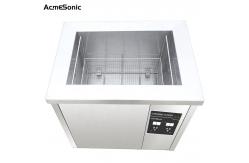
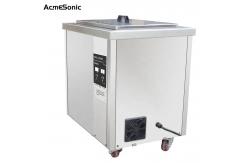
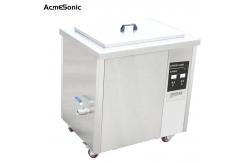
1. How to choose the suitable ultrasonic cleaner?Measure the dimensions of largest parts to be cleaned and make sure
to select a tank that will accommodate these parts. In addition,
pay attention to the internal dimensions of the parts basket, since
this is most likely where you will put the parts during cleaning.
2. How to choose correct Ultrasonic Frequency?
Most ultrasonic cleaners operate between 28 and 40 kHz.This
frequency range is well suited to the vast majority of cleaning
tasks. A lower frequency such as 28 kHz produces larger cavitation
bubbles. When these bubbles implode they release a larger amount of
cleaning energy. For coarse cleaning such as removal of lapping
abrasives or polishing paste, a lower frequency will be more
effective. A higher frequency produces smaller cavitation bubbles.
These cover fine featured complex surfaces more thoroughly and are
more gentle than low frequencies.
3. Why need heating element?
Most cleaning operations are much more effective with heating. It's
a lot like doing laundry. A hot cleaning solution is best for
removing oils, machining coolants and a whole host of other
contaminants from just about any surface one can think of. Although
heat is a natural by-product of ultrasonic cavitation, cleaning
efficiency increases when you give it a boost by using ultrasonic
cleaners with thermostat- controlled heaters.