
Solid Track Etching System For Radon Cumulative Dose Monitoring Neutron Dose Measurement
|


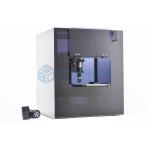
STE46 Solid Track Etching SystemProduct Introduction STE46 Solid Track Etching System is a precision measuring instrument developed by SHUOBODA, which can accurately measure the cumulative dose of radon in the environment. It is suitable for environmental protection, colleges and universities, nuclear power, research institutions and other fields.
Functional characteristics When the alpha particles emitted by radon decay bombard the detector, it produces submicroscopic damage tracks. The detector is chemically etched under certain conditions to expand the damage track so that it can be read and counted with a microscope or counting device. The number of tracks per unit area is proportional to the product of radon concentration and exposure time. The scale factor can be used to convert track density into radon concentration. Track etching method is passive sampling, and the detector is CR-39, which is placed in a sampling box of a certain shape to form a sampler. The new developed electrostatic collection type sampler has a detection limit of up to 0.6Bq/m3.
Applications: Radon cumulative dose monitoring Neutron dose measurement Fission and heavy ion nuclear reactions Geological age measurement Identification of heavy cosmic particles in astrophysics Earthquake prediction, determination of uranium in environmental water, etc. Product Features: Multi-focal plane image recognition technology Intelligent recognition mode: This system combines machine learning algorithms with manual intervention Performs secondary analysis and statistics on up to 32,000 field-of-view images Detection limit: 5 Bq/m³ using a standard passive radon detector 0.6 Bq/m³ using an electrostatic accumulation radon detector Etching system can etch from 1 to 256 detectors at a time
System Features Multi-Focal Plane Image Recognition Technology Solid track detectors may accumulate dust and non-detectable damage during daily use and during the etching process. These can interfere with normal measurements and make it difficult to distinguish between valid tracks and impurity interference. Multi-Focal Plane Image Recognition Technology uses different focusing distances to create different focal plane images of the object being identified to distinguish valid tracks from impurity interference.
Intelligent Recognition Mode This system combines machine learning algorithms with manual intervention to significantly improve track recognition and counting performance.
Other Features The STES solid track etching system can perform secondary analysis and statistics on up to 32,000 field-of-view images. Reading results can be exported in .csv file format and Excel spreadsheets. Equipped with track image reanalysis software for advanced users: batch image analysis and detailed track morphology information. Detection Limit: Using a standard passive radon detector: 5 Bq/m³; Using an electrostatic accumulation radon detector: 0.6 Bq/m³.
Efficient Etching System The etching system can etch from one to 256 detectors at a time, depending on the user's workload. Etching small batches of detectors can reduce etchant usage and hazardous waste. The etching system's internals are constructed of corrosion-resistant materials, enhancing the safety and reliability of the etching process.
Detector Compatibility Can read CR-39 detector elements of any shape. It can read 64 square CR39s (1cm x 1cm); It can read 16 round CR39s (2.4cm diameter); It can read custom CR39 shapes and sizes up to 12cm x 12cm (with customizable reading field position and order).
Technical Parameters:
Standard Configuration The radon cup is designed through air exchange rate, cup shape and material to ensure that radon can diffuse into the radon cup with target effect within a given sampling period. Radon accumulation measurement requires the detector (CR-39) to be placed in the radon cup to form the entire sampling system. The detector that completes sampling under certain conditions is etched under certain conditions, then through the solid track reading system, it can accurately measure the radon cumulative dose in the environment.
Electrostatic collection cup Purpose: Radon (222Rn) sampling Diffusion mode: Radon diffuses from the bottom Size: Φ16.5cm; Height 23cm Weight: 1.5kg Detection limit: 0.6Bq/m3
Radon-Thorium cup Purpose: Radon (222Rn) and Thorium (232Th) sampling; Diffusion mode: Radon diffuses from the spiral; Thorium diffuses from the bottom Size: Φ60mm; Height 87mm Weight: 80g Detection limit: 9Bq/m3
Standard cup Purpose: Radon (222Rn) sampling Diffusion mode: Radon diffuses from the bottom Size: Φ66mm; Height 65mm Weight: 25g Detection limit: 9Bq/m3 |
||||||||||||||||||||||||||||||||||||||||||||||||||||||||||||||||||||||||||||||||||
| Product Tags: Solid Track Etching System Radon Cumulative Dose Monitor Neutron Dose Measurement | ||||||||||||||||||||||||||||||||||||||||||||||||||||||||||||||||||||||||||||||||||
|
Solid Track Etching System For Radon Cumulative Dose Monitoring Neutron Dose Measurement |

|
Radon And Daughter Continuous Monitor Portable Radiation Detection Systems |

|
Alpha Spectrum Electronic Radon Detector / Radon Testing Device |

|
Real Time Radon Thoron Monitor For Air Soil Water Radon Testing Device |

|
CR39 Radon Thoron Monitor Conductive Plastic Radon Dosimeter |