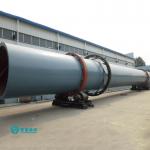
RDF pelletizing and drying line
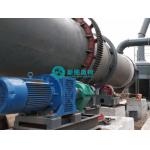
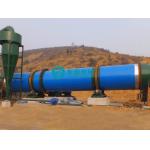
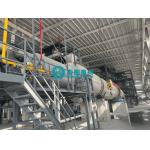
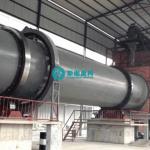
1.Product Introduction Rotary drum dryer
The RDF Pelletizing and Drying Production Line is a comprehensive system integrating material pre-treatment,
drying, pelletizing, and cooling processes. Its core objective is
to enhance the physical properties of RDF feedstock—such as
density, hardness, and calorific value—thereby optimizing its
storage, transportation, and combustion performance. The production
line typically utilizes high-purity combustible waste (such as
plastics, paper, and textiles) or specifically pre-treated
materials (such as dried sludge) as raw materials.
2.Application Rotary drum dryer
Energy Production: As a renewable energy source, RDF is used to substitute fossil
fuels for power generation or heating. With a typical heating value
of 10–16 MJ/kg, it is suitable for waste-to-energy plants or co-firing with coal
and biomass, significantly reducing greenhouse gas emissions.
Cement Manufacturing: The high-temperature environment of cement kilns is ideal for the
complete combustion of RDF. Replacing traditional fuels (like coal
or petcoke) with RDF reduces production costs, and its ash content
can be integrated into the clinker, achieving material circularity.
Steel Smelting: In the auxiliary energy sectors of steel production, RDF or its
derived syngas can replace a portion of fossil fuels, lowering the
carbon intensity and pollutant emissions of the manufacturing
process.
3.Working Principle Rotary drum dryer
The production line follows a logic of "Pre-treatment → Drying → Pelletizing → Post-treatment":
Raw Material Pre-treatment: Feedstock (such as dried sludge or sorted combustibles) undergoes
further shredding and homogenization to ensure uniform particle
size, facilitating downstream processing. Homogenization is vital
for stabilizing the final fuel composition and calorific value.
Drying: To achieve ideal pelletizing results, the moisture content must be
reduced to a low level. Drying systems (such as pre-crystallization
drying systems) remove moisture through heating, which boosts the
thermal value and prevents bonding failure during pelletization.
Pelletizing: The dried material is compressed into shape within a pellet mill
using mechanical pressure. Common equipment includes screw extruders and ring die pellet mills. Occasionally, small amounts of binders (such as starch) are added
to enhance pellet strength. This process dramatically increases the
material's bulk density and mechanical strength.
Cooling and Storage: After forming, the high-temperature pellets must be cooled to set
their shape. They are then stored under appropriate conditions
until ready for use.
4.Advantages Rotary drum dryer
Enhanced Fuel Quality: The pelletizing process significantly improves the density,
hardness, and calorific value of the RDF. For example, research
indicates that sludge-based RDF can reach a heating value of 3,071 kcal/kg after pelleting. Homogenization ensures consistent combustion
performance.
Optimized Logistics and Economics: High-density pellets drastically reduce storage space requirements
and lower long-distance transportation costs. Uniform pellet
specifications also facilitate automated feeding, improving the
operational efficiency and reliability of combustion equipment.
Promotion of Resource Circularity: This production line transforms waste—which might otherwise be
landfilled or processed inefficiently—into standardized alternative
fuel. This reduces reliance on virgin fossil fuels and decreases
landfill volume, aligning with circular economy principles.
Significant Environmental Benefits: Replacing fossil fuels like coal with RDF can reduce CO2 emissions by up to 50%. Simultaneously, modern processing technologies effectively
control other pollutants, achieving cleaner energy recovery.
5.Technical Specifications Rotary drum dryer
| Product Specs (m) | Capacity (T/H) | Main Motor Power (kW) | Main Motor Model | Main Gearbox Model | Ratio | Weight (T) |
| φ1.2×10m | 2.5 | 7.5 | Y160M-R3 | ZL50-16-1 | - | 13.5 |
| φ1.5×12m | 3.3 - 4.9 | 10 | Y160L-6B3 | JZQ500-III-2F | - | 18.9 |
| φ1.5×15m | 4 - 6 | 18.5 | Y200L-6 | JZQ500-III-2F | - | 21 |
| φ1.8×12m | 4 - 6 | 11 | Y200L-6 | ZQ50-16II-2 | 16.46 | 22.33 |
| φ2.2×12m | 7 - 12 | 18.5 | Y160L-6 | JZQ650-III | 31.5 | 37.6 |
| φ2.2×14m | 7 - 12 | 18.5 | Y160L-6 | JZQ750-III | 31.5 | 40 |
| φ2.2×16m | 12 | 30 | Y225M-6 | JZQ750-III | 31.5 | 45 |
| φ2.4×14m | 12 | 30 | Y250M-6 | JZQ750-III | 31.5 | 51 |
| φ2.4×18m | 10 - 13 | 37 | Y250M-6 | ZL85-13-1 | 27.16 | 54 |
| φ2.4×20m | 10 - 14 | 37 | Y250M-6 | ZL85-13-1 | 27.16 | 54.14 |
| φ3×20m | 25 | 55 | Y250M-4 | ZL100-16-1 | 41.52 | 78 |
| φ3×25m | 32 - 36 | 75 | YR280M-4 | ZL100-16-1 | 41.52 | 104.9 |
6.Our Solutions