Lithium battery black mass recycling rotary kiln
1.Product Introduction Calcination Rotary Kiln
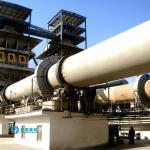
The Lithium Battery Black Mass Recycling Rotary Kiln is the core
thermal engineering equipment for the resource recovery of spent
lithium-ion batteries. It is specifically designed for the
high-temperature pyrolysis and carbonization of "Black Mass" (the
mixture of cathode and anode active materials) obtained after
crushing and sorting. Featuring a horizontal rotating cylinder
structure under the protection of an inert atmosphere (Nitrogen or
Argon), the kiln achieves the efficient decomposition of hazardous
components such as organic binders (e.g., PVDF) and residual
electrolytes. This process preserves the chemical activity of
high-value metals like Lithium, Cobalt, Nickel, and Manganese,
providing a high-grade feedstock for subsequent hydrometallurgical
lithium extraction. The system integrates electromagnetic induction
heating, hermetic atmosphere control, anti-clogging technology, and
multi-stage off-gas treatment for continuous, automated, and
low-emission industrial applications.
2.Application Calcination Rotary Kiln
EV Battery Recycling: Processing electrode plates and black mass from decommissioned
New Energy Vehicle (NEV) battery packs for resource regeneration.
Consumer Electronics Recycling: Centralized pyrolysis treatment for small-scale lithium batteries
from mobile phones, laptops, etc.
Material Regeneration Plants: Acting as the critical front-end equipment for hydrometallurgical
recovery, enhancing black mass purity and leaching efficiency.
Environmental Remediation: Reducing direct emissions of fluorine and phosphorus-containing
hazardous gases to meet regulatory requirements.
R&D and Pilot Platforms: Supporting process verification and parameter optimization for
technical industrialization.
3.Working Principle Calcination Rotary Kiln
Preheating & Desolvation (200–400°C): Black mass enters the front end of the kiln via a sealed feeding
system. Electrolyte residues and low-boiling organics are initially
volatilized in a low-oxygen environment.
High-Temperature Pyrolysis & Carbonization (500–800°C): As the kiln rotates, the material advances to the mid-temperature
zone where binders undergo anaerobic cracking. This generates
combustible pyrolysis gases and solid-phase defluorinated
carbonized material, facilitating the clean separation of active
materials from copper and aluminum foils.
Atmosphere Control & Safety: The entire process is protected by $N_2$ or $Ar$, with oxygen content strictly maintained at <100 ppm to prevent metal oxidation. Negative pressure operation prevents
the leakage of hazardous gases.
Energy Self-Balancing: Combustible gases generated during pyrolysis are purified and fed
back into the combustion chamber to support heating, achieving
thermal energy recycling and lowering operational costs.
Cooling, Discharge & Off-gas Treatment: Pyrolysis products are cooled to <80°C via a water-cooled rotary discharger. Flue gas passes through
cyclone dust removal, a quenching tower, acid-alkali absorption,
and an RTO (Regenerative Thermal Oxidizer) system to ensure emissions meet environmental standards.
4.Advantages Calcination Rotary Kiln
High Recovery Rates: Precision temperature control and uniform heating ensure stable
lithium compound activity. Lithium recovery from black mass is ≥90%, with Copper >98% and Aluminum >99%.
Energy Saving & Eco-Friendly: Electromagnetic induction heating achieves a thermal efficiency
of over 85%, reducing energy consumption by 40% compared to traditional gas kilns.
Superior Off-gas Control: Multi-stage treatment ensures $HF$ emissions are <1 mg/m³ and particulate matter <10 mg/m³, satisfying ultra-low emission standards.
Process Stability: Precise control within ±5°C and partitioned heating zones adapt to various battery chemistries
(NCM, LFP, etc.). An intelligent anti-clogging system (ceramic
coating + pulse cleaning) prevents kiln ringing, ensuring
continuous operation for ≥720 hours.
High Automation & Safety: PLC-based intelligent controls enable remote monitoring and
self-diagnosis. The system is equipped with over-temperature
alarms, pressure protection, and combustible gas monitoring.
Strong Adaptability: Capable of processing various types of electrode scraps and black
mass; the modular design facilitates easy maintenance and capacity
expansion.
5.Technical Specifications
| Model | Speed (r/min) | Inclination (%) | Capacity (t/h) | Gearbox Model | Ratio | Motor Model | Motor Power (kW) | Motor Speed (r/min) | Thrust Roller Type | Support Count | Weight (t) |
| Φ1.9/1.6x36 | 0.53-1.59 | 4 | 2.5-3 | JZQ750-1 | 48.58 | JZT-72-4 | 30 | 1200/400 | Mechanical | 3 | 53 |
| Φ2.1/1.8x36 | 0.5-1.51 | 4 | 4 | UT2-110 | 163.38 | JZS-81 | 30/10 | 1410/470 | .. | 3 | 75 |
| Φ1.2x25 | 0.5-1.6 | 3 |
| PM650 | 40.17 | JZTY71-4 | 22 | 1200/120 | .. | 3 | 34 |
| Φ1.6x32 | 0.158-0.258 | 3 |
| PM750 | 48.57 | JZJY61-4 | 15 | 1200/120 | .. | 3 | 46.82 |
| Φ1.8x45 | 0.66-1.98 | 4 | 3.5 | UT2-110 | 163.38 | JZS-81 | 30/10 | 1410/470 | .. | 3 | 80 |
| Φ2.2x50 | 0.125-1.25 | 3.5 | 4 | ZS145-11 | 157 | YCT280-4A | 30 | 1320/132 | .. | 3 | 130.71 |
| Φ2.5x50 | 0.516-1.549 | 3.5 | 5.5 | ZS165-7 | 99.96 | YCT355-4A | 55 | 1320/440 | .. | 3 | 167.5 |
| Φ3x48 | 0.3309-3.309 | 3.5 | 35 | ZL130-14 | 32.11 | ZSN4-250-21B | 90 | 1000/100 | .. | 3 | 237 |
| Φ3.2x50 | 0.398-3.975 | 3.5 | 50 | ZL130-16 | 40.85 | ZSN4-280-11B | 190 | 1500/150 | .. | 3 | 263 |
| Φ3.3x52 | 0.391-3.91 | 3.5 | 50 | ZSY500-28 | 27.707 | ZSN4-315-082 | 190 | 1000/100 | .. | 3 | 280.8 |
| Φ4x60 | 0.396-3.96 | 3.5 | 104 | ZSY630-35.5 | 34.601 | ZSN4-355-092 | 315 | 1000/100 | Hydraulic | 3 | 487.5 |
| Φ4.2x60 | 0.4165-4.165 | 3.5 | 116 | ZSY710-35.5 | 35.526 | ZSN4-355-12 | 420 | 1000/100 | .. | 3 | 576.1 |
| Φ4.3x62 | 0.398-3.98 | 3.5 | 125 | ZSY710-35.5 | 35.714 | ZSN4-355-12 | 420 | 1000/100 | .. | 3 | 598.5 |
| Φ4.8x74 | 0.35-4 | 4 | 208 | JH710C-SW305-40 | 42.226 | ZSN4-400-092 | 630 | 1500/130 | .. | 3 | 841 |
6.Our Solutions