
FX3 PLC Programmable Logic Controllers Compact For Global Small Scale Automation
|

Detailed Product Description
|
FX3 PLC: Compact, Cost-Effective for Global Small-Scale Automation FX3 PLC is a compact, cost-effective control solution tailored for
global small-scale automation scenarios. Boasting a plug-and-play
design that simplifies installation for overseas local technicians,
it holds CE and UL certifications to meet the compliance
requirements of markets worldwide. Ideal for workshops, small
production lines, vending machines, and HVAC systems, this PLC
delivers reliable performance with low maintenance costs. Its
space-saving structure fits dense equipment layouts, while the
easy-to-use programming interface eliminates the need for
specialized training—making it the go-to choice for small and
medium-sized overseas factories looking to upgrade automation
without heavy investment. Core Features & Highlights Ultra-Compact Design, Space-Saving & Easy to Install
High Cost-Effectiveness, Ideal for Small-to-Medium-Scale Needs
High-Speed Processing & Stable Performance
Flexible Expansion, Adapts to Diverse Scenarios
Globally Compatible, Hassle-Free Cross-Border Use
High Usability, Lowers Local Maintenance Costs
Core Technical Parameters
Product Model List The FX3 series is categorized into four main types for overseas
markets: FX3S (Entry-Level), FX3G/FX3GC (Standard), and FX3U/FX3UC (High-Performance). Sub-models are differentiated by I/O point counts, output types,
and power supply modes to meet diverse industrial needs worldwide. FX3S Series (Entry-Level) As the entry-level micro PLC, mainstream overseas models focus on
small I/O configurations. Core models include:
FX3G/FX3GC Series (Standard) FX3G serves as the mainstay standard model, while FX3GC is its
compact variant. Overseas models are classified by I/O points: FX3G Core Models
FX3GC Compact Models
FX3U/FX3UC Series (High-Performance) FX3U is the flagship model of the series, and FX3UC is its compact
connector-type variant. The series offers a rich lineup of overseas
models covering various I/O counts and output types: FX3U Core Models (By I/O Points + Output Types)
FX3UC Connector-Type Models
Industry Applications Small-Scale Food Processing Perfect for small workshops in Thailand, Vietnam, and Indonesia
that make snacks, sauces, or bottled drinks. The FX3S series'
compact size fits into cramped electrical cabinets, and its 10-30
I/O points are enough to control conveyor belts, filling valves,
and temperature sensors. Local technicians can learn to program it
in a day—no need for expensive experts. It works with 220V power
grids common in the region, and the anti-humidity design holds up
in tropical rainy seasons. Vending Machine & Kiosk Manufacturing A top pick for vending machine makers in Europe and North America.
FX3G models handle the core controls of snack, beverage, or ticket
vending machines—managing payment systems, product dispensing, and
inventory counting. The plug-and-play design cuts down assembly
time for OEMs, and its low power consumption helps vending machines
meet EU energy efficiency standards. It also supports MODBUS
communication, so it can connect to remote monitoring systems for
real-time sales data tracking. HVAC & Building Automation Used in small office buildings, retail stores, and hotels across
Europe. The FX3U series controls air conditioners, ventilation
fans, and lighting systems—adjusting temperature and brightness
based on occupancy sensors. Its CE certification means it can be
directly installed without extra compliance checks, and the
Ethernet expansion module lets facility managers control everything
via a smartphone app. For small projects, it's way cheaper than
big-brand building automation controllers. Textile Machinery A staple in India and Bangladesh's spinning and weaving factories.
FX3G models control small looms, yarn tensioners, and fabric
cutting machines—synchronizing speed to reduce yarn breakage. The
dust-resistant design works in cotton-fluff-filled workshops, and
the local language programming interface lets factory workers
operate it without knowing English. It also supports high-speed
pulse output, so it can adjust loom speed in real time based on
fabric thickness. DIY Workshop & Small Manufacturing Popular with garage inventors and small factories in the US and
Canada that make custom parts, 3D printer enclosures, or small
assembly lines. The FX3U series' high I/O count (up to 384 points)
handles complex tasks like robotic arm control and quality
inspection sensors. It's compatible with 110V North American power,
and the GX Works software's English version is easy to use for
hobbyists. Many makers use it to automate small batch production
without spending a fortune on industrial PLCs. Agricultural Equipment Ideal for small to medium-sized farms in Brazil, Argentina, and
Mexico. FX3S/FX3G models control irrigation systems, greenhouse
temperature regulators, and grain drying machines. The wide voltage
input (100-240V) works with unstable rural power grids, and the
rugged design resists dust and vibration from farm machinery.
Farmers can set up automatic irrigation schedules to save water,
and the PLC's battery-free program storage means no data loss
during power outages. Packaging Machinery Used by local packaging workshops in Dubai, Saudi Arabia, and Qatar
that make plastic bags, labels, or gift boxes. The FX3U series
controls sealing machines, label printers, and bagging
equipment—adjusting speed for different package sizes. It can
withstand the high temperatures and dry dust of Middle Eastern
workshops, and the RS422 interface connects to barcode scanners for
product tracking. For small businesses, it's a cost-effective
alternative to expensive imported packaging controllers. Frequently Asked Questions Q1: North American factories use 110V voltage—can the FX3 series be
connected directly? Will it burn the module? A: Most models work perfectly! The FX3G/FX3U series support a wide
AC voltage range of 100-240V, so they can be plugged directly into
110V (North America), 220V (Europe), or 230V (Southeast Asia) power
supplies—no extra transformer needed. Only some FX3S models require
DC24V input; just use a local switching power supply to convert the
voltage. The key is to check the nameplate before wiring—never
connect AC power to DC terminals. A Southeast Asian customer once
made this mistake and fried the motherboard. Q2: After installing the PLC in a Middle Eastern workshop, it keeps
restarting automatically. Is it because of the high temperature? A: That's almost certainly the case! Workshop temperatures in the
Middle East often exceed 55℃ in summer, which is the maximum
operating temperature for the FX3 series—overheating causes
frequent restarts. The fix is simple: ① Install the PLC in an
air-conditioned electrical cabinet, don't leave it exposed to the
workshop environment. ② If air conditioning isn't an option, add a
cooling fan to the cabinet and put in some desiccant to cool things
down and absorb moisture. Also, keep the PLC at least 10cm away
from heat sources like inverters and heaters. Q3: European customers say the PLC's communication protocol is
incompatible and can't connect to their PROFINET system. What to
do? A: The FX3 series comes with RS422 and USB as standard, which don't
support PROFINET natively. Two solutions: First, install a PROFINET
communication module—it plugs directly into the PLC's expansion
slot and works right out of the box. Second, ask the customer's MES
engineer to use the MODBUS protocol for connection. All FX3 models
support MODBUS; no program modifications are needed—just set the
register addresses in the software. We fixed this exact issue for a
German customer before, and the module got the system up and
running the same day. Q4: In a Southeast Asian textile mill with heavy dust, the PLC's
I/O points failed after six months of use. How to fix this? A: Dust got into the terminal blocks and caused oxidation! Cotton
lint and dust in textile mills can seep into the PLC's wiring
terminals, leading to poor contact over time. First, cut the power,
unplug the wires from the terminals, and blow the terminals clean
with a cold-air hair dryer, then spray some anti-rust agent on
them. If the I/O points still don't work, you don't need to replace
the module—just switch the faulty points to spare ones in the GX
Works software. It takes 5 minutes tops. Next time, install a dust
filter on the electrical cabinet and clean it regularly. Q5: Overseas technicians can't use the Japanese/English programming
software. How to get them up to speed quickly for debugging? A: No need to panic. The FX3 supports ladder logic programming,
which has a simple interface. Plus, the GX Works software has an
English version with almost the same operation logic as the Chinese
version. Have the technicians watch a basic tutorial focusing on
"wiring configuration" and "program upload/download"—they'll be
able to handle simple debugging in half a day. If they still
struggle, Mitsubishi has overseas technical support that can assist
remotely. Alternatively, hire a local industrial control service
provider—most of them are familiar with mainstream PLCs like the
FX3, and paid debugging isn't expensive. Q6: After installation, the PLC shows a "communication timeout"
error and can't connect to the HMI. What's the cause? A: Two common scenarios: First, the communication cable is wired
incorrectly. The FX3's RS422 interface uses four wires—mixing up
positive and negative polarities will cause issues. Always use
shielded cables and route them separately from power cables to
avoid interference. Second, IP address conflict. Overseas workshops
have lots of equipment, so duplicate IP addresses are common.
Switch to a static IP address that doesn't overlap with other
devices. We troubleshooted this for a Mexican customer
before—changing the IP fixed the connection immediately. Q7: A South American farm uses the FX3 to control its irrigation
system, but the program is lost every time there's a power outage.
Why? A: Most FX3 models use battery-free program storage, so
theoretically, programs shouldn't be lost. But rural power grids in
South America are unstable—frequent power cuts can cause data
corruption. Solutions: ① Install a small UPS for the PLC—it can
supply power for a few minutes after an outage, allowing the
program to save properly. ② Back up the program to a USB drive
regularly—this way, you can restore it quickly if it gets lost.
Also, avoid cheap third-party UPS units—unstable voltage from these
can damage the PLC. Q8: During acceptance, European customers say the PLC doesn't have
CE certification and won't allow power-on. What to do? A: All FX3 models have CE certification—you just need to find the
right documents! Contact Mitsubishi's overseas office, provide the
PLC model and serial number, and they'll send you the official
certification papers. Print them out and show them to the customer.
Also, make sure the wiring complies with EU standards—for example,
the ground wire cross-sectional area should be no less than 2.5mm²,
and power cables must be routed separately from signal cables. Even
with certification, customers might find fault if the wiring is
substandard. We helped an Italian customer resolve this issue by
providing the certification documents and rectifying the wiring,
and the acceptance passed smoothly. |
||||||||||||||||||||||||||||||||||||||||||||||||||||||||||||||||
| Product Tags: FX3 PLC Programmable Logic Controllers FX3 Programmable Logic Controllers PLC Programmable Logic Controllers Compact |
Related Products
|
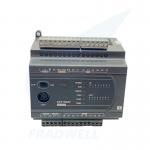
DVP PLC for Small Automation – CE/UL Certified, 0.1μs Instruction |

|
WAGO PFC200 G2 | Cybersecurity PLC for EU CRA 2026 |
|
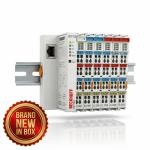
Beckhoff EK1100 EtherCAT Couplers & Terminals | New in Box |

|
Siemens LOGO! 9 Logic Module 6ED1052 Series | Cloud-Native IIoT Controller - 2026 New Generation |
|
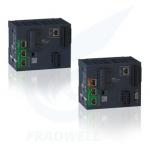
Schneider Modicon M262 IIoT PLC Controller - 2026 Latest Version |
|
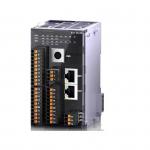
XL5H EtherCAT Bus Controller Card Type Ultra Fast Speed For Versatile Control Needs |
Email to this supplier