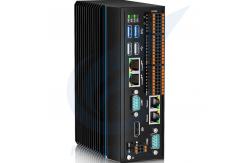
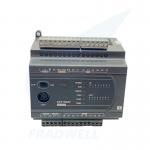
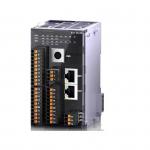
XA Series: All-in-One Intelligent Controllers for Industrial
Automation The XA Series stands as a highly integrated, all-in-one intelligent
industrial controller engineered to streamline complex automation
workflows across global manufacturing facilities. Combining
advanced control logic, seamless connectivity, and user-friendly
programming capabilities in a compact, durable unit, it eliminates
the need for multiple standalone components, reducing system
complexity and installation costs. Ideal for applications ranging
from packaging lines and assembly processes to automotive and
electronics manufacturing, the XA Series delivers reliable,
high-performance operation 24/7, empowering factories to boost
production efficiency, minimize downtime, and achieve flexible,
scalable industrial automation upgrades with ease. Product Features - Integrated All-in-One Design: Compact structure integrating logic control, motion control, and
data processing functions; eliminates the need for additional
expansion modules and reduces equipment footprint.
- Intelligent Operation & Maintenance Capabilities: Built-in fault self-diagnosis, predictive maintenance, and remote
monitoring functions; supports real-time data collection and
analysis to help users grasp equipment status in time.
- Flexible Programming & Compatibility: Compatible with mainstream industrial communication protocols
(Modbus, Ethernet/IP, PROFINET, etc.); supports multiple
programming languages, and can be seamlessly integrated with
existing factory automation systems.
- High-Speed & High-Precision Control Performance: Equipped with high-speed input/output ports, which can respond to
field signals quickly; it has excellent motion control accuracy and
is suitable for complex process control scenarios.
- Stable & Durable Industrial Grade Hardware: Adopts industrial grade components, with strong anti-interference
ability; it can operate stably for a long time in harsh
environments such as high temperature, high humidity and strong
electromagnetic interference, and supports 7×24 hours of continuous
work.
Product Advantages - Lower System Construction Cost: The all-in-one design reduces the purchase cost of additional
modules, wiring cost and installation space cost; the simplified
system structure also shortens the debugging cycle and reduces the
later maintenance cost.
- Improve Production Efficiency & Flexibility: High-speed control performance shortens the equipment response
time and improves the production beat; flexible expansion and
compatibility support rapid line transformation and realize
multi-variety small-batch production.
- Reduce Downtime Risks: Intelligent fault diagnosis and remote monitoring functions can
detect potential problems in advance, reduce unplanned downtime;
simple maintenance process can quickly restore equipment operation
and minimize production loss.
- Easy to Deploy & Operate: User-friendly programming interface reduces the learning threshold
for technicians; the plug-and-play design and standardized
communication protocol can realize quick connection with other
equipment, reducing the difficulty of system integration.
- High Cost-Effectiveness & Strong Scalability: It has the performance comparable to high-end controllers, but the
price is more competitive; it supports function expansion through
optional accessories, which can meet the growing automation needs
of enterprises.
Core Technical Specifications | Parameter Category | Specific Parameter Item | Specification |
|---|
| Core Processor | Processor Architecture | Intel X86 (J6412 quad-core 2.0GHz / Celeron 1.5GHz optional; Core
i7 for high-end models) |
| Computing Performance | LD Bit instruction: 1.99ns; MovDouble instruction: 4.95ns;
Double-precision floating point: 5.5ns |
| Operating System | Dual-system support (Windows/Linux optional); Hypervisor
virtualization compatible | | Memory & Storage | RAM | DDR4 4GB as standard, scalable for high-end models |
| Storage | 128GB M.2 SSD (expandable); Sufficient capacity for program and
data storage | | Motion Control | Maximum Axis Count | Supports 256-axis EtherCAT motion control with 1ms synchronization
cycle for 256 axes |
| Control Functions | Compatible with single-axis, axis group, electronic cam, flying
shear, CNC, robot and other complex algorithms; Control accuracy up
to 250-500μs |
| High-Speed I/O | 4 channels of 200KHz high-speed counting + 4 channels of 200KHz
pulse output; Encoder access supported | | Input/Output (I/O) | Digital I/O | 12 inputs & 12 outputs as standard (NPN/PNP compatible),
transistor output; Remote I/O expansion supported |
| Analog I/O | Optional expansion modules available for industrial sensors and
actuators | | Communication Interfaces | Ethernet Ports | 3-4 Gigabit Ethernet ports; Supports EtherCAT, TCP/IP, Modbus TCP |
| Serial Ports | 1-2 RS232/RS485 ports each; Modbus RTU supported |
| Expansion Interfaces | 2×USB2.0, 2×USB3.0; DP/HDMI display interface (max 4096×2160@60Hz) | | Programming & Compatibility | Programming Platform | XS Studio; Supports IEC 61131-3 (LD/ST/FBD/IL/SFC); Compatible with
C++/C#/LabVIEW |
| Protocol Support | OPC UA, Ethernet/IP, PROFINET and other mainstream industrial
protocols | | Environment & Reliability | Operating Temperature | -5℃~55℃ (-20℃~55℃ for some models) |
| Operating Humidity | 5% - 95%RH (non-condensing); IP20 protection grade; 7×24h
continuous operation supported |
| Certifications | CE certified, compliant with industrial safety standards | | Physical Specifications | Dimensions (mm) | Compact model: 61.6×172×125; Standard model: 66×236×165 |
| Power Supply | DC24V industrial power supply; Built-in UPS for power-off data
retention |
Xinje XA Series Overseas Full Model List | Series | Model | Core Positioning | Key Configuration Differences | Application Scenarios |
|---|
| XA Series (Industrial Intelligent Controller, X86 Architecture) | XA-310 | Entry-level X86 intelligent controller | Intel Celeron 1.5GHz, 4GB DDR4, 128GB SSD, 256-axis EtherCAT, 12
inputs & 12 outputs | Small-scale automation production lines, basic motion control |
| XA-520 | Standard X86 intelligent controller | Intel J6412 quad-core 2.0GHz, 8GB DDR4, 256GB SSD, 256-axis
EtherCAT, 1ms synchronization cycle | Medium-sized production lines, multi-axis linkage (e.g., packaging,
electronic assembly) |
| XA-530 | High-performance X86 intelligent controller | Intel Core i3, 8GB DDR4, 512GB SSD, 256-axis EtherCAT, supports
robot/CNC algorithms | Complex motion control (e.g., lithium battery, photovoltaic
equipment) |
| XA-550 | Flagship X86 intelligent controller | Intel Core i7, 16GB DDR4, 1TB SSD, 256-axis EtherCAT,
high-precision synchronization (250μs) | High-end manufacturing, robot workstations, precision machining |
Key Overseas Industries & On-Site Scenarios - Lithium-ion Battery Manufacturing (High Growth in Europe, North
America, Southeast Asia)
Typical Scenarios: Winding machines, liquid injection machines,
cell stacking equipment, module assembly lines.
How It Works: XA-530/XSA530 handles 256-axis EtherCAT
synchronization (500μs cycle) for precise tension control during
electrode winding. It integrates machine vision to check tab
alignment (accuracy ±0.05mm), cutting the need for separate vision
controllers. XSA550 even runs battery formation/grading algorithms
directly, replacing expensive specialized controllers and saving
30%-40% on system costs.
Why It Fits: Perfect for gigafactory expansion where multi-axis
precision and cost-efficiency matter most. - 3C Electronics Assembly (Big Demand in Mexico, Vietnam, Malaysia)
Typical Scenarios: High-speed SMT pick-and-place machines, PCB
inspection lines, phone case cutting/trimming equipment.
How It Works: XSA520-W/L syncs 16+ axes for component placement
(cycle time 1ms) and connects to industrial cameras via Ethernet
for real-time defect checks. XA-310 is a budget-friendly pick for
small contract manufacturers running basic testing stations, as it
supports 128-axis motion without overspending.
Why It Fits: Meets the need for fast changeovers between product
models and tight integration with existing factory networks
(EtherCAT+OPC UA). - Solar PV Equipment (Hot in Middle East, Europe, Australia)
Typical Scenarios: Wafer slicers, cell stringers, module
laminators, tracker control systems.
How It Works: XA-550 uses Core i7 power to run CNC-like algorithms
for solar cell cutting, keeping edge precision within ±0.02mm.
XSA330-L (Linux) runs 24/7 in desert-grade enclosures, managing
tracker tilt angles and communicating with weather stations via
Modbus TCP. It cuts down on external IPCs, streamlining the system.
Why It Fits: Aligns with the push for local PV manufacturing and
the demand for reliable, low-maintenance controllers in remote
solar farms. - Packaging & Printing (Steady Demand Globally)
Typical Scenarios: High-speed labelers, flexible packaging
machines, gravure printing presses, carton folder-gluers.
How It Works: XSA520 supports electronic cam and flying shear
functions, syncing the printing roller with the web feed (no more
misalignment). XA-520 integrates HMI and motion control in one
unit, so operators can tweak speeds and job parameters on-the-fly
without switching devices. It's a hit with small-to-medium
converters tired of complicated multi-device setups.
Why It Fits: Cuts downtime during job changes and slashes system
integration costs by 25% vs. traditional PLC + HMI combos. - Material Handling & Logistics Automation (Booming in North
America, Europe)
Typical Scenarios: AGV fleets, conveyor sorting systems, warehouse
palletizing robots.
How It Works: XSA550-W runs AGV fleet management algorithms
natively, coordinating 50+ vehicles with sub-100ms latency. XA-310
acts as a local controller for conveyor zones, linking to the main
system via EtherCAT and handling 12 digital I/Os for
sensor/actuator control.
Why It Fits: Works seamlessly with OPC UA to connect to WMS/MES,
which is exactly what 3PLs and e-commerce warehouses need. - Metal Fabrication & Machine Tools (Strong in Germany, Italy,
Turkey)
Typical Scenarios: CNC lathes, laser cutting machines, sheet metal
bending presses.
How It Works: XA-530/XSA550 runs CNC code directly (supports
G-code) and syncs the laser head with the worktable (250μs cycle)
for clean, precise cuts. Linux-based XSA models offer enhanced data
security, which is a must for job shops handling sensitive part
files.
Why It Fits: Replaces costly traditional CNC controllers at a
fraction of the price while keeping the same precision and
programming flexibility. - Food & Beverage Processing (Steady in EU, North America, Japan)
Typical Scenarios: Bottle filling lines, candy wrapping machines,
dairy packaging systems.
How It Works: XSA330-W controls 16 I/Os for filling valves and
syncs with servo drives for label application (speed up to 600
bottles/min). Its Windows system makes it easy to log batch data
and link to food safety traceability software. XA-520 handles
multi-lane packaging lines, keeping all lanes in sync to avoid
jams.
Why It Fits: CE-certified for food-safe environments and supports
quick recipe changes for seasonal products.
Quick Sizing Guide | Model | Best For | Typical Overseas Client Type |
|---|
| XA-310/XSA330 | Basic motion, cost-sensitive lines | Small workshops, startup manufacturers | | XA-520/XSA520 | Medium-scale multi-axis lines | Mid-size OEMs, contract packagers | | XA-530/XSA530 | Complex motion, vision integration | Large component makers, solar panel factories | | XA-550/XSA550 | High-end CNC/robot projects | Automotive suppliers, battery gigafactories |
Common Installation & Operation Q&A Q1: Just unboxed and powered on, the controller won't light up and
can't connect to the computer. What's wrong? A: It's almost always a power supply issue. Don't plug it directly
into local sockets--voltage standards vary overseas! The entire
XA/XSA series runs on DC24V industrial power supply. First, use a certified switching power supply, and double-check
the positive/negative polarity (reverse connection will trigger
protection). Also, ensure power terminals are tightly fastened. For
Europe and North America, grounding is mandatory--poor grounding
can also cause power failures. Q2: Keeps disconnecting or having high latency when connecting to
the factory's EtherCAT network. How to fix it? A: Check two key points first:
1. Use industrial-grade shielded twisted-pair cables --regular network cables can't resist interference from inverters
or welders on the production floor.
2. IP address conflict is another common culprit. Overseas factories often use fixed IP
segments; change the controller's default IP to match the main
station's network segment. Set the synchronization cycle to 1ms
(for up to 256 axes) to boost stability. Pro tip: Linux-based XSA
models have better anti-interference performance for harsh
industrial environments. Q3: Can't install the programming software XS Studio on overseas
computers running English Windows 10/11. A: No need to change the system language--install the Chinese
version directly! The main issue is missing the Microsoft .NET Framework 4.8 runtime. Download it from the official Microsoft website first, then run
the installer as an administrator. Also, install the software in an
English-only file path (e.g., D:XS_Studio) instead of Chinese paths like "My
Documents"--this fixes 90% of compatibility issues. Q4: The controller freezes after running for a while, especially in
summer. What's causing this? A: Heat dissipation is the core problem! The XA/XSA series has an
IP20 rating--it can't be placed in dusty, high-temperature areas
without protection. Many overseas workshops lack air conditioning,
so mount the controller in an electrical cabinet with a cooling fan and keep the cabinet temperature below 55℃. Also, avoid
overloading the device--don't run too many background programs when
operating 256 axes at full load; leave enough processing resources
for core tasks. Q5: Trying to connect to the customer's OPC UA system, but there's
a protocol compatibility issue. A: All XA/XSA models natively support OPC UA--no extra modules
needed! Here's the fix:
1. Enable the OPC UA server in the controller settings.
2. Add the server address to the customer's upper-level software
(e.g., Siemens WinCC, Rockwell FactoryTalk).
3. Check the "Secure Connection" option--European and North American customers have strict data security
requirements; skipping this step will cause connection failures.
Use UA TCP protocol instead of the outdated OPC DA for better
compatibility. Q6: Overseas after-sales support is slow --how can I troubleshoot
common faults myself? A: Use the controller's built-in fault self-diagnosis function! Open the "Diagnostic Log" in XS Studio--it clearly identifies
issues like I/O errors, communication failures, or power supply
problems. For example:
- "EtherCAT Slave Lost" -> Check cable connections or slave
device status.
- "I/O Input Abnormal" -> Inspect sensor wiring. Also, download
the English version of the troubleshooting manual from Xinje's
overseas official website--it covers 80% of common on-site
problems. Q7: European customers require CE certification. The controller
itself is CE-certified, but do the expansion modules need
certification too? A: Absolutely! The XA/XSA main unit has CE certification, but all expansion I/O modules and communication modules must have
corresponding CE certificates as well. When purchasing, specify that you need the "overseas
certified package"--don't use domestic-only modules, or the
customer will face customs clearance issues. Additionally, ensure
wiring complies with EU LVD (Low Voltage Directive) standards, and
always secure the grounding terminal tightly. Certification | Certification Type | Applicable Regions | Core Functions | Typical Application Scenarios |
|---|
| CE Certification (LVD + EMC) | EU, Middle East, Southeast Asia | Complies with Low Voltage Directive and Electromagnetic
Compatibility Directive; mandatory for EU market access | Machinery manufacturing, packaging lines, solar PV production;
withstands high interference from inverters/welders | | UL Certification | North America (USA, Canada) | Meets North American industrial safety standards; passes rigorous
tests on short-circuit, overload, and insulation performance | Auto parts manufacturing, food processing; fits high-safety
requirements of North American factories | | FCC Certification | USA, Canada, most Latin American countries | Controls electromagnetic radiation; ensures no interference with
surrounding communication equipment | Electronics manufacturing, 3C product assembly; suitable for
production lines with multiple communication devices | | CNAS Laboratory Accreditation (ILAC Mutual Recognition) | Most ILAC member countries/regions | Test reports are internationally recognized; shortens certification
cycles for overseas projects | Custom export projects, third-party inspection and acceptance;
reduces costs of repeated testing |
|