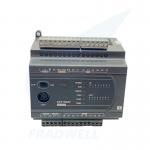
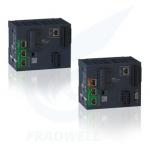
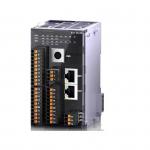
EVO700 Flagship Mid-range PLC: Unmatched Performance for Industrial
Automation The EVO700 series is a flagship PLC product developed by Inovance Technology based
on the iFA Evolution platform. Designed in compliance with PLCopen specifications and the IEC 61131-3 standard, it supports a full range of standard industrial networks
including EtherCAT, EtherNet/IP, OPC UA, Modbus TCP, TCP/IP and CAN. Built on an all-new platform architecture and backed by the
full-scenario intelligent iFA Evolution platform, the EVO700 series helps reshape the high reliability, flexibility
and efficient development of non-standard equipment. Product Features - Flagship-grade PLC developed on Inovance's proprietary iFA
Evolution platform, engineered for full-scenario intelligent
industrial control.
- Fully compliant with PLCopen specifications and the IEC 61131-3
international standard, ensuring compatibility with global
industrial automation protocols and development practices.
- Supports a comprehensive suite of standard industrial communication
networks, including EtherCAT, EtherNet/IP, OPC UA, Modbus TCP,
TCP/IP, and CAN.
- Built on an new platform architecture to deliver optimized
performance for non-standard equipment development scenarios.
Product Advantages - High Reliability - Standard-compliant hardware and software design guarantees
stable, uninterrupted operation even in demanding non-standard
equipment applications, minimizing unplanned downtime.
- Superior Flexibility - Multi-protocol network compatibility enables seamless
integration with existing industrial systems and third-party
devices, adapting to diverse automation needs with minimal
configuration.
- Efficient Development - Leveraging the iFA Evolution platform's intelligent tools, the
EVO700 series streamlines the R&D process for non-standard
equipment, significantly reducing development cycles and
time-to-market.
- Global Market Readiness - Adherence to international industrial standards removes
technical barriers for overseas deployment, making it an ideal
solution for global automation projects and cross-border
applications.
Core Technical Specifications | Specification Category | Details |
|---|
| Model Range | EVO763-0804TN (32 axes), EVO764-0804TN (64 axes), EVO765-0804TN (96
axes), EVO766-0804TN (128 axes) | | Processor & Operation | OS: Linux Preempt-RT
Execution Mode: Compiled execution
Programming Languages: IEC 61131-3 compliant (LD, ST) | | Memory Capacity | User Program Storage: 128MB
User Data Storage: 128MB
Power Failure Retention: 5MB (built-in capacitor, no external UPS
required)
Power Failure Retention Time: 150ms | | Motion Control | Supports multi-axis synchronous control, up to 128 axes (varies by
model)
Pulse control for stepper motors and inverters | | Communication Protocols | EtherCAT: 1 channel + 1 redundant channel (max 256 slaves per
channel)
EtherNet/IP: 2 channels (max 256 slaves per single/dual port)
OPC UA: 2 channels (max 50 sessions per channel)
Modbus TCP: 2 channels (max 63 masters, 16 slaves)
Modbus RTU: 1 channel (max 31 masters, 1 slave)
CANopen: 1 channel (master only, max 64 slaves) | | Ethernet Interface | 2 x RJ45 ports (10M/100M/1000Mbit/s, full-duplex, max communication
distance 100m)
Supports ring network configuration via EtherCAT | | I/O Specifications | Digital Inputs: 8 channels (3 differential-compatible, max input
frequency 200kHz, optical isolation)
Digital Outputs: 4 channels (transistor sink type, 0.5A per
channel, 2A per common terminal, short-circuit protection)
Expansion Capacity: Up to 32 GL20-XX local expansion modules (relay
power module required for >16 modules) | | Power Supply | Input Voltage: 24VDC (-15% ~ +20%, SELV input)
Input Current: Max 4A, typical 2.4A
Bus Output: 5.2VDC (4.75VDC ~ 5.5VDC), 2A max
Protection: Short-circuit protection, reverse polarity protection | | Environmental Adaptability | Operating Temperature: Refer to official specifications
(industrial-grade wide temperature range)
Storage Temperature: Refer to official specifications
Humidity: 5% ~ 95% (non-condensing)
Protection Class: IP20 | | Certifications | CE, UL/cUL, KCC, EAC, UKCA, RoHS compliant
Meets EMC (2014/30/EU), LVD (2014/35/EU) directives | | Physical & Other Features | Heat Dissipation: Natural cooling with internal heat sink
Battery: CR2032 (3V, ≥210mAh, -40℃ ~ +85℃ operating temp)
Clock Deviation: ≤4 seconds/day (room temperature) |
Model Comparison | Model Number | Max Axes Supported | Motion Control Capability | Key Communication Interfaces | Typical Application Scenarios |
|---|
| EVO763-0804TN | 32 axes | Multi-axis synchronous control, pulse control for
steppers/inverters | 1*EtherCAT (redundant channel), 2*EtherNet/IP, OPC UA, Modbus TCP,
CANopen | Small-to-medium non-standard equipment, packaging machinery,
material handling systems | | EVO764-0804TN | 64 axes | High-precision synchronous motion, electronic gearing, cam
profiling | 1*EtherCAT (redundant channel), 2*EtherNet/IP, OPC UA, Modbus TCP,
CANopen | Printing machinery, textile equipment, assembly lines | | EVO765-0804TN | 96 axes | Multi-group coordinated motion, complex trajectory planning | 1*EtherCAT (redundant channel), 2*EtherNet/IP, OPC UA, Modbus TCP,
CANopen | Automotive component production lines, semiconductor handling
equipment | | EVO766-0804TN | 128 axes | Large-scale distributed motion control, real-time synchronization | 1*EtherCAT (redundant channel), 2*EtherNet/IP, OPC UA, Modbus TCP,
CANopen | Heavy-duty industrial automation systems, intelligent factory
integrated control |
Industry Applications & Scenarios - Automotive Component Manufacturing - On automotive sub-assembly lines, the EVO700's 128-axis
coordinated control handles multi-robot synchronous operation,
while EtherCAT real-time communication ensures precise timing
between welding robots, conveyor belts, and clamping fixtures.
- Semiconductor & Electronics Equipment - For semiconductor wafer handling equipment and PCB assembly
lines, the EVO700 supports OPC UA and EtherNet/IP protocols to
connect with vision inspection systems and high-speed
pick-and-place machines.
- Packaging & Labeling Machinery - In high-speed food packaging lines, the EVO700's compact design
fits into limited electrical cabinet space, and its multi-protocol
support integrates seamlessly with third-party sensors and weighing
systems.
- Textile & Printing Machinery - For textile dyeing and finishing lines, as well as large-format
digital printing machines, the EVO700's electronic gearing and cam
profiling functions enable smooth speed matching between fabric
rollers and printing heads.
- Logistics & Material Handling - In automated warehouse sorting systems and conveyor lines, the
EVO700's scalable design supports expansion from 32 to 128 axes,
adapting to growing sorting capacity demands.
- Renewable Energy Equipment - For solar panel assembly lines and wind turbine component
testing stations, the EVO700's high reliability ensures stable
operation in harsh industrial environments.
Rigorous Quality Assurance System From raw material procurement to after-sales service, the entire
process adheres to international quality standards, ensuring stable
performance in complex overseas industrial environments. Full-Process Quality Control - Supplier Selection - Establishes a global supplier white list, requiring core
components to meet RoHS and industrial-grade standards, with a
5-level supplier audit mechanism to ensure component reliability.
- Production Management - Adopts MES intelligent production systems, with key processes
controlled by CPK ≥ 1.67, and equipment overall efficiency (OEE)
maintained above 85%.
- Environmental Adaptability Testing - Passes wide-temperature (-40℃ ~ 85℃), high-humidity (5% ~ 95%
non-condensing), salt spray, and dust resistance tests, adapting to
diverse industrial environments.
Global Warranty & Service Support 3-Year Global Warranty - Follows the industry trend of extended product life cycles,
providing a 3-year warranty period for global customers. During the
warranty period, free repair or replacement is offered for
non-human-caused faults. Common Installation & Operation Issues - Q: During on-site commissioning overseas, the EtherCAT bus connection
is unstable and slave stations frequently drop offline. How to
resolve this?
A: Check network cable specifications and topology configuration. Use
industrial-grade Cat5e or Cat6 shielded cables and ensure cable
length does not exceed 100m. Prioritize linear or ring topologies
and verify EtherCAT parameters match slave station configurations. - Q: The product is CE-certified, but after installation in a European
factory, electromagnetic interference (EMI) causes false triggers
in the PLC. What should be done?
A: Ensure proper grounding with resistance less than 4Ω. Separate
control signal lines from power lines by at least 20cm and route
through metal conduits. Adjust PLC parameters to increase
anti-interference threshold and extend filtering time. - Q: Overseas customers report garbled text or missing function modules
when opening EVO700 project files with local programming software.
How to fix this?
A: Install the latest version of Inovance programming software with
corresponding language packs. When exporting project files, select
"International Version Format" and check "Include All Library
Files" option. - Q: After installation in high-temperature, high-humidity factories in
Southeast Asia, the PLC freezes after running for a period of time
but recovers after a power cycle. What is the cause?
A: Ensure proper installation location with adequate ventilation
space. Install industrial dehumidifier to control humidity and
maintain input voltage within 24VDC±10% range using regulated power
supply. - Q: When connecting to overseas third-party devices via EtherNet/IP,
communication fails. How to troubleshoot?
A: Ensure IP addresses are in same network segment. Set PLC as
"Scanner" and device as "Adapter", then import device's EDS file.
Test communication link using ping command. - Q: After overseas installation, a sudden power outage in the local
grid causes PLC program loss when power is restored. How to prevent
this?
A: Enable "power failure retention" in system parameters. Install
CR2032 backup battery for extended outages. Regularly export and
back up important production parameters. - Q: In the North American market, customers require the PLC to connect
to the MES system via OPC UA, but data transmission latency is
high. How to optimize this?
A: Streamline data transmitted via OPC UA to key parameters only. Set
reasonable sampling frequency and enable OPC UA caching function.
Ensure sufficient network bandwidth between PLC and MES server.
|