
Endress+Hauser PH/ORP Transmitter and Electrode with Ceramic Membrane 0.1% Accuracy and 40 Bar Pressure Range
|


Detailed Product Description
|
In industrial PH/ORP measurement systems, transmitters and
electrodes are the core components that determine measurement
accuracy and stability. As a leader in the industrial automation
sector, Endress+Hauser (E+H) is renowned for its PH/ORP product
portfolio with precise functional segmentation and broad scenario
adaptability. This article will break down the classifications,
performance characteristics, applicable scenarios and cost levels
of PH/ORP transmitters and electrodes in detail, providing accurate
references for component selection in industrial applications. I. PH/ORP Transmitters: The Core Hub for Signal ProcessingCore Functions of PH/ORP Transmitters: Convert electrode signals into standard signals such as
4-20mA+HART, integrate functions including data display, fault
diagnosis and calibration management, and serve as the key link
connecting electrodes and control systems. E+H transmitters are
divided into two categories based on functional complexity, with
the core features summarized as follows: 1. Basic Universal Type (CPM223, CPM253)Featuring a modular design, it supports PH/ORP mode switching,
equipped with a two-line display and multi-language menu, and
enables fast two-point calibration via the CAL key. It has safety
functions such as overvoltage protection, compatible with both
analog and digital sensors. Suitable for conventional scenarios
like water treatment and chemical neutralization tanks, it offers a
high cost-performance ratio. 2. Advanced Functional Type (CPM153)Adopting a 4-wire design with high accuracy, it can monitor
electrode status, impedance and signals, with built-in data logging
and automatic buffer recognition as well as one-click calibration.
It supports advanced functions such as automatic cleaning and
integral-derivative measurement, and is expandable for dual-loop
measurement, with outputs complying with NAMUR standards. Adapted
for precision control scenarios such as chemical reactors, food and
pharmaceutical production, it is priced at $1,800-$2,500 per unit,
meeting high-end control requirements. II. PH/ORP Electrodes: The Core Component for Medium DetectionPH/ORP electrodes are the core components that directly contact the
measured medium and collect PH/ORP signals, and their performance
directly determines measurement accuracy and stability. E+H
electrodes can be subdivided across three dimensions: measurement type, signal type and material characteristics. Different types show distinct differences in accuracy,
anti-interference ability, medium adaptability and cost, fully
covering various complex working conditions in the industrial
field. 1. Pure PH Electrodes: Focus on Precise Acidity and Alkalinity MeasurementPure PH electrodes are dedicated to PH value measurement.
Classified by signal type, they include digital and analog types;
classified by material, they are divided into non-glass and
conventional glass types, adapted to different interference
environments and medium characteristics. Digital PH ElectrodesCore models include CPS491D, CPS171D, CPS341D, etc. Adopting
Memosens digital technology, they feature strong signal
anti-interference ability and can directly output digital signals,
supporting long-distance transmission (up to 1,000 meters for some
models). Some models support predictive maintenance and laboratory
calibration, enabling convenient on-site replacement. With a
measurement accuracy of ±0.01-0.02 pH and a response time of ≤2
seconds, they are suitable for scenarios such as chemical workshops
with high electromagnetic interference and water treatment systems
with long-distance wiring. Analog PH ElectrodesCore models include CPS471, CPF201, CPS441, etc. They output
mV-level analog signals, with a measurement accuracy of ±0.02-0.1
pH and a response time of ≤3 seconds. Featuring a simple structure,
they need to be used with transmitters and have relatively weak
anti-interference ability, suitable for short-distance transmission
(≤50 meters). Their applicable scenarios include municipal sewage
treatment, cooling water treatment, general chemical storage tanks,
etc., offering outstanding cost-performance ratio. Non-glass vs. Conventional Glass PH ElectrodesNon-glass PH electrodes such as CPS77D and CPS47D adopt non-glass
sensing materials such as ISFET, featuring wear resistance,
corrosion resistance and no risk of glass breakage, with a service
life over 30% longer than conventional glass electrodes and a
measurement accuracy of ±0.02 pH. They are adapted to media
containing solid particles, strong acids and alkalis, priced at
$700-$1,200 per unit. Conventional glass PH electrodes such as
CPS11D and CPS12D use special glass as the sensing material, with
high measurement accuracy (±0.01 pH) and fast response speed (≤1.5
seconds), suitable for clean liquid scenarios such as
pharmaceutical purified water and electronic ultrapure water. 2. Pure ORP Electrodes: Focus on Oxidation-Reduction Potential MonitoringPure ORP electrodes are dedicated to oxidation-reduction potential
measurement, also divided into digital and analog types by signal
type. Digital ORP electrodes with core models including CPS72D,
CPS42D, CPF82D, etc., adopt Memosens technology with strong
anti-interference ability, supporting long-distance transmission
and pre-calibration. With a measurement range of -1000~+1000 mV,
accuracy of ±2 mV and response time of ≤3 seconds, some models have
temperature compensation functions, suitable for complex scenarios
such as electroplating solution monitoring and printing and dyeing
wastewater treatment. Analog ORP electrodes with core models including CPS92E, CPS72E,
CPS42, etc., output mV-level analog signals, with a measurement
range of -1000~+1000 mV, accuracy of ±5 mV and response time of ≤5
seconds. Featuring a simple structure, they are suitable for
conventional scenarios such as municipal sewage disinfection and
swimming pool water quality maintenance. 3. Combined PH/ORP Electrodes: An Efficient Choice for Synchronous Dual-Parameter MonitoringCombined electrodes adopt an integrated design, capable of
measuring both PH and ORP parameters simultaneously, reducing
installation space and wiring costs. Core models include CPS76E,
CPS96E, CPS16E, CPS76D, CPS96D, etc. Digital models support
Memosens technology with strong anti-interference ability, while
analog models offer lower costs. With a PH measurement accuracy of
±0.02 pH, ORP measurement accuracy of ±3 mV and response time of ≤3
seconds, they are suitable for scenarios requiring synchronous
collection of dual parameters such as chemical reactors,
aquaculture water quality management and environmental online
monitoring stations. III. Summary of Core Measuring Component SelectionE+H PH/ORP transmitters and electrodes form a complete core
measurement system: basic transmitters are adapted to conventional
scenarios, while advanced ones meet precision control needs;
digital electrodes are suitable for complex interference and
long-distance transmission, while analog electrodes focus on
cost-performance ratio; non-glass electrodes are adapted to harsh
media, glass electrodes focus on high-precision clean scenarios,
and combined electrodes efficiently address dual-parameter
monitoring requirements. During selection, a comprehensive judgment should be made based on
working conditions, measurement accuracy requirements, transmission
distance and cost budget to ensure component matching and system
stability. |
| Product Tags: Ceramic Membrane PH/ORP Transmitter 0.1% Accuracy PH/ORP Electrode 40 Bar Pressure Range E+H Instrument |
Related Products

|
Siemens Transmitter 7ME6910-1AA10-1AA0 Magnetic Flow Meter with 0.05% Accuracy IP67 Rated for 100 MPa Pressure |
|
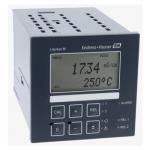
ENDRESS HAUSER pH/ORP transmitter Liquisys CPM223-MR0005 Compact panel device for all industries |

|
Endress+Hauser PH/ORP Transmitter and Electrode with Ceramic Membrane 0.1% Accuracy and 40 Bar Pressure Range |

|
ROHS Endress Hauser 4-channel transmitter Liquiline CM444R |

|
ROHS Endress Hauser Vibronic Point level detection Soliphant FTM50 Robust point level switch for fine-grained bulk solids also for hazardous areas |

|
E+H Multi Parameter Transmitter Digital Endress Hauser 1-/2-channel transmitter Liquiline CM442R |
Email to this supplier