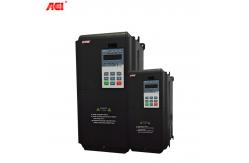
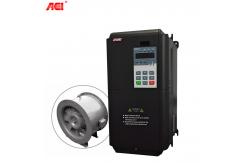
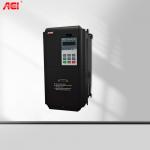
ACI Energy Saving Blower Dedicated Variable Frequency Converter Energy saving fan specific frequency converter is a frequency
conversion speed control device designed for the characteristics of
fan equipment. It achieves air volume control by adjusting the
motor speed, and has the functions of high efficiency, energy
saving, precise speed control, and system protection. It is widely
used in industrial ventilation, air conditioning systems,
environmental engineering and other fields. Technical Principles - Variable frequency speed regulation mechanism
By using power electronic devices such as IGBTs, the power supply
is converted into AC power with adjustable frequency to drive the
fan motor. The fan speed is proportional to the power supply
frequency (n ∝ f), and reducing the frequency can lower the speed,
thereby reducing the air output.
Energy saving logic: The power of the fan is proportional to the
third power of the speed (P ∝ n ³), and energy consumption
significantly decreases when the speed decreases. For example, when
the speed drops to 80%, the power only needs 51.2% (0.8 ³ * 100%). - Closed loop control technology
Built in PID controller, combined with real-time feedback from
pressure or flow sensors, dynamically adjusts motor frequency to
ensure constant air volume. Compared to traditional air door
regulation, it can avoid throttling losses and achieve an
energy-saving rate of 20% -60%.
Core Advantages - Efficient and energy-saving
Wind turbine loads mostly have square torque characteristics, and
energy consumption decreases significantly when the speed
decreases.
The soft start function reduces the starting current of the motor,
reduces grid impact and mechanical wear. - Precise control
Wide range of stepless speed regulation (0-100% rated speed), fast
response speed (millisecond level), suitable for complex working
conditions.
High precision PID control with air volume fluctuation range of ≤±
2%, meeting process requirements such as constant pressure and
constant flow rate. - System protection
Built in overload, overvoltage, undervoltage, and phase loss
protection functions extend the lifespan of the equipment.
Fault self diagnosis and alarm, reducing maintenance costs.
Application - Industrial ventilation and dust removal
Ventilation and air exchange in workshops, mines, and other places
to reduce energy consumption while ensuring air quality.
Industrial dust removal system improves dust removal efficiency
through constant air flow control. - Air conditioning and HVAC system
Commercial buildings and hospitals use air conditioning to achieve
precise temperature control and energy efficiency.
Constant temperature and humidity laboratory to ensure stable
airflow. - Environmental protection engineering
Provide stable airflow delivery in systems such as exhaust gas
treatment and flue gas desulfurization.
The aeration system of the sewage treatment plant maintains a
constant oxygen supply.
|