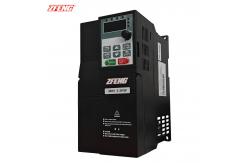
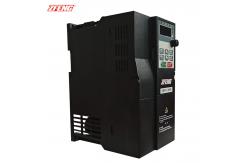
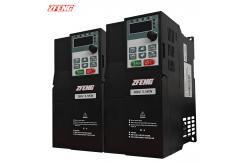
ZFeng 310 Series 5.5Kw-T General Vector Variable Frequency Drive General Vector Variable Frequency Drive is an advanced type of
variable frequency drive (VFD) that employs vector control
technology to achieve precise control over AC motors' speed,
torque, and position. Unlike conventional VFDs that use scalar
control (V/F control), vector inverters utilize complex algorithms
to decouple the motor's magnetic flux and torque components,
enabling dynamic performance comparable to DC motors. High Precision Control Vector control enables extremely accurate speed and torque
regulation, ensuring that the motor operates at optimal
performance. This is crucial for applications requiring tight speed
tolerances, such as CNC machining, printing presses, and winding
machines. Wide Speed Range: Vector inverters offer a broad speed control range, typically from
0 Hz to the maximum rated frequency of the motor. This allows for
flexible operation across various applications and load conditions. High Dynamic Response: The closed-loop control system of vector inverters enables rapid
detection and adjustment of the motor's operating state, ensuring
stable and safe operation even during sudden load changes. This is
essential for applications like elevators, cranes, and fast
positioning systems. High Starting Torque: Vector inverters can provide high starting torque at low speeds,
making them ideal for driving heavy loads and overcoming initial
static friction. This is particularly beneficial for applications
such as hydraulic pumps, excavators, and conveyor belts. Energy Efficiency: By optimizing the energy efficiency ratio and improving conversion
efficiency, vector inverters contribute to energy conservation and
reduced operating costs. They can also incorporate energy recovery
functions, such as regenerative braking in elevators and hoists, to
further enhance energy utilization.
Applications Vector inverters are widely used in various industrial applications
due to their superior control performance and reliability. Some
typical applications include: - Industrial Machinery: CNC machine tools, winding machines, printing
presses, and other equipment requiring high-precision speed
control. Cranes, elevators, and fast positioning systems that
demand rapid response to load changes.
- Heavy Machinery: Excavators, hydraulic pumps, and other heavy-duty
equipment that requires high starting torque.
- Energy Recovery Systems: Elevators, fans, and pumps that can
benefit from energy recovery during braking operations.
- Multi-motor Synchronization: Production lines in industries such as
textiles, paper making, and printing, where multiple motors need to
operate in synchronization.
- Robotics and Automation: Automated production lines and robots that
require complex trajectory control and precise motion control.
|