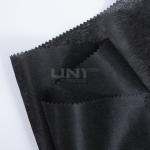
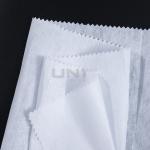
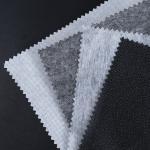
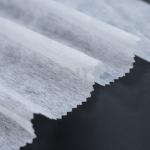
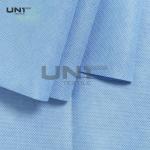
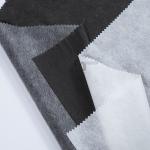
Chemical bond nonwoven interlining is a type of nonwoven fabric produced by bonding fibers together
using a chemical process, typically with the application of resins
or adhesives. This type of interlining is widely used in the
garment industry to provide structure, support, and durability to
various fabrics. Unlike traditional woven or knitted fabrics,
chemical bond nonwoven interlining does not require weaving or
knitting processes, offering a cost-effective and efficient
solution for garment production. Product SpecificationsMaterial Composition: - Chemical bond nonwoven interlining is primarily made from synthetic fibers like polyester, nylon, or polypropylene. These fibers are bonded together using a resin or adhesive, which
ensures that the fabric maintains its integrity and stability
without the need for a weaving process.
Manufacturing Process: - The manufacturing process of chemical bond nonwoven interlining
involves applying a bonding agent to the fibers, followed by curing
or heating to secure the bond. The chemical bonding process creates
a fabric with unique properties, such as enhanced durability,
flexibility, and stability. This process is efficient and can be
easily adapted for different applications in the textile industry.
Types of Chemical Bond Nonwoven Interlining: - Fusible Chemical Bond Nonwoven Interlining: This type of interlining comes with a heat-sensitive adhesive
layer that bonds to the fabric when ironed. It is widely used for
garments where fusibility is required, such as shirts, blouses, and
outerwear.
- Non-Fusible Chemical Bond Nonwoven Interlining: This version does not have an adhesive backing and is used in
applications where the interlining is sewn into place rather than
fused. It is often used in garments that do not require fusibility,
such as high-end fashion items or garments made from delicate
fabrics.
- Stretchable Chemical Bond Nonwoven Interlining: This variant includes stretch capabilities, making it suitable
for activewear or sportswear where the fabric needs to retain its
shape without restricting movement.
Weight and Thickness: - Chemical bond nonwoven interlining is available in various weights,
typically ranging from 30gsm to 150gsm. Lighter weights are used for delicate fabrics or minimal
structure, while heavier weights provide more rigid support for
areas such as collars, cuffs, and waistbands.
Width Options: - The width of chemical bond nonwoven interlining typically ranges
from 50cm to 150cm, but custom widths can be produced to meet specific production
needs.
Key FeaturesDurability and Strength: - Chemical bond nonwoven interlining provides excellent durability
and strength to fabrics. The bonding process creates a stable
structure that prevents the fabric from losing its shape over time,
making it ideal for long-lasting garments.
Smooth and Soft Texture: - Despite its strong and durable properties, chemical bond nonwoven
interlining maintains a soft texture, ensuring comfort when applied
to garments. This is particularly important for garments that are
worn close to the skin, such as shirts or dresses.
Excellent Support: - The interlining offers superior support and stabilization to areas
of the garment that require it, such as collars, cuffs, waistbands,
and plackets. It helps to maintain the crisp, structured look of
the garment without adding bulk.
Lightweight and Flexible: - Chemical bond nonwoven interlining is lightweight and flexible,
allowing the fabric to retain its natural drape and movement while
still providing the necessary support and structure. This makes it
an excellent choice for both lightweight and heavyweight fabrics.
Eco-Friendly Options: - Many chemical bond nonwoven interlinings are available in
eco-friendly options, made from recycled fibers or produced with
sustainable manufacturing practices. These options cater to
environmentally conscious consumers and businesses.
ApplicationsGarment Manufacturing: - Shirts: Chemical bond nonwoven interlining is commonly used in shirt
collars, cuffs, and plackets to provide structure and prevent the
fabric from sagging or wrinkling.
- Suits: Used in jackets and suits to maintain the crisp appearance of
lapels and collar shapes, chemical bond nonwoven interlining
ensures that the garment maintains its form and structure
throughout wear.
- Outerwear: Provides added support to outer garments like coats and jackets,
especially around areas like collars, cuffs, and waistbands.
- Pants and Skirts: Used in waistbands and other areas that require support, chemical
bond nonwoven interlining helps maintain the garment’s shape and
prevents stretching.
Fashion Accessories: - Bags: Chemical bond nonwoven interlining is used in handbags,
backpacks, and other accessories to provide structure without
adding excessive weight.
- Belts: Provides support to belts, keeping them firm and in place without
compromising flexibility or comfort.
Home Textiles: - Curtains and Drapes: Chemical bond nonwoven interlining is used to add weight and
support to home textile products, such as curtains and drapes,
helping them hang properly and maintain their form.
- Bedding: Adds durability and structure to bedding items like pillowcases
and comforters.
Technical Textiles: - Automotive Upholstery: Used in car seats, headliners, and other interior components to
provide durability and stability.
- Industrial Fabrics: Chemical bond nonwoven interlining can be used in industrial
applications that require strong, stable fabrics, such as for
filtration or insulation materials.
Advantages of Chemical Bond Nonwoven InterliningCost-Effective: - The chemical bonding process is less expensive than traditional
weaving or knitting processes, making chemical bond nonwoven
interlining a cost-effective solution for garment manufacturers.
Efficient Production: - The manufacturing process is fast and efficient, allowing for
large-scale production without sacrificing quality. This makes it
ideal for high-volume production runs.
Versatile and Customizable: - Chemical bond nonwoven interlining can be produced with a variety
of finishes and characteristics, such as flame resistance, water
resistance, or anti-static properties, making it suitable for a
wide range of applications in different industries.
Eco-Friendly Options: - With a growing demand for sustainable textiles, many chemical bond
nonwoven interlinings are available in eco-friendly versions made
from recycled fibers or produced using environmentally conscious
methods.
Improved Comfort: - Despite its durability, chemical bond nonwoven interlining retains
a soft, smooth texture, ensuring that the garments are comfortable
to wear while still providing the necessary structure.
Our ServicesCustomized Solutions: - We offer a wide range of chemical bond nonwoven interlining products, including custom weights, widths, and finishes, tailored
to your specific garment and textile needs. Whether you require
fusible or non-fusible options, we can provide solutions that fit
your production requirements.
Expert Consultation: - Our team of experts can assist you in selecting the right chemical
bond nonwoven interlining for your specific application, providing
advice on the most suitable products for your fabrics and designs.
Quality Assurance: - We implement strict quality control measures to ensure that all of
our chemical bond nonwoven interlining products meet the highest
standards for durability, performance, and consistency. Every batch
undergoes thorough testing to guarantee its reliability.
Fast Delivery: - We understand the importance of timely delivery in the garment
industry. Our streamlined logistics ensure that all orders are
fulfilled quickly, helping you meet tight production schedules.
Sustainable Practices: - We are committed to providing eco-friendly options for our
customers, offering chemical bond nonwoven interlining made from
recycled fibers or produced using sustainable methods.
ConclusionChemical bond nonwoven interlining is an essential material in the textile industry, providing
superior durability, structure, and flexibility for a wide range of
garment applications. Whether you are producing shirts, suits,
outerwear, or fashion accessories, chemical bond nonwoven
interlining offers excellent support while maintaining comfort and
ease of handling. At Shanghai Uneed Textile Co., Ltd., we offer high-quality chemical bond nonwoven interlining products
tailored to your specific needs, backed by expert support and fast
delivery services |