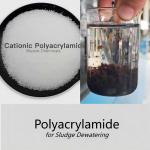
Product Description - Blufloc cationic polyacrylamide flocculant is working well in coal
wash wastewater treatment.
- Polyacrylamide has a certain amount of polar groups on the
molecular chain, it can be through the adsorption of solid
particles suspended in water, bridging between particles, or
through the charge and make the particle formation of large flocs
condensation. So, it can accelerate the settlement of particles in
suspension and obviously speed up the solution to clarify, promote
filtering, and other effects.
- As flocculants, it is mainly used for various industrial effluent
flocculation sedimentation, and clarification treatment, such as
iron and steel plant effluent, paper effluent, food plant effluent,
textile effluent, electroplating wastewater, wastewater metallurgy,
coal washing wastewater treatment, sludge dewatering.
| Blufloc Polyacrylamide: | | Trade Name: | Blufloc CPAM | | Active Ingredient: | High molecular weight polymer | | Chemical Name: | Cationic Polyelectrolyte Flocculant | | Standard: | GB17514-2008 | | Certification: | ISO, SGS | | MOQ: | 500kgs | | Port of Loading: | Shanghai Port, China | | Delivery Time: | Within 10 Working Days After Got Your Payment | | Package: | Packed in 25kgs kraft bag or white PE bag on a pallet and
16-18ton/FCL, or 750kgs big bag | | Sample: | Free to test | | Blufloc Cationic Polyacrylamide Specifications: | | Appearance: | Off-White Granular Powder | | Ionic Charge: | Cationic | | Molecular Weight: | High | | Hydrolysis Degree: | >30% | | Approximate Brookfield Viscosity at 25° C: | >500cps | | Bulk Density: | About 0.6-0.8 | | Solid Content: | 89%min | | Active Content: | 100% | | Specific Gravity at 25°C: | 1.01-1.1 | | Recommended Working Concentration: | 0.1% |
Advantages of Blufloc Polyacrylamide:
- Economical to use - lower dosage levels.
- Easily soluble in water; dissolves rapidly.
- Can eliminate the use of alum & further ferric salts when used
as primary coagulants.
- Reduction in the sludge of the dewatering process system.
- Faster sedimentation, better flocculation.
- Non-pollution (no aluminum, chlorine, heavy metal ions, etc.).
How to Use Blufloc Polyacrylamide? Application and Dosage:
The dosage range varies from 0.2 - 3.0 ppm depending upon the type
of effluent and application. It is always advised to do a jar test
for evaluating the functioning and approximate dosage.
Jar Test: Put a sample of effluent in a beaker and add it as designated,
agitate for 1 minute at 100-120 rpm, and then slowly agitate at 60
rpm. Determine the floc properly at this time and note the
sedimentation and clarity of the top solution.
Procedure and precautions upon dispersion and dissolving
flocculants:
Dissolving time: The time required to dissolve the flocculant
varies according to the type of flocculant, water quality,
temperature, and agitation. However, most flocculants generally
require around 1 hour of agitation to completely dissolve the
powder. The incomplete mixture of flocculant or lumping may inhibit
the performance of the flocculant.
Agitation speed: The ideal revolution of the agitator is between
200-400rpm. A high-speed agitator operating without reducing the
revolution of a motor is not advised, since it may cut the
molecules of the flocculant. An ideal agitator motor should be 1HP
for a 1-2m3 mixing tank.
Dissolving concentration: Flocculants should be standardly
dissolved to 0.1-0.2% concentration. It is also effective to start
dissolving at a slightly higher concentration and then dilute the
flocculant mixture immediately before use.
Handling measures and precautions:
Proper human safety products such as Splash goggles, lab coats,
vapor respirators, gloves, and boots should be worn while handling
and applying chemicals. Splashes on the skin should be washed off
with water immediately. In case of splashing into the eyes, flush
it with fresh water and obtain medical attention. Should not be
injected. Please refer to MSDS for more details. |
|